

The best kundalini books are Gopi Krishna’s Kundalini: The Evolutionary Energy in Man for a first-hand account, Bonnie Greenwell’s Energies of Transformation for grounded support, and Lilian Silburn’s Kundalini: The Energy of the Depths for the traditional texts.
Below are 12 books worth your time, grouped by what you are looking for: the classic sources, safety and understanding, and practice. Each one comes with who it is for, so you can choose with care.
Key Takeaways
- Start with a first-hand account. Gopi Krishna’s book is the most quoted personal story, and it is honest about the strain as well as the wonder.
- For safety and context, read Sannella or Greenwell. Both write about how to tell a spiritual process from a crisis, and when to ask for help.
- For the traditional texts, try Woodroffe or Silburn. They are dense, so give them time.
- If you want to practice, go gently. Kundalini yoga books such as Khalsa’s are best used with a qualified teacher.
- This page is not medical advice. If you feel unwell or frightened, please speak to a doctor or a mental health professional.
What Are Kundalini Books?
Kundalini is described in yogic and tantric traditions as a latent energy, often pictured as a coiled serpent at the base of the spine. In these teachings it can rise through the chakras, the energy centers of the body, and many people describe the experience as a change in awareness.
Kundalini books fall into three groups: traditional texts that explain the philosophy, personal accounts from people who report an awakening, and practical guides to yoga, breath and meditation. For a plain-language overview first, read our guide to kundalini energy or our article on kundalini awakening symptoms and when to get help.
Kundalini Books at a Glance
| Book | Best for | Type | Voice |
|---|---|---|---|
| Kundalini: The Evolutionary Energy in Man (Gopi Krishna) | A first-hand story | Classic | Experiencer |
| The Serpent Power (Avalon) | Source texts | Classic | Scholar |
| Kundalini: The Energy of the Depths (Silburn) | Philosophy | Classic | Scholar |
| Play of Consciousness (Muktananda) | Lineage stories | Classic | Teacher |
| Kundalini: Psychosis or Transcendence? (Sannella) | Safety and context | Understanding | Physician |
| Energies of Transformation (Greenwell) | Practical support | Understanding | Psychotherapist |
| Kundalini Rising (various) | Many viewpoints | Understanding | Anthology |
| When Thought Turns to Light (Garlinger) | A modern voice | Understanding | Teacher |
| Kundalini Yoga (Khalsa) | Gentle practice | Practice | Yoga teacher |
| Kundalini Tantra (Satyananda) | Advanced students | Practice | Yoga master |
| Kundalini Vidya (Harrigan) | A step-by-step system | Practice | Teacher |
| Eastern Body, Western Mind (Judith) | Chakras and psychology | Practice | Therapist and author |
How Do I Choose the Right Kundalini Book?
Start with the question you are carrying. If it is “what does this feel like?”, pick Gopi Krishna or Muktananda. If it is “is what I am feeling safe?”, pick Sannella or Greenwell. If it is “how do I practice?”, pick Khalsa, and consider a teacher.
A few simple guides help:
- Brand new to the idea? Try Kundalini Rising for a sampler, then Eastern Body, Western Mind for the chakra map.
- Feeling shaky or overwhelmed? Read Greenwell slowly, and talk to a doctor or therapist you trust.
- Love old texts? Try The Serpent Power or Silburn’s study.
If your questions are about the wider path, our guide to spiritual awakening and our list of best books for spiritual awakening go further. For reading across the whole spiritual path, see our list of the top spiritual books.
The Classics: Where the Western Conversation Began
These four books are the traditional and first-hand sources most other writers lean on. They are rich, and they ask for patience.
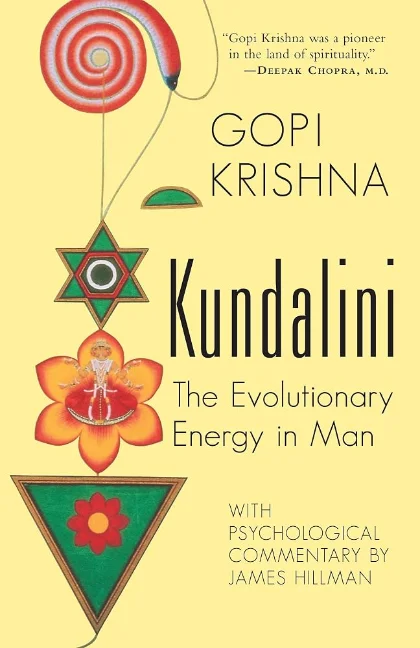
1. Kundalini: The Evolutionary Energy in Man
Gopi Krishna (Shambhala; first published 1967)
The best-known first-hand account in the field. Gopi Krishna, an Indian government employee and lifelong meditator, describes the sudden awakening he says he had in 1937 and the years of physical and mental strain that followed before he found his balance.
He writes plainly about what he went through and what he came to believe it meant. It reads as both a testimony and a caution.
Best for: Readers who want one honest personal story before anything else.
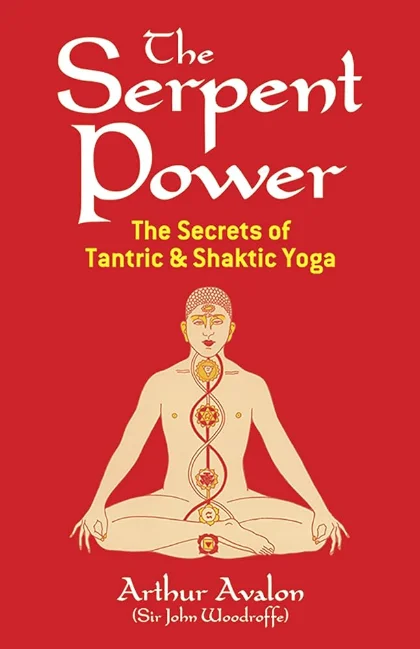
2. The Serpent Power
Arthur Avalon (Sir John Woodroffe) (Dover, reprint of the 1919 classic)
Woodroffe, writing as Arthur Avalon, translated two Sanskrit texts on the six chakras and added a long commentary on the tantric view of kundalini. For decades it was the main English source for the subject.
It is dense and full of Sanskrit terms, so give yourself time. The reward is a clear view of where the Western idea of kundalini came from.
Best for: Serious students who want the traditional source texts.

3. Kundalini: The Energy of the Depths
Lilian Silburn (State University of New York Press, 1988)
A scholarly study based on the scriptures of nondualistic Kashmir Shaivism. Silburn follows how kundalini is described across these texts, from subtle experience to the deepest states of awareness.
It is an academic book and not a how-to. It is best read slowly, with a notebook beside you.
Best for: Readers who enjoy philosophy and primary sources.

4. Play of Consciousness
Swami Muktananda (Siddha Yoga Publications)
A spiritual autobiography in which Muktananda, founder of the Siddha Yoga path, describes the visions and inner experiences he links with the awakening of kundalini under his teacher.
It is a window into one lineage’s view of the process. As with any teacher’s account, read it with your own discernment.
Best for: Readers curious about the Siddha Yoga tradition and its inner experiences.
Safety and Understanding: Making Sense of the Experience
These four books are written by a physician, a psychotherapist and teachers who take the hard moments seriously. They are the best place to start if the subject feels big or close to home.

5. Kundalini: Psychosis or Transcendence?
Lee Sannella, MD (1976; also published as The Kundalini Experience)
Sannella was a physician who asked an important question: how do we tell a spiritual process from a mental health crisis? He gathers cases and describes the range of experiences people report.
It is a useful book for anyone who feels unsettled by strong energy experiences, and for the friends or professionals who support them. It does not replace a doctor or therapist.
Best for: Readers who want a careful, balanced look at the difficult side of awakening.

6. Energies of Transformation: A Guide to the Kundalini Process
Bonnie L. Greenwell, PhD (Shakti River Press, 1995)
Greenwell, a psychotherapist, draws on years of working with people who report kundalini experiences. She describes common patterns and offers grounded suggestions for living with them.
The tone is calm and practical. It is one of the books most often suggested to readers who want safety-minded support.
Best for: Readers who feel overwhelmed and want a steady, practical voice.

7. Kundalini Rising: Exploring the Energy of Awakening
Various authors, including Gurmukh Kaur Khalsa, Dorothy Walters, Andrew Newberg and Ken Wilber (Sounds True, 2009)
A collection of voices from yoga teachers, writers, a neuroscientist and a philosopher. Each approaches kundalini from a different angle, from practice to personal story to research.
Because the pieces are short, you can read them in any order. It is a good sampler if you are not sure where you stand yet.
Best for: Newcomers who want several perspectives in one book.
8. When Thought Turns to Light: A Practical Guide to Spiritual Transformation
Patrick Paul Garlinger (Epigraph Publishing, 2016)
Garlinger left a career in law to teach spirituality. He joined the Next Level Soul Podcast to talk about his own kundalini awakening, and this book is his practical guide to spiritual transformation.
It speaks in a modern, personal voice that many readers find easier to approach than the older texts.
Best for: Readers who prefer a contemporary teacher and a practical tone.
View on Amazon▶ Watch the Interview with Patrick Paul Garlinger
Practice and the Body: Yoga, Tantra and the Chakras
These four books move from reading to doing. Whatever you try, go slowly and stop if you feel unwell.

9. Kundalini Yoga: The Flow of Eternal Power
Shakti Parwha Kaur Khalsa (Tarcher/Perigee, 1998)
A simple illustrated guide to kundalini yoga as taught by Yogi Bhajan, with postures, breathing and meditation sets laid out step by step.
If you try the practices, go gently, listen to your body and consider learning from a qualified teacher. Stop and speak to a doctor if anything feels wrong.
Best for: Readers who want to practice, not only read.

10. Kundalini Tantra
Swami Satyananda Saraswati (Bihar School of Yoga / Yoga Publications Trust)
A large, systematic manual from the Bihar School of Yoga that covers the chakras, kundalini and the tantric techniques used to work with them.
It is advanced and detailed. Most readers will get the most from it with the guidance of an experienced teacher.
Best for: Dedicated yoga students with a teacher or a steady practice.

11. Kundalini Vidya: The Science of Spiritual Transformation
Joan Shivarpita Harrigan, PhD (Patanjali Kundalini Yoga Care, 2006)
Harrigan teaches in the Patanjali Kundalini Yoga Care tradition and lays out a step-by-step system for understanding the kundalini process alongside yoga and meditation.
It is thorough and structured, which some readers find reassuring.
Best for: Readers who like a clear framework and a practice that unfolds in stages.
12. Eastern Body, Western Mind
Anodea Judith, PhD (Ten Speed Press (Celestial Arts), revised 2004)
Judith links the seven chakras to Western psychology, showing how each energy center relates to growth, trauma and healing. It is not only about kundalini, but it gives you the map that most kundalini books assume you already know.
It is warm, readable and full of exercises.
Best for: Readers who want to understand the chakras before going deeper.
An Honest View of Kundalini
Kundalini comes from the yoga and tantra traditions. Scientists have not confirmed it as a physical energy, and researchers and clinicians are still studying why some people report strong experiences during meditation or breathwork. Many practitioners describe it as real and life-changing.
Use these books as guides, not authorities. Be cautious with any teacher or practice that promises fast results or asks you to push past discomfort. If something does not feel right, set it down. Nothing here replaces medical or mental health care; if you are struggling, please reach out to a doctor or call or text 988 in the US.
As an Amazon Associate, Next Level Soul earns from qualifying purchases.
Hear It From the Guests
Prefer to listen? This Next Level Soul Podcast conversation features an author from this list telling his story in his own voice.
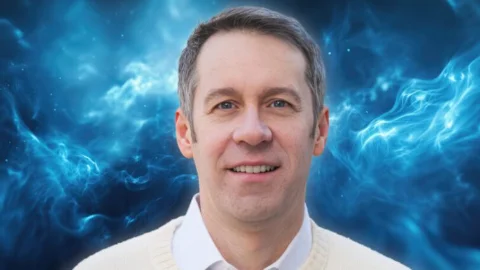
Awakening Kundalini Energy with Patrick Paul Garlinger
Patrick Paul Garlinger shares his shift from lawyer to spiritual teacher, his kundalini awakening, and what he says about sitting with emotion. Watch the full episode and read the show notes.
Watch More on Next Level Soul TV
Next Level Soul TV is our own home for films, series and teachings on these questions. Here are six to start with.

Go Deeper with NLS Mastery: Ancient Meditation for Inner Stillness
Explore Vedic meditation techniques that quiet the mind and return you to lasting inner stillness, a steady foundation for any energy practice. Acharya Shunya teaches it in Ancient Meditation for Inner Stillness, part of NLS Mastery. Watch the course preview below.

Sources and Further Reading
Spirituality for the Rest of Us™
Movies, teachings and community on Next Level Soul TV.
Frequently Asked Questions
What is the best kundalini book for beginners?
Many readers begin with Kundalini Rising, a collection of short pieces from several teachers, or with Gopi Krishna’s first-hand account. If you are unsettled by the subject, start with Bonnie Greenwell’s Energies of Transformation.
What is kundalini?
In yogic and tantric traditions, kundalini is a latent energy at the base of the spine that can rise through the chakras. Many people describe its awakening as a shift in awareness. Scientists have not confirmed it as a physical energy.
Is it safe to read about kundalini?
Reading is safe for most people. Practices such as strong breathwork can be intense, so go gently, learn from a qualified teacher and speak to a doctor if you feel unwell. This page is not medical advice.
Which kundalini book is best for understanding the risks?
Lee Sannella’s book asks how to tell a spiritual process from a crisis, and Bonnie Greenwell offers practical support. Gopi Krishna’s account is also candid about the strain he went through.
Which kundalini book is best for yoga practice?
Shakti Parwha Kaur Khalsa’s Kundalini Yoga: The Flow of Eternal Power is a simple illustrated guide. Swami Satyananda’s Kundalini Tantra is far more advanced and best used with a teacher.
Which are the most traditional kundalini texts?
The Serpent Power by Arthur Avalon (Sir John Woodroffe) and Lilian Silburn’s Kundalini: The Energy of the Depths draw on Sanskrit and Kashmir Shaiva scriptures.
Do I need a teacher to work with kundalini?
Many traditions advise learning from a qualified, trusted teacher, especially for intense practices. A teacher can help you pace yourself, and a doctor or therapist can help if you feel unwell.
What is kundalini awakening?
People use the phrase for a sudden or gradual change in awareness that some link with kundalini. Reports include heat, tingling, waves of emotion and changes in sleep. Our article on kundalini awakening symptoms explains what people describe and when to get help.
What is the difference between kundalini yoga and a kundalini awakening?
Kundalini yoga is a practice of postures, breath, chanting and meditation, popularized in the West by Yogi Bhajan. A kundalini awakening is the experience some people report, with or without a practice.
How are the chakras connected to kundalini?
In the traditional teachings, kundalini rises through the chakras, from the root to the crown. Anodea Judith’s Eastern Body, Western Mind is a friendly introduction to the seven chakras.
Are any kundalini books written by doctors or therapists?
Lee Sannella was a physician, Bonnie Greenwell is a psychotherapist and Anodea Judith holds a PhD. Kundalini Rising also includes writing by neuroscientist Andrew Newberg.
Can I hear kundalini stories instead of reading them?
Yes. Patrick Paul Garlinger talks about his own kundalini awakening on the Next Level Soul Podcast, and the link sits in the Hear It From the Guests section above.
Where can I learn more about kundalini?
Our guide to kundalini energy covers the traditions, the signs people describe and safe practice in one place.


