The best books on astrology depend on what you want from the stars: a friendly start, a psychological map of your birth chart, or the history behind the tradition. For most beginners, The Inner Sky by Steven Forrest or You Were Born for This by Chani Nicholas are warm places to begin, while Tetrabiblos and Hellenistic Astrology reward the curious reader who wants the roots.
Key Takeaways
- Best to begin: The Inner Sky (Steven Forrest) and You Were Born for This (Chani Nicholas) are approachable and focused on self-understanding.
- Best reference: Parkers’ Astrology is an illustrated, wide-ranging guide you can return to for years.
- Best for the soul’s path: Astrology for the Soul (Jan Spiller) centers the lunar nodes and the direction of growth.
- Best for history and depth: Cosmos and Psyche, Tetrabiblos and Hellenistic Astrology trace how astrology developed.
- Honest framing: Astrology is a symbolic and cultural tradition. Scientific consensus does not support its predictive claims, so read it for reflection, not forecasts.
What Makes a Good Astrology Book?
Astrology books fall into a few families, and picking the right family matters more than picking the “best” title. Some are friendly introductions to the signs, planets and houses. Some are psychological, treating the chart as a map of inner patterns. Some are historical or technical, written for readers who want to understand the craft.
A good book is clear about what it claims. It names the tradition it follows (modern psychological, evolutionary, Hellenistic, Vedic), it explains its terms, and it invites you to test ideas against your own life rather than telling you what will happen to you. Be wary of any book that promises certain predictions.
Astrology Books at a Glance
| Question | Quick answer |
|---|---|
| Where should a beginner start? | The Inner Sky by Steven Forrest, or You Were Born for This by Chani Nicholas. |
| Best illustrated reference? | Parkers’ Astrology by Julia and Derek Parker. |
| Best for the lunar nodes? | Astrology for the Soul by Jan Spiller. |
| Best for psychological astrology? | Saturn: A New Look at an Old Devil by Liz Greene. |
| Best for history and philosophy? | Cosmos and Psyche by Richard Tarnas. |
| Best classical text? | Tetrabiblos by Claudius Ptolemy, 2nd century CE. |
| Best for ancient techniques? | Hellenistic Astrology by Chris Brennan. |
The 10 Best Books on Astrology
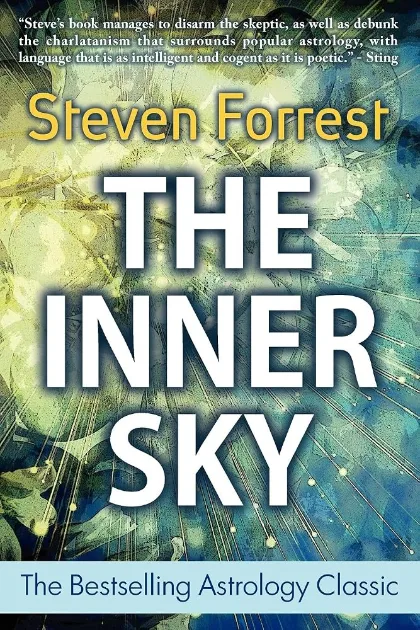
1. The Inner Sky
Steven Forrest
First published in 1984, The Inner Sky is often recommended as the first serious astrology book. Forrest writes in a warm, conversational voice and teaches the planets, signs and houses as parts of one story about who you are becoming. He is associated with evolutionary astrology, which reads the chart as a picture of growth.
Best for: beginners who want a human, readable guide.

2. You Were Born for This
Chani Nicholas
Chani Nicholas is a well-known modern astrologer, and this book frames the birth chart as a tool for radical self-acceptance. It is practical, contemporary and gentle, with reflection prompts built in.
Best for: readers who want astrology as a mirror for daily life, not as fortune telling.

3. I Don’t Believe in Astrology
Debra Silverman · St. Martin’s Essentials, 2025
Debra Silverman is a therapist and professional astrologer, and she writes the way she talks: plainly, with psychology first and prediction second. The book is built for people who are skeptical or new, and it treats the birth chart as a tool for understanding yourself rather than a verdict on your life.
Best for: skeptics and beginners who want a grounded, therapeutic way in.

4. You Don’t Really Believe in Astrology, Do You?
Pam Gregory · SilverWood Books, 2017 (2nd edition)
British astrologer Pam Gregory wrote this short book (192 pages) for readers who are curious but doubtful. Its subtitle promises that astrology can reveal profound patterns in your life, and it explains how charts are read in plain language, without asking you to believe anything first.
Best for: curious skeptics who want a short, readable first book.

5. Astrology for the Soul
Jan Spiller
Published in 1997 by Bantam, this book is built around the lunar nodes: where you came from and where you are growing. Spiller offers a clear, step-by-step reading by North Node sign, which is why many readers love it. You can start with our guide to the North Node and then read her full treatment.
Best for: anyone drawn to purpose, growth and life direction.

6. Parkers’ Astrology
Julia and Derek Parker
A large, illustrated reference from Dorling Kindersley that covers charts, planets, aspects, houses and relationships in one volume. It reads less like a story and more like a handbook, which makes it a good bookshelf companion.
Best for: visual learners and people who like to look things up.
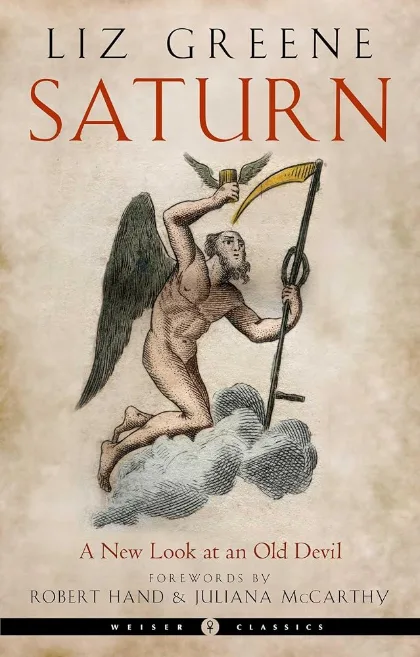
7. Saturn: A New Look at an Old Devil
Liz Greene
First published in 1976, this is a landmark of psychological astrology. Greene, a Jungian analyst and astrologer, treats Saturn as a symbol of fear, limitation and eventual maturity. If you are curious about that life chapter, pair it with our guide to the Saturn return.
Best for: readers who like depth psychology and mythic language.

8. Cosmos and Psyche
Richard Tarnas
Published in 2006 by Plume, this is a long, scholarly book, and an ambitious one. Tarnas argues that planetary cycles correspond with patterns in human history and culture, linking the two through Jung’s idea of synchronicity rather than direct causation. It is a work of philosophy and history more than a how-to.
Best for: thinkers who want the big picture.
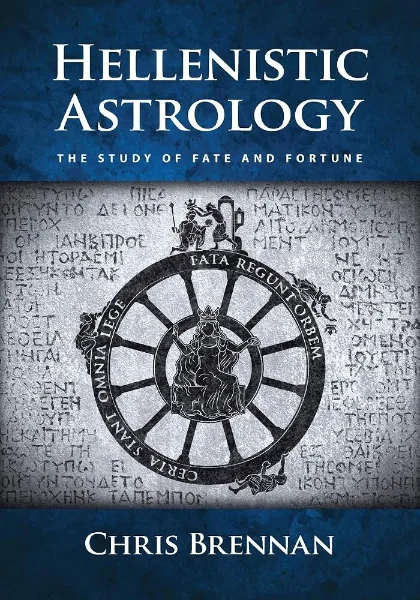
9. Hellenistic Astrology
Chris Brennan
A thorough history and technical guide to the astrology of the ancient Greek world, the root of much of what Western astrologers practice today. It is detailed and demanding, but very rewarding.
Best for: serious students and history lovers.

10. Tetrabiblos
Claudius Ptolemy
Written in the 2nd century CE, Tetrabiblos is a four-book treatise on the theory and practice of astrology. It was treated as nearly authoritative for over a thousand years and was translated into Arabic and Latin. It reads as a historical document, which is part of its value.
Best for: readers who want to meet the source.
Editions and reprints vary. Check the edition you buy, especially for older and translated works.
Some links on this page are Amazon affiliate links. If you buy through them, Next Level Soul may earn a small commission at no extra cost to you.
Which Astrology Book Is Right for You?
| Book | Style | Difficulty | Best for |
|---|---|---|---|
| The Inner Sky | Evolutionary, narrative | Beginner | A first complete introduction |
| You Were Born for This | Modern, reflective | Beginner | Self-acceptance and journaling |
| Astrology for the Soul | Lunar-node focus | Beginner | Purpose and growth |
| Parkers’ Astrology | Illustrated reference | Beginner to intermediate | Looking things up |
| Saturn: A New Look at an Old Devil | Psychological | Intermediate | Depth psychology readers |
| Cosmos and Psyche | Historical, philosophical | Advanced | Big-picture thinkers |
| Hellenistic Astrology | Technical, historical | Advanced | Serious students |
| Tetrabiblos | Classical text | Advanced | Primary-source readers |
| Best for skeptics? | I Don’t Believe in Astrology by Debra Silverman, or You Don’t Really Believe in Astrology, Do You? by Pam Gregory. |
If you are unsure, begin with one beginner book and one reference, then add a historical or psychological title once you know what interests you.
How to Get the Most from an Astrology Book
- Get your chart first. You need your birth date, time and place. Free chart tools can generate one, and then you can look up your own placements as you read.
- Read with a notebook. Write down one idea per chapter that resonates and one that does not.
- Learn the building blocks. Planets are the what, signs are the how and houses are the where. Our astrology guide covers the basics.
- Test, do not accept. Treat each description as a question to explore rather than a verdict.
- Explore a second tradition. When you are ready, try Vedic astrology to see how another culture reads the sky.
Honest Limits: What Astrology Is and Is Not
Astrology has a long history in many cultures, and millions of people find it a rich language for reflection. It is also fair to know where it stands today. Wikipedia and Britannica both note that the scientific community regards astrology as lacking scientific support, and that controlled tests have not supported its predictions.
That is why a good astrology book offers symbols and questions, not guarantees. Use these books to think about patterns, values and timing in your own way, and never to make medical, legal or financial decisions.
- Misconception: Your sun sign tells you everything. Reality: Traditions look at the whole chart, including the Moon, rising sign and planets.
- Misconception: A book can tell you your future. Reality: Good books offer themes and reflection prompts.
- Misconception: You need to be an expert to enjoy one. Reality: Several of the books above are written for complete beginners.
Go Deeper
If books are your path to the stars, you may enjoy our wider reading list of top spiritual books. For listening or watching, explore what is available on Next Level Soul TV, a spiritual library with talks, movies and series, and join us at the link below.
Go Deeper with NLS Mastery: Your Soul’s Blueprint
If these books spark your curiosity, this course turns astrology into a personal soul blueprint you can actually read. Karen Bell teaches it in Your Soul’s Blueprint, part of NLS Mastery. Watch the course preview below.

Frequently Asked Questions
What is the best astrology book for beginners?
Many readers start with The Inner Sky by Steven Forrest or You Were Born for This by Chani Nicholas. Both are friendly, readable and focused on self-understanding.
What is the best book to learn astrology?
The Inner Sky is a popular all-round introduction, and Parkers’ Astrology works well as an illustrated reference. Pair a narrative book with a reference.
Which astrology book is best for the North Node?
Astrology for the Soul by Jan Spiller is widely read for its focus on the lunar nodes and the direction of growth.
What is psychological astrology?
It treats the birth chart as a symbolic map of inner patterns, often using ideas from Jungian psychology. Liz Greene is a leading author in the field.
Which astrology book is best for history?
Cosmos and Psyche by Richard Tarnas, Hellenistic Astrology by Chris Brennan and Tetrabiblos by Ptolemy cover different parts of astrology’s history.
Who wrote Tetrabiblos?
Claudius Ptolemy, an Alexandrian scholar of the 2nd century CE. It is a four-book treatise on astrology that influenced medieval Islamic and European astrology.
Do I need my birth time to use astrology books?
It helps. Your birth time sets your rising sign and house placements. Without it you can still read about your sun, Moon and planets.
Is astrology scientifically proven?
No. Wikipedia and Britannica note that the scientific community does not support astrology’s predictive claims. Many people use it as a symbolic tool for reflection.
Are astrology books good for self-discovery?
Many readers find them useful for reflection, journaling and conversation. They work best as prompts for thought rather than as authority.
Should I read Western or Vedic astrology books first?
Western books are more common in English and a good first step. Vedic astrology uses a different zodiac and system, and it is worth exploring later.
Sources and Further Reading
Spirituality for the Rest of Us™
Movies, series, documentaries, audiobooks, audio courses and guided meditations on awakening and consciousness, all in one place. 14-day money-back guarantee.