Fourteen Lessons in Yogi Philosophy is the 1904 course in yogic and occult teaching published under the name Yogi Ramacharaka, a pen name Wikipedia attributes to William Walker Atkinson. It moves from the mind and spirit to the aura, thought, healing, the astral world, and the path of attainment. This study guide walks through all 14 lessons in plain language, then hands you a workbook to try the ideas on your own life.
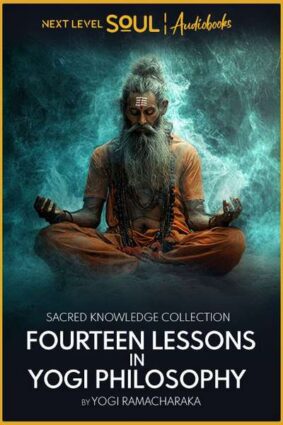
Listen While You Study
The audiobook is available on Next Level Soul TV. Play a lesson, then come back here for the notes and the workbook prompt.
Key Takeaways
- Your mind has layers, and learning to direct your thoughts is the first step in the author’s course.
- Thoughts are treated as a real force, so what you dwell on shapes your character.
- You are more than body and mind, because the author teaches that a spiritual self sits at the center of every person.
- Actions return to the one who sends them, which is the author’s way of describing cause and effect.
- The path is steady practice, built from patience, self-mastery, and daily effort.
The Book at a Glance
| Detail | What to Know |
|---|---|
| Author | Yogi Ramacharaka, a pen name attributed to William Walker Atkinson (1862 to 1932) |
| First published | 1904 |
| Lessons | 14 |
| Tradition | Yogi philosophy and Western esoteric teaching |
| Audiobook | Available on Next Level Soul TV |
What Is Fourteen Lessons in Yogi Philosophy About?
Fourteen Lessons in Yogi Philosophy and Oriental Occultism was first published in 1904 as a course in fourteen parts. It was released under the name Yogi Ramacharaka, a pen name that Wikipedia attributes to William Walker Atkinson, an American writer. The book introduces yogic ideas to Western readers in plain, step by step language.
The lessons begin with the mind and spirit, then move through the aura, the power of thought, healing, and the astral world. They end with spiritual growth, cause and effect, and a path of attainment. The author presents these as teachings of a tradition, and this guide describes them in that same spirit.
The Board: 14 Lessons
Each square is a lesson. Tap one to jump to its study notes.
- 1Threshold
- 2Mind
- 3Spirit
- 4Human Aura
- 5Thought Dynamics
- 6Telepathy
- 7Human Magnetism
- 8Healing
- 9Influence
- 10Astral World
- 11Beyond
- 12Evolution
- 13Cause, Effect
- 14Attainment
Lesson-by-Lesson Study Notes
These notes are our own summary, written to help you follow the book. Each one ends with a small practice you can try this week.
On the Threshold
The opening lesson sets the stage. The author introduces yogi philosophy as a practical path, not just a set of beliefs, and invites you to approach it with an open and patient mind. He describes the study as a way to understand yourself, your place in life, and the larger order behind it. Think of this lesson as the doorway you step through before the real work begins.
The Mental Principles
This lesson looks at the mind. The author describes the mind as having layers, from everyday thinking to deeper instinctive and higher levels. He teaches that the ordinary conscious mind is only a small part of who you are. Understanding how these levels work, he says, is the first step toward directing your own thoughts instead of being pushed around by them.
The Spiritual Principles
Here the author turns from mind to spirit. He teaches that a person is more than body and thought, and that a spiritual essence lies at the center of every life. The lesson describes how this inner self relates to the universal source the tradition calls the Absolute. The aim is to help you see yourself as part of something much larger.
The Human Aura
This lesson describes the aura, a field the author says surrounds every person. He teaches that it carries the marks of our thoughts and feelings, and that trained observers can sense it. The idea is presented as part of the tradition’s view of how people affect each other without words. The lesson encourages care about the thoughts you carry into a room.
Thought Dynamics
The fifth lesson explores thought as a kind of force. The author teaches that thoughts have energy, that they can be shaped, and that focused attention gives them strength. He describes how habits of thinking build character over time. The practical message is simple: what you dwell on grows, so choose your mental focus with care.
Telepathy and Clairvoyance
This lesson covers mind to mind communication and the ability to perceive beyond the ordinary senses. The author describes both as natural powers of the mind that most people have not developed. He explains them within the tradition’s view of subtle energies, and stresses that such powers should be approached with calm, respect, and good intent.
Human Magnetism
Here the author discusses personal magnetism, the quality that draws others toward some people. He teaches that it comes from stored vital energy, strong will, and inner balance, and that it can be cultivated. The lesson links this to health and confidence. It presents magnetism as something built through habits, not something a few people are simply born with.
Occult Therapeutics
This lesson looks at healing through the tradition’s ideas about vital energy and mind. The author describes how attitude, breath, and concentration are said to support wellbeing. These are the author’s teachings and are offered as part of a philosophy, not as medical advice. The lesson reminds readers that care of body and mind go hand in hand.
Psychic Influence
The ninth lesson deals with the way one mind can affect another. The author warns that this power can be used well or badly, and he urges readers to protect their own minds and respect the freedom of others. He teaches that a calm, positive, self-possessed person is hard to sway. The lesson is as much about ethics as about ability.
The Astral World
This lesson describes the astral plane, a subtler level of reality that the tradition says lies beyond the physical world. The author explains it as a realm tied to thought and feeling, and discusses how the idea fits with the larger map of existence. He presents it as part of the yogic view of the universe, to be considered with an open but careful mind.
Beyond the Border
Here the author continues past the astral level and describes what the tradition teaches about life after the death of the body. He presents death as a change of state, not an ending, and describes stages the soul is said to pass through. The lesson speaks to the human wish to understand what lies beyond, and offers the tradition’s comforting answer.
Spiritual Evolution
This lesson presents growth of the soul as a long journey. The author teaches that each life is a step in an unfolding process, moving from simple to higher forms of awareness. He ties this to the idea of rebirth, which the tradition holds as central. The lesson invites you to see present struggles as part of a larger and purposeful path.
Spiritual Cause and Effect
The twelfth lesson explains the law of cause and effect, often called karma in the tradition. The author teaches that actions, words, and thoughts all produce results that return to the one who sent them. This is not framed as punishment, but as a fair and orderly principle. The lesson encourages taking full responsibility for the seeds you plant.
The Yogi Path of Attainment
The final lesson gathers the whole course into a way of living. The author describes the path as one of steady practice, self-mastery, and growing awareness, leading toward union with the highest. He stresses patience and daily effort over dramatic leaps. It closes the book by pointing you back to your own practice.
Key Ideas in Plain Language
| Idea | What It Means | Lesson |
|---|---|---|
| The layers of the mind | The author describes the mind as having several levels, from everyday thought to deeper and higher ones. | 2 |
| The inner spiritual self | A spiritual essence is said to sit at the center of each person and connect to a universal source. | 3 |
| The aura | A field said to surround every person and to carry the marks of their thoughts and feelings. | 4 |
| Thought as force | Thoughts are treated as energy that can be shaped and directed through focus. | 5 |
| Personal magnetism | A quality of presence that the author says can be built with vital energy and a steady will. | 7 |
| The astral plane | A subtler level of reality that the tradition places beyond the physical world. | 10, 11 |
| Spiritual evolution | The idea that the soul grows over a long journey of many lives. | 12 |
| Cause and effect | Actions and thoughts return their results to the one who sent them. | 13 |
| The path of attainment | A life of steady practice and self-mastery that leads toward the highest. | 14 |
Who This Book Is For
This guide is for curious beginners who want to meet yogic and esoteric ideas in a clear, step by step way. It suits anyone interested in the mind, meditation, or the roots of modern spiritual thought. You do not need any background. If you prefer to listen first, the audiobook is on Next Level Soul TV, and this guide can sit beside it as a map and a notebook.
A 14-Day Way to Use It
- On days 1 to 5, take one lesson a day and read or listen to it, then do its small practice.
- On days 6 to 10, continue with one lesson each day and keep a few lines in a notebook about what you notice.
- On days 11 to 14, finish the last lessons and pick the practices that felt most useful.
- On day 15, reread your notes, and choose one practice to carry forward.
Your Workbook
Your answers save on this device as you type. They are not sent anywhere. Use the copy button to move them into your own notes.
Watch More on Next Level Soul TV
Next Level Soul TV brings together full episodes, courses, movies, series and audiobooks, ad-free. Join Next Level Soul TV and keep exploring.
Keep Going
- The Yogi’s Guide to the Infinite audio course
- What Is Karma? Meaning, Types, Instant Karma and How It Works
- Aura Colors and Meanings: Layers, Seeing and Cleansing
Sources and Further Reading
Go Deeper with NLS Mastery: Ancient Meditation for Inner Stillness
The author teaches that stillness of mind is where deeper awareness begins, and that a calm, focused mind is the gateway to the spiritual self. If you want to take that idea further, Acharya Shunya teaches it in Ancient Meditation for Inner Stillness, part of NLS Mastery. Watch the course preview below.

Frequently Asked Questions
What is Fourteen Lessons in Yogi Philosophy about?
It is a course in fourteen parts that introduces yogic and occult ideas, from the layers of the mind and the spiritual self to thought, healing, the astral world, and the path of attainment.
Who wrote Fourteen Lessons in Yogi Philosophy and when?
It was first published in 1904 under the name Yogi Ramacharaka. Wikipedia attributes that pen name to the American writer William Walker Atkinson, who lived from 1862 to 1932.
What kind of book is it?
It is an esoteric teaching book that blends yogic philosophy with ideas popular in early twentieth century Western spiritual circles. Its claims are the author’s and the tradition’s own, and are not presented here as proven fact.
How many lessons are in the book and what are they?
There are 14. They are On the Threshold, The Mental Principles, The Spiritual Principles, The Human Aura, Thought Dynamics, Telepathy and Clairvoyance, Human Magnetism, Occult Therapeutics, Psychic Influence, The Astral World, Beyond the Border, Spiritual Evolution, Spiritual Cause and Effect, and The Yogi Path of Attainment.
What does the book teach about the mind?
The author describes the mind as having several levels and teaches that the everyday conscious mind is only a small part of you. Learning to direct your thoughts is presented as the first step in the course.
What does the book say about thought and energy?
The author teaches that thoughts carry energy and that focused attention gives them strength. The practical message is that what you dwell on tends to shape your character, so you should choose your focus with care.
What is the law of cause and effect in this book?
Lesson 13 describes it as an orderly principle in which actions, words, and thoughts return their results to the one who sent them. The author does not frame it as punishment, but as fairness.
How should a beginner read or study this book?
Take one lesson at a time and keep a small notebook. After each lesson, try the practice for that day and write a line or two about what you notice. Slow, steady reading works better than rushing.
Is Fourteen Lessons in Yogi Philosophy hard to read?
The language is older, and some terms may be new, but the lessons are written as a step by step course for general readers. A study guide and workbook can make the ideas easier to follow.
How long does it take to go through the book?
A steady pace is one lesson a day, so about two weeks. You can also go slower and spend several days on lessons that speak to you most, which is perfectly fine.
How does this study guide and workbook help?
It explains each of the 14 lessons in plain language, lists the key ideas, and gives you one small practice for every lesson. Together they turn reading into something you can try in daily life.
Where can I listen to the audiobook, and what should I read next?
The audiobook is available on Next Level Soul TV. To go further, look for other books on meditation, the mind, and yogic philosophy, and compare how different authors describe similar ideas.
Spirituality for the Rest of Us™
Movies, teachings and community on Next Level Soul TV.