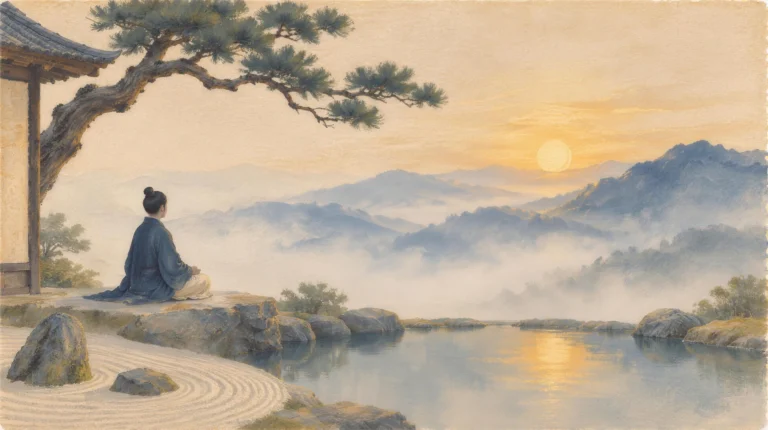





A druid was a member of the learned class in ancient Celtic societies of Britain, Ireland and Gaul, serving as priest, teacher, judge and keeper of tradition. Little was written by the druids themselves, so much of what we know comes from Greek and Roman writers and from later revival. Today, modern Druidry is a nature-centered spiritual path that honors the seasons, trees and ancestors. This guide separates history from legend.
Key Takeaways
- Ancient druids: priests, teachers and judges in Celtic societies, known mostly through Roman and Greek writers.
- Little record: druids passed teachings orally, so firsthand sources are rare.
- Modern Druidry: a revived, nature-centered spirituality that began in the 17th and 18th centuries.
- Core values: reverence for nature, the cycle of the seasons, wisdom and community.
- Practice today: eight seasonal festivals, tree lore, meditation and ritual.
What Is a Druid?
The druids were the intellectual and spiritual class of Iron Age Celtic peoples. Classical authors such as Julius Caesar described them as responsible for religious rites, teaching, and settling disputes. They were said to study for many years, memorizing verse instead of writing it down, which is a main reason so little of their own voice survives.
Because the record is thin, popular images of druids in white robes performing rites at Stonehenge are largely modern. Stonehenge was built long before the Celts, and there is no evidence that druids built it. Historians treat many popular claims about druids with care.
The Druids in History
Greek and Roman writers describe druids as philosophers, teachers and priests, and some accounts say they believed in the survival of the soul. Roman sources also describe ritual practices that are debated by historians. After Roman conquest, the druids were suppressed in Gaul and Britain, and their institutions faded. Later medieval Irish and Welsh literature kept echoes of the tradition in stories of poets, seers and wise people.
For more on the Celtic world, you can read about the Celts. Our glossary entry on Druidry offers a short definition.
The Druid Revival
Interest in druids grew in the 17th and 18th centuries, when scholars and writers in Britain romanticized them as ancient sages. Societies formed, and by the 18th and 19th centuries groups gathered for ceremony and poetry. In the 20th century, Druid orders such as those that emerged in Britain and the United States shaped modern Druidry as a spiritual path, drawing on nature reverence and earlier literature.
Druids at a Glance
Here are the main points.
| Topic | Quick answer |
|---|---|
| Who were the druids? | Priests, teachers and judges in Celtic societies |
| Where? | Britain, Ireland and Gaul |
| Sources | Greek and Roman writers, later Irish and Welsh literature |
| Built Stonehenge? | No evidence they did |
| Modern Druidry | A nature-centered path revived since the 17th and 18th centuries |
| Core values | Nature, wisdom, community and the seasons |
What Do Modern Druids Believe?
Modern Druidry is diverse, and there is no single creed. Common themes include reverence for nature as sacred, respect for ancestors, the importance of poetry and music, and a sense of living in cycles. Many modern Druids see the earth as a teacher and strive to live lightly on it. Some are also Christian, Pagan, Buddhist or have no other label, since Druidry is often treated as a path of practice more than a religion with strict doctrine.
Druid Practices and the Wheel of the Year
- Seasonal festivals: eight celebrations marking solstices, equinoxes and the points between them.
- Tree lore: reverence for oak, ash, rowan, yew and other trees.
- Meditation and ritual: quiet time in nature and ceremonies that mark transitions.
- Bardic arts: poetry, storytelling and music as spiritual practice.
- Service: care for land and community.
You can begin simply with a walk, sitting with one tree through the seasons and keeping notes. Our meditation entry and our guide to spirit animals are good companions.
Common Myths About Druids
Druids did not build Stonehenge. They did not necessarily wear white robes, and the idea of sickle-wielding priests cutting mistletoe comes from a single Roman account. Druidry is also not a single ancient religion handed down in an unbroken line. Modern Druids tend to be open about this, and many value the tradition as living inspiration instead of exact reconstruction.
How to Begin if You Feel Called
Start with reading from reputable authors, then spend time outside. Pay attention to the seasons where you live. Join a group or order only after you have learned how it works and what it asks of you. The path is about relationship with nature, not about a costume.
What the Ancient Writers Said About Druids
Here is something that surprises most people: no ancient druid left a written account of what druids believed. Everything we know from the period comes from outsiders, mostly Greek and Roman authors writing about people they considered foreign, and some of them had political reasons to describe the druids in a particular light.
Julius Caesar, writing about his campaigns in Gaul in the 1st century BCE, described druids as a learned class who served as priests, judges and teachers. He wrote that training could last as long as twenty years and that druids relied on memory instead of writing, which is one reason so little survives in their own words.
Pliny the Elder, in the 1st century CE, described a ritual in which a druid cut mistletoe from an oak with a golden sickle. The oak and the mistletoe are the reason both are still associated with druidry today. Tacitus described the Roman attack on the island of Mona (modern Anglesey, Wales) around 60 or 61 CE, where he says druids stood among the defenders and were destroyed along with their sacred groves.
These accounts are valuable, but they should be read the way a careful reader reads any account written by a conqueror. Some details are likely accurate. Others may be exaggerated, including the claims of human sacrifice, which archaeology has never confirmed in a way that settles the question.
Bards, Ovates and Druids: Three Callings
The Greek geographer Strabo, writing around the turn of the 1st century CE, described three groups in Gaulish society: bards, who were poets and singers, vates (later called ovates), who were seers and natural philosophers, and druids, who were the priests and judges. Modern druid orders often use this three-part structure as a path of study.
| Grade | Traditional role | What it means in modern practice |
|---|---|---|
| Bard | Poet, singer, keeper of stories | Creativity, voice and the art of expression |
| Ovate | Seer and student of nature | Healing, divination and attention to the natural world |
| Druid | Priest, teacher and judge | Wisdom, service and ceremony |
The Order of Bards, Ovates and Druids (OBOD), founded in 1964 by Ross Nichols and led for many years by Philip Carr-Gomm, offers a correspondence course organized around these three grades. It is one of the largest druid organizations in the world.
What Archaeology Adds
Archaeology gives a more physical picture. The Iron Age Celtic-speaking peoples of Britain, Ireland and Gaul left behind ritual sites, offerings in lakes and bogs, and richly decorated metalwork. Lindow Man, a bog body found in Cheshire, England, in 1984, is often discussed in connection with ritual, though no one can say whether he had any link to druids.
One of the most repeated myths is that druids built Stonehenge. They did not. The main stages of Stonehenge were built between roughly 3000 and 2000 BCE, thousands of years before the Iron Age druids described by Caesar. The association comes from 17th and 18th century antiquarians such as John Aubrey and William Stukeley, who linked the monument to druids, and the idea has stuck ever since.
The Wheel of the Year: Druid Festivals
Modern druids usually mark eight festivals through the year, tied to the sun and the seasons. Four are fire festivals with roots in Celtic-speaking cultures, and four are the solstices and equinoxes.
| Festival | Approximate date | Theme |
|---|---|---|
| Samhain | October 31 to November 1 | The end of the harvest and honoring ancestors |
| Alban Arthan (winter solstice) | Around December 21 | The return of the light |
| Imbolc | February 1 | First stirrings of spring |
| Alban Eilir (spring equinox) | Around March 20 | Balance between dark and light |
| Beltane | May 1 | Fertility, growth and fire |
| Alban Hefin (summer solstice) | Around June 21 | The height of the sun |
| Lughnasadh | August 1 | The first harvest |
| Alban Elfed (autumn equinox) | Around September 22 | Gratitude and balance |
The four “Alban” names for the solstices and equinoxes are Welsh and were popularized in the late 18th century by Iolo Morganwg. Many modern druids use them, while others use the more widespread names Yule, Ostara, Litha and Mabon. Neither set is an ancient druid tradition in the strict sense. They are a modern way of organizing a calendar around the sun.
Sacred Trees and the Ogham Alphabet
Trees sit at the heart of druidry. The oak is the best known, and the Celtic-language word for oak is thought by some scholars to be related to the word druid itself, though that connection is debated. Other trees with a place in the tradition include the ash, the hazel, the rowan, the yew and the birch.
Ogham is an early medieval alphabet, used mainly in Ireland between about the 4th and 6th centuries CE, in which letters are strokes carved along the edge of a standing stone. Later medieval Irish texts connected the letters with the names of trees, and modern druids often use them as a symbolic system.
One caution is worth knowing. The popular “Celtic tree calendar,” which assigns a tree to each part of the year, is a 20th-century invention that traces back to the poet Robert Graves and his 1948 book The White Goddess. It is a beautiful idea, but there is no evidence that ancient druids used it.
Awen: The Flowing Spirit of Inspiration
Awen is a Welsh word that means poetic inspiration. In modern druidry it is a central idea, often described as a flowing spirit that moves through the artist, the healer and the seeker. The awen symbol, three rays above three dots, was introduced by Iolo Morganwg in the late 18th century and is now one of the most recognized druid symbols.
Many druids begin ceremonies by chanting the word awen, drawing it out into three long tones. The practice is simple, and it makes a good entry point if you want to try something without committing to a path.
Major Druid Groups Today
- OBOD (Order of Bards, Ovates and Druids) was founded in 1964 and is based in England. It teaches druidry as a spiritual path open to people of any faith.
- Ár nDraíocht Féin (ADF) was founded in 1983 by Isaac Bonewits in the United States. It emphasizes public ritual and scholarship about ancient Indo-European religions.
- The Druid Network is a UK-based organization that gained recognition as a charity for the advancement of religion in England and Wales in 2010.
These groups differ in practice. Some are polytheist, some are animist and some treat druidry as a nature-based philosophy that sits alongside another faith. That variety is part of why the question “what do druids believe?” rarely has one answer.
Values That Run Through Modern Druidry
Across the different groups, a few themes appear again and again.
- Reverence for nature. The living world is treated as sacred and worthy of care.
- Honoring the ancestors. Many druids remember their family, their land and the people who came before them, especially at Samhain.
- Continuing learning. Study, poetry, music and storytelling are part of the path.
- Service. Tending a place, teaching others and helping a community are part of the work.
- Respect for other paths. Most modern druid groups welcome people who follow other religions.
Three Simple Practices to Try
You do not need robes or a stone circle. These three practices come from modern druid traditions and take only a few minutes.
- Sit with a tree. Choose a tree near your home and visit it for ten minutes each week. Notice the bark, the light and the season, and write down one sentence each time.
- Mark a festival. Light a candle at the next solstice, equinox or Samhain, and write down what you want to release and what you want to invite.
- Chant awen. Take a slow breath and sing the word in three long tones. Notice how your body feels afterward.
If you enjoy the grounding feel of time outdoors, our guide to types of meditation includes walking and breath-based styles that pair well with a weekly tree visit.
Druids in Irish and Welsh Stories
Druids appear throughout early Irish and Welsh literature, and these stories shape much of the popular picture of druidry. In the Irish Ulster Cycle, a druid named Cathbad advises kings and foretells the fate of heroes. In the lives of Saint Patrick written in the 7th century, druids confront the saint in contests of power.
These texts were written down by Christian monks several centuries after the Iron Age, so they are better read as literature and memory than as a record of druid belief. They show how druids were remembered: as counselors, seers and keepers of knowledge. Welsh tradition adds the figure of Myrddin, the Merlin of later legend, who is remembered as a poet and prophet.
Druidry and Wicca: What Is the Difference?
People often ask whether druids are the same as Wiccans. They overlap in places, but they are different paths with different histories.
| Question | Druidry | Wicca |
|---|---|---|
| Origins | Inspired by Iron Age Celtic priests, revived in the 17th and 18th centuries | Developed in England in the 1950s, popularized by Gerald Gardner |
| Central focus | Nature, inspiration (awen), poetry and learning | The Goddess and God, ritual and witchcraft |
| Structure | Orders, groves and correspondence courses | Covens and initiation traditions |
| Magic | Present in some groups, often secondary | Central to practice |
| Festivals | Eight seasonal festivals | Eight seasonal festivals, often called sabbats |
Many people practice elements of both, and the shared calendar makes that easy. The difference is mostly one of emphasis.
The Gorsedd and the Welsh Eisteddfod
If you have ever seen a photograph of robed figures standing in a circle of stones at a Welsh festival, you have seen the Gorsedd. The ceremony traces to Iolo Morganwg (Edward Williams), who held the first modern Gorsedd on Primrose Hill in London in 1792. It was later folded into the National Eisteddfod of Wales, a festival of poetry and music, and it continues today with an Archdruid presiding.
The Gorsedd is not an ancient survival. It is a creative revival that became a living cultural tradition, and that is the most honest way to describe much of modern druidry. The inspiration is old, the forms are modern and the sincerity is real.
Can You Be a Druid and Follow Another Faith?
Many modern druid groups say yes. OBOD, for example, has said publicly that its path is open to people of other religions, and some members describe themselves as Christian druids or Buddhist druids. Others treat druidry as a nature spirituality that sits alongside their existing practice.
Other groups, including some that focus on reconstructing ancient religion, are more specific about gods and ritual forms. If this question matters to you, read each group’s own statement before joining, because the answer differs by organization.
Books and Sources for Further Study
- Blood and Mistletoe: The History of the Druids in Britain by Ronald Hutton (2009) is a careful scholarly history of how druids have been imagined from antiquity to today.
- Caesar’s Druids by Miranda Aldhouse-Green (2010) looks closely at what the Roman sources and the archaeology can and cannot tell us.
- Druid Mysteries by Philip Carr-Gomm (1998) is an accessible introduction to modern druid practice from a leading OBOD voice.
A good habit is to read one scholarly history and one practitioner’s book together. The history keeps you grounded, and the practitioner’s book shows you what the path feels like in daily life.
A Short Druid Glossary
| Term | Meaning |
|---|---|
| Awen | Welsh word for poetic inspiration, often chanted in three tones |
| Nemeton | A sacred place or grove, from the ancient Celtic word for a sanctuary |
| Grove | A local group of druids who meet and celebrate festivals together |
| Archdruid | A senior leader, a title used by several orders and in the Welsh Gorsedd |
| Ogham | An early medieval alphabet of strokes carved on stone, linked with tree names in later texts |
| Gorsedd | A ceremonial gathering of bards and druids, revived by Iolo Morganwg in 1792 |
| Eisteddfod | A Welsh festival of poetry, music and performance |
| Samhain | The festival at the end of October that honors ancestors and the turning of the year |
| Ovate | The grade connected with seership, healing and the study of nature |
| Bard | The grade connected with poetry, music and storytelling |
Visiting Sacred Sites With Respect
Many people who feel drawn to druidry want to visit the ancient sites of Britain and Ireland. The most famous include Stonehenge and Avebury in England and Newgrange in Ireland, which was built around 3200 BCE and is even older than Stonehenge. None of them were built by druids, but they remain powerful places for reflection, and druid groups have gathered at several of them for decades.
Stonehenge is managed by English Heritage and normally restricts access to the stones, though open access is arranged for the summer and winter solstices. A few simple habits go a long way when you visit any ancient site.
- Stay on the paths and do not climb, touch or lean on stones where it is not permitted.
- Leave nothing behind. Candles, ribbons and offerings can damage a site, so follow the posted rules.
- Arrive quietly. Others may be there for prayer, photography or simple wonder.
- Learn the history first. Knowing who actually built the place and when deepens the visit.
A Year of Druid Practice, Month by Month
If you want a gentle structure, you can follow the festivals through the year with one small action at each.
- November (Samhain): Light a candle for someone you have lost and write down what you are ready to release.
- December (winter solstice): Spend an evening in candlelight and think about what you want to grow in the new year.
- February (Imbolc): Clear one space in your home and note the first signs of spring outside.
- March (spring equinox): Plant a seed, literally or as an intention.
- May (Beltane): Spend a day outdoors with someone you care about.
- June (summer solstice): Watch the sunrise or sunset and write down what is flourishing in your life.
- August (Lughnasadh): Share a meal made from seasonal food and name three things you have gathered this year.
- September (autumn equinox): Write a letter of gratitude and decide what to store for the darker months.
The point is not to follow a script. It is to let the turning of the year give your attention somewhere to rest.
Questions to Ask Before Joining a Druid Group
Because druidry is organized so differently from one group to the next, a few questions will save you time and help you find a good fit.
- What does the group teach about gods and spirits? Some are polytheist, some animist and some leave belief entirely to the individual.
- Is it open to people of other faiths? Many are, and some are not.
- How is it structured? A correspondence course, a local grove and a public ritual group are quite different experiences.
- What does it cost? Reputable groups are transparent about fees, and none of them should pressure you.
- Who leads it, and what is their background? Look for a clear history and openness to questions.
Take your time. A good path will still be there after you have read the group’s own materials twice and attended an open event.
Go Deeper with NLS Mastery: Awakening Divine Consciousness
A guided course on awakening divine consciousness. Paul Selig teaches it in Awakening Divine Consciousness, part of NLS Mastery. Watch the course preview below.
Frequently Asked Questions
What is a druid in simple terms?
A druid was a priest, teacher and judge in ancient Celtic societies. Today the word also names followers of modern Druidry.
What did ancient druids do?
They led religious rites, taught, kept oral tradition and helped settle disputes, according to classical writers.
Did druids build Stonehenge?
No evidence supports this. Stonehenge was built long before the Celts and the druids.
Are druids still around?
Yes. Modern Druidry is a living path practiced by people who honor nature and the seasons.
What do modern druids believe?
Beliefs vary, but many hold nature as sacred and honor the seasons, ancestors and wisdom.
What is the difference between a druid and a witch?
Druidry centers on nature, poetry and the seasons, while witchcraft centers on craft and spellwork. Practices and people often overlap.
What are the druid festivals?
Many modern Druids celebrate eight festivals: the solstices, the equinoxes and the cross-quarter days between them.
Did druids practice human sacrifice?
Some Roman writers claimed so. Historians debate how reliable these accounts are.
How do I become a druid?
Study, spend time in nature and, if you wish, join a Druid order. There is no single path or authority.
Is Druidry a religion?
It is often described as a spiritual path. Some practice it as a religion and others as a philosophy or way of life.
Did druids build Stonehenge?
No. The main stages of Stonehenge were built between roughly 3000 and 2000 BCE, thousands of years before the Iron Age druids described by Julius Caesar. The link comes from 17th and 18th century antiquarians.
What did ancient druids actually do?
According to Greek and Roman writers, druids served as priests, judges and teachers, and they relied on memory instead of writing. No druid left a written account, so what we know comes from outsiders.
What is awen?
Awen is a Welsh word meaning poetic inspiration. In modern druidry it describes a flowing spirit of creativity, and the awen symbol of three rays above three dots was introduced by Iolo Morganwg in the late 18th century.
What are the three druid grades?
Many modern orders use three grades based on a description by the ancient writer Strabo: bard (poet and singer), ovate (seer and student of nature) and druid (priest and teacher).
Is the Celtic tree calendar real?
The popular tree calendar is a 20th-century idea that traces to Robert Graves and his 1948 book The White Goddess. There is no evidence that ancient druids used it.
What festivals do druids celebrate?
Modern druids usually mark eight festivals: Samhain, the winter solstice, Imbolc, the spring equinox, Beltane, the summer solstice, Lughnasadh and the autumn equinox.
What is the difference between druids and Wiccans?
Druidry is inspired by Iron Age Celtic priests and emphasizes nature, inspiration and learning, while Wicca developed in 1950s England and centers on a Goddess and God, ritual and witchcraft. They share a seasonal calendar and many people practice elements of both.
Can you be a druid and follow another religion?
Many modern druid groups say yes. OBOD, for example, is open to people of other faiths, though some groups that focus on reconstructing ancient religion are more specific, so it is worth reading each group’s own statement.
Can anyone practice Druidry today?
Yes. Modern Druid orders such as the Order of Bards, Ovates and Druids and the Ancient Order of Druids in America welcome people of many backgrounds, and many members also follow another religion or none. Most begin with reading, time in nature and seasonal observances, then join a grove or study course if they want more structure.
Do you need a teacher to start Druidry?
No. Beginners usually start on their own by learning the eight seasonal festivals, spending regular time outdoors and reading reliable history. A teacher or grove becomes helpful later, mainly for community and structured study, but it is not a requirement for a personal practice.
Sources and Further Reading
Spirituality for the Rest of Us™
Movies, series, documentaries, audiobooks, audio courses and guided meditations on awakening and consciousness, all in one place. 14-day money-back guarantee.