Divine Encounters Episode 100 | Near-Death Experience Story
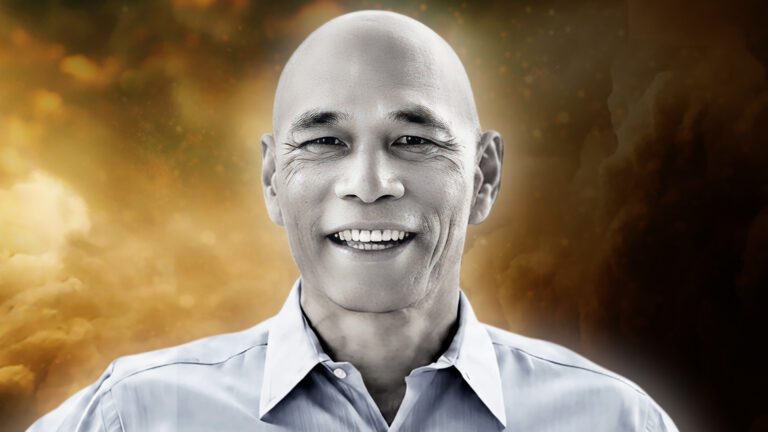
Dr. Raymond Moody says he grew up in a Southern home free of religion until, at 18, a story near the end of Plato’s Republic about a man believed dead and revived opened a door that led to a career of interviewing thousands of people who came close to death. In this Divine Encounters episode he tells Alex Ferrari what he says those people describe, and how it has shaped the way he sees life.
Key Takeaways
- Raymond says he grew up without religion, with a father who was a hardened surgeon and a military medic in the Pacific in World War Two.
- He says a story in Plato’s Republic about a man believed dead and resuscitated sparked his interest at 18, and that he later heard a psychiatry professor’s own close call with death.
- He says he has interviewed thousands of people from all over the world who went to the brink of death and came back.
- He describes 15 or 20 common elements across those accounts, and says some people report only a few while others report the whole picture.
- He says people describe a life review in which they feel the effect of their actions on others, and that the lesson is to learn to love.
- He describes people coming back with less fear of death, calling it a transition into another reality.
- He offers his own view that human life is like a story, and that learning continues beyond this life.
| Guest | Dr. Raymond Moody |
| Episode | Divine Encounters 100 |
| Background | Raised in the South; studied philosophy, then medicine and psychiatry; career as a forensic psychiatrist |
| What he has done | Interviewed thousands of people who went to the brink of death and came back |
| Common elements he describes | Leaving the body, a passageway, a loving light, relatives, a life review, a choice or a sending back |
| What people say they learned | The important thing is to learn to love |
| His own view | Life is like a story, and learning continues beyond it |
| Time away | Varies by account; he mentions a friend who was dead for 40 minutes according to her doctor |
A Southern Boyhood Without Religion
Alex opens with his usual question, and Raymond starts with where he came from. He was born and raised in the South. His father was a hardened surgeon and a military medic from the Pacific Theater in World War Two. Raymond gathers that his father was just turned off by religion, so Raymond grew up free of it. Nobody around him took the notion of an afterlife seriously.
That changed when he was 18. In his first year at the University of Virginia, he read Plato and immediately decided to major in philosophy. At the end of Plato’s Republic, he says, there is a story about a man who was believed dead and resuscitated, and Plato obviously took it seriously. The man told of an amazing experience.
From Plato to Thousands of Interviews
Three years later, Raymond met Dr. George Richie, a professor of psychiatry at the University of Virginia. Raymond heard his story of the same kind of thing, a close call with death. After that came a PhD in philosophy, an MD and a residency in psychiatry, then a career as a forensic psychiatrist.
Along the way, he says, he had the privilege of interviewing literally thousands of people from all over the world who went to the brink of death and came back with remarkable stories. For anyone new to this field, our complete guide to near-death experiences is a good starting point.
He also mentions his best friend of a lifetime, a presidential speechwriter named Milton Friedman, not the economist. On whether people believe or not, Raymond is plain: it doesn’t matter whether people wish or don’t wish this. It is or it isn’t.
Life as a Story
Raymond’s own view is that “human life is a story,” and that even consciousness is narrative directed. When something new happens, he says, the mind weaves it into your life story. He goes further and says that “this is the movies and the whole setup of life,” a hyper-future version of what Hollywood does.
He knows the objection. Taking the theater as a model for life looks like a logical fallacy, one he says Aristotle identified. But Raymond thinks it runs the other way: we have theater because life is like that. He points to his geriatric psychiatry work, where eminent, reflective older people told him that the older they got, the more they felt their life had been a story, a movie, a novel or a play.
Two Children and a Desert Island
Raymond says he learned something from his two children, whom he and his wife adopted at birth. They never went to church, and he says the family talked about the phone bill and what to watch, not life after death. Yet both of them independently recalled where they were before they came to the family.
He also describes a thought experiment he has put to people for about ten years. Imagine you had to be isolated on a desert island for ten years, with a plane full of food, water and medicine, plus a DVD player and 10,000 DVDs. Would you pick all comedies? Only three people ever said yes, and they had a little goofy look in their eyes. Most would take some tragedies too. And when alone watching a tragedy, would you cry? Sure, they say, because that is the experience of tragedy. Raymond thinks this is the setup we are in now.
God’s Toy, Roller Coasters and Illness
Raymond recalls that in his old age Plato wrote in The Laws that “We are God’s toy,” and that the best way to deal with life is to play it out. He pairs this with a picture: people waiting two hours in line for a roller coaster, knowing full well they will not want to be there when they are upside down at 90 miles an hour. Life, he says, is a bit like that.
When we are in it, we may be kicking and screaming, even if in a larger sense we set it up. He says he has been through some awful things, including a terrible illness recently that left him feeling terrible for a month. As a physician, he says, every illness is “an altered state of consciousness.” Even a cold pulls your awareness to the back of your throat. So illness, too, can be a learning experience.
A Family Resemblance Across Thousands of Cases
He says that when you look at thousands of cases, you see a family resemblance: about 15 or 20 common elements. Not everyone has the whole picture. One person may have one, two or three of them, another seven or eight, and some people have all of it. He says the experience seems to correlate nicely with how long the person was in cardiac arrest: the longer it goes on, the more complex the experience becomes.
People tell him they hear someone say they are dead or lost, and from their point of view, he hears versions of this line again and again: “I’ve never been so alive as when I heard that doctor say I was dead.” They describe it as something like waking up. Raymond is reporting what people tell him, and he says so throughout. Researchers have also tried to put structure around these accounts. Bruce Greyson published the 16-item NDE Scale in 1983, one way of describing which elements a person reports. Our glossary entry on near-death experience offers a short definition.
Leaving the Body, the Passage and the Light
Here is the sequence he describes, as people tell it. They withdraw from their body. They can see the resuscitation team below. They usually do not hear voices, but they understand what the doctors and nurses are thinking or communicating. At some point they realize they are dying.
They go through a passageway, like a hallway or a tunnel, and come out into what he calls “incredibly brilliant and warm and loving light.” They are taken up into comfort and peace. They see relatives and friends who have already passed away, who seem to be there to meet them.
The Panoramic Review and the One Question
Next, he says, comes a holographic, panoramic memory. Time stands still. Every action they have ever done is displayed all around them, and they re-witness it. People are not only seeing it from their own point of view; they are “empathically embedded in the consciousness of the person” they interacted with. If you were mean to someone, you feel that person’s pain and hurt. This is what the glossary calls a life review.
Many people, he says, describe being with a being of sheer light, with complete compassion and love. There are no words, but the thought comes: “what have you done with your life,” or “How have you learned to love.” Whatever people had been chasing, whether the creative buzz, money, power, fame or knowledge, what becomes clear in the panorama, he says, is that “the important thing is to learn to love.”
Choices, Unfinished Business and a Realm of Knowledge
How do people get back? Raymond says accounts differ. Some have no idea how they returned; they were in the light and then back in their body. Others are given a choice between staying in that perception and going back to the life they had been leading. Others are told they have to go back, because there are things left to finish, though they are not told what.
Beyond that, he says, some people see into an entire realm of existence that seems to rest on the search for knowledge, and beyond that a realm of sheer life. He recalls Dr. Richie’s vivid description: imagine Cal Tech, MIT, Harvard, Yale, Princeton and the Sorbonne squeezed into one place, with people in there pursuing knowledge. One part, Richie said, was like a library, with a section for the holy books of the universe.
Raymond adds a story of a dear friend he knew for twenty-something years. Her doctor told him she was dead for 40 minutes, and he says the way she came back was almost too much to believe.
Less Fear and an Illusion You Can Hold Lightly
Among the most common things people say on returning, Raymond hears: “I’m just not afraid of death.” He says they do not welcome pain in the process, but they say what we call death is “a transition into another reality.”
He also hears that this life is a kind of illusion, a projection, which he says he had worked out on his own. He knows how immersive life feels. He will have an insight that this is an illusory experience, and then the police knock on the door and he is pulled right back in. But he has reached a point where he can keep both streams going: knowing it is theatrical, while still being moved, pleased or frightened by it. To him, a big part of the point is to experience your life story, the love and the connections.
Taking the Learning Across
Raymond also thinks, though he says he is less sure of this one, that you can take the learning you do here across. He says many people describe the light being focusing on specific things they had been learning, with a thought that comes without words: that is very good, very interesting. People get the impression that “the process of knowledge is eternal.”
He closes with a hopeful note on the present. He believes we are at a moment in world history when “the spiritual dimension of life will sort of be rationally comprehensible.” Here, as always, we share his words as his view and his reports of what others say, not as medical claims. What it all means is still debated, and you are invited to hold it the way you hold any story that moves you.
Questions to Sit With
- Raymond says every action is felt from the other person’s side in a life review. Whose perspective would you most want to understand better today?
- If your life is, as he puts it, a kind of story, what chapter are you in, and what is the next scene asking of you?
- He says whatever people chase, what matters is learning to love. What have you been chasing lately?
This week, pick one conversation and, before you respond, ask yourself how the other person is feeling in it. Then respond to that.
Spiritual Takeaways
- Raymond says the lesson people bring back is to learn to love.
- He says people feel the effect of their actions on others during a life review.
- He describes less fear of death, and death as a transition into another reality.
- He suggests life can be held like a story you are living and watching at once.
- He says people describe learning as continuing beyond this life.
Please enjoy my conversation with Dr. Raymond Moody.
Guest Links: Connect With Dr. Raymond Moody
- Dr. Raymond Moody’s official site
- Life After Life by Raymond Moody on Amazon
- God Is Bigger Than the Bible on Amazon
- The Light Beyond on Amazon
- Full conversation with Dr. Raymond Moody
Listen to the Episode
- Watch this episode ad-free on Next Level Soul TV
- Download the MP3
- More episodes: Divine Encounters
- Listen to Divine Encounters on Apple Podcasts
- Listen to Divine Encounters on Spotify
Go Deeper with NLS Mastery: Beyond the Veil
A grounded exploration of what lies beyond death and how that understanding changes how we live. Julie Ryan teaches it in Beyond the Veil, part of NLS Mastery. Watch the course preview below.
Frequently Asked Questions
Who is Dr. Raymond Moody?
Dr. Raymond Moody is a philosopher, physician and psychiatrist who says he has interviewed thousands of people who went to the brink of death and came back. He talks with Alex Ferrari in this Divine Encounters episode.
What sparked Raymond’s interest in near-death experiences?
He says that at 18, in his first year at the University of Virginia, he read a story at the end of Plato’s Republic about a man believed dead and resuscitated, and later heard Dr. George Richie’s own story of a close call with death.
What common elements does Raymond describe?
He says there are about 15 or 20 common elements, including leaving the body, a passageway, a loving light, relatives who have passed, a life review, and a choice or sending back. Not everyone has every element, he says.
What does Raymond say about the life review?
He says people see every action they have ever done and feel it from the other person’s perspective as well as their own. If you were mean to someone, he says, you feel that person’s pain.
What do people say they learn, according to Raymond?
He says people tell him the important thing is to learn to love, whatever they had been chasing, such as money, power, fame or knowledge.
Does Raymond say people fear death less afterward?
Yes. He says a common report is that people are no longer afraid of death, and describe it as a transition into another reality, though they do not want pain in the process.
What is the desert island question Raymond asks?
He asks people to imagine being isolated for ten years with 10,000 DVDs. Almost nobody would choose only comedies, and most would take tragedies too, which Raymond uses to suggest why we might choose a life with difficulty in it.
What does Raymond mean when he says life is like a story?
He says human life is a story and even consciousness is narrative directed. He suggests life resembles theater because that is how life feels, especially as people grow older.
What did Dr. George Richie describe?
Raymond recalls Dr. Richie describing a realm of knowledge like many great universities in one place, with a library that included a section for the holy books of the universe.
What does Raymond say about his children?
He says he and his wife adopted both children at birth, and that they never talked about life after death at home, but both independently recalled where they were before they came to the family.
Does Next Level Soul say these accounts settle what happens after death?
Next Level Soul shares near-death experiences as lived experiences told in the person’s own words. Researchers continue to study and debate what they mean. Nothing here is medical advice or a medical claim.
Keep Exploring
- The complete guide to near-death experiences
- What a near-death experience is
- What a life review is
- A scientist on patterns across 1,700 near-death experiences
- A researcher on what thousands of near-death experiences revealed
- A physician on what 5,000 near-death experiences reveal
- A near-death experience researcher on the evidence
- How ancient civilizations described near-death experiences
- Browse more free masterclasses and the Divine Encounters podcast.
Follow Along with the Transcript
Alex Ferrari 0:00
Tell me what your life was like before you died.
Raymond Moody 0:08
I was born and raised in the south. My dad was a hardened surgeon, military medic from World War Two Pacific Theater. I gather that he was just kind of turned off by religion. So I grew up free of that anybody took the notion of an afterlife seriously until I was 18 years old in Plato my first year at the University of Virginia, and immediately decided to major in philosophy at the end of Plato's Republic. There's this story about a man who was believed dead and resuscitated, and Plato obviously took it seriously. Man told of this amazing experience. Three years later, I met Dr George Richie, who was a professor of psychiatry at University of Virginia, and I heard his story of the same thing, close call with death. Subsequently to that, through a PhD in philosophy and an MD and a residency in psychiatry. Career as a forensic psychiatrist, I had the wonderful privilege, as it is, Alex, of interviewing literally 1000s of people from all over the world who went to the brink of death and came back at these amazing stories I know in my life, many, many wonderful people, including my best friend of life, Milton Friedman, that not the economist, but presidential speech writer who didn't want there to be. I mean, it's wish fulfillment. It's just It doesn't matter whether people wish or don't wish this. It is or it isn't, regardless of I think that human life is a story, and even your consciousness is narrative directed when some new event happens to you in life, what do you do? You your mind automatically weaves it into their life story. So what I think, is this thing we're in is the hyper future version of what you guys do out there in Hollywood. In my opinion, I think this is the movies and the whole setup of life. You may say, Well, that's a simple logical fallacy, because what you're doing is you're taking one aspect of the human life, namely the theater, and projecting it out as a model for a home, and I understand that fallacy, which Aristotle identified. However, what I think is it happened the other way around. I think the reason why we reason we have the theater, is that just as I learned when in my Geriatric Psychiatry career, I got to talk to some eminent, celebrity, knowledgeable, refined, reflective people who just would go back and say, you know, Raymond, the older I get, the more the impression about an uncanny impression develops when I look back at my life. It has been a story or a movie or a novel or a play, whatever term they used. You know, we all know the story pisistratus, there in Athens and the chorus that have been going on for long, long time. So what I'm getting at is, I think this thing that we're in is kind of like theater, the way I gather, is just like, that's what people naturally come to as they grow older. This has been a kind of script or a story, and then as I gathered, you know, from my own way I put this together. I gather that you we die, then we go through some incomprehensible process, and then we're back on another story, as both of my kids have assured me, I don't, you know, I mean in terms I learned this from my two kids, because, you know, they never went to church. My wife and I don't talk about life after death. We talk about the phone bill was for dinner the movie, you know, so, but they both just independently recalled where they were before they came to us. We adopted both of them at birth. So I watched this on phone. And, you know, it's like I asked people for this for about 10 years, I've been observing this, I asked, let's suppose that you were diagnosed with a terrible infection that required that you be isolated all by yourself on a desert island for 10 years. And they could, they would send you over there in a cargo plane with plenty of room for all the food and water and medicine they're going to need for 10 years. But in addition, there's some extra room so they can send a DVD player, and let's say 10,000 DVDs. Ask people under that circumstance is, would you choose all comedies? And only three people have only said that they would, and they had a little goofy look in their eyes. But what I'm getting at is then I say, Well, would you take along some tragedies too, and they will sure, sure. And I said, Well, when you were all by yourself on that desert island watching that tragedy, would you be crying? And they say, Well, sure, because that's the experience of tragedy.
Raymond Moody 5:00
And I think this is the setup we're in now. It's like, I kind of the way I've put it together. You know, Plato, I was like, following on with what you're saying. In his old age, his last book was the laws, and in it, he said, We are God's toy. He began it by saying, if you think about it, for there's not much to a human life is not very important, and we are God's toy, and he said, and you're the best way of dealing with this life is just sort of play out. I see people all the time standing in line for a roller coaster, for example, with my daughter, who was not me, standing in line with her. People standing in line for two hours to get on a roller coaster, knowing full well that when they're upside down at 90 miles an hour, where they won't want to be there. And I think life is kind of that. What you know, I've been through some Gosh, awful, terrible things you mentioned. I've just been a terrible illness lately, and just a month I was feeling terrible. So the thing is that when we're in it, we might be kicking and screaming and protesting, even though, in a larger sense, we might have set it up. It's like I've come to do you see as a physician, is that every illness is a state of is an altered state of consciousness. Think about it. Every one of even having a cold, your consciousness goes to the back of your throat. See it from there. Every illness has its own peculiar alterations and consciousness. So illnesses can be a learning experience too. So while we're in here, it's just like the movie, too. I mean, I'm not much on horror movies. I'll go there with my daughter and my aunts over my eyes, but you know it's you choose to go see a horror movie. For one thing, they told me, Well, first of all, there is a family resemblance, and that if you look at 1000s of cases, you see about 15 or 20 common elements. But not everybody has the whole picture, and one person may have one or two or three of these things, or seven or eight. Some people have the whole picture, and it does seem to correlate very nicely with how long the person was in a state of cardiac arrest. That longer the cardiac arrest goes on, the more complex this experience becomes. But what people say is that at a certain point they may hear the doctor or nurse or somebody else say, Oh my God, he's dead. We've lost him, or worse, to that effect. But from their point of view, I hear people all the time say in one terms or another, I've never been so alive as when I heard that doctor say I was dead. Because people say it's kind of like waking up. They say, you withdraw from your body. You leave your body. You can see the resuscitation team scene going on down below. You don't hear voices, usually, but you can hear you can understand what the doctors and nurses or communicate or thinking really is what they say. At a certain point, you realize, oh, I'm dying or something, they proceed through a passageway of some sort, like a hallway or a tunnel, or come out on the other side into this incredibly brilliant and warm and loving light. They say, just taken up into comfort and peace. They say they see in spirit form, relatives or friends of theirs who have already passed away, who seemed to be there to meet them, and they undergo holographic panoramic memory, where they say that time stands still there in a timeless state and in a sort of hologram displayed all around them, they see every action they've ever done, and they re witness it, not just from the perspective they had they Were doing when they were doing the action, but they are also empathically embedded in the consciousness of the person with whom they're interacting. So you if you do something mean to somebody, then you feel that person's pain and hurt. And everybody goes out of this saying that obvious. Many people say that this is in a company with a being of sheer light to like, say, complete compassion and love, who can see this and is sort of helping them think about and they say, there are no words, but that it's the thought comes that, what have you done with your life, or How have you learned to love? Because they say whatever you had been chasing, like the creative buzz, like a friend of mine, their experiences and me too, you know, if or the people who are looking for money or power or fame or knowledge is where, you know, I'm chasing knowledge. But whatever anybody is chasing. They say that what comes clear in this panorama is that the important thing is to learn to love because they say that's just and then some people say, I have no idea how I got back I was in this light. Was just back in my body. Other people say they were given a choice that you can either perceive. With this, or you can go back to the life you've been leading. And yet, other people say you got to go back. There's things left to finish, but they're not told what it is. And then there are things beyond that. Some people say that they see into a realm, an entire realm of existence that seems to be predicated on the search for knowledge. And then beyond that, the realm of sheer life. The ones I sketched out, they're the most common ones that people say when they come back. They say, I'm just not afraid of death, not that they would want pain in the process, but rather that they say that to learn from their experience, that what we call death is a transition into another reality. You know, I had this friend of mine. I loved her dearly. I knew her 20 something years till she died. Her doctor told me, he said she was dead right for 40 minutes. And I mean, the way she came back, it was just, it's too much to believe. But what people say is that they're like, Here's George Richie's description. Was very graphic. He said that if you try to imagine Cal Tech and MIT and Harvard and Yale and Princeton and the Sorbonne and all of them squeezed into one place, he said you can't even begin to imagine this. But he said there are people in there who are pursuing knowledge. And George said that there was one aspect of this realm that he said you could compare it to a library. And he said he noticed that in one section of that library was dedicated, he said to the holy books of the universe, well, I wish he could be, you know, it's, and I've heard these same things. It's the another thing that people with these extremely in depth, that you see that this thing we're in is is kind of an illusion. It's like a projection, kind of which I've kind of figured out by myself. They say it becomes very clear. And, you know, it's like he thought we had an absolutely kind of duty insofar as we can think about it and see the illusionary quality that certainly is how life feels in breakfast when you're in the midst of it. It's immersive. I've gotten the point where I would have these little insights that, oh yeah, this is an illusionary experience, and then the police knock on the front door some terrible noise, so then you're immersed immediately in it again. But I've got to the point where I can keep the streams going, like I can, pretty much all the time, kind of cognize or realize that it's theatrical or illusory thing, and at the same time, be burped by it and pleased by it and frightened by it, and all the things, I think that a big part of it is to experience story your life story, and the love and the relationship and the interconnections that come. And then I also think, although I was not as sure of this one, but I do think that you can take the learning you make here, you can take that across what I understand from a lot of people. It's like a lot of people say that during these life reviews, that this being that they're with, sort of focuses in on some specific things where they've been learning, and even though there's no words, they say the thought comes that's very good, very interesting, that even after you come here, that will go on for eternity, as a lot of people say, you get the impression that the process of knowledge is eternal. And I do think that we are in a situation of world history right now where the spiritual dimension of life will sort of be rationally comprehensible.
Our Sponsors
- Next Level Soul TV: exclusive spiritual movies, series, audiobooks, courses and events. Get the app.
- Earthing.com: discover the science-based healing powers of earthing and grounding.
If you enjoyed today’s episode, watch and subscribe to Divine Encounters on YouTube.