Next Level Soul Podcast Episode 640
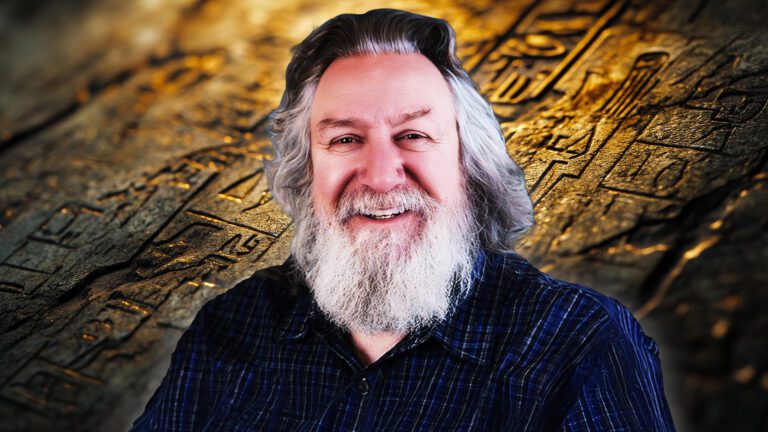
Matt LaCroix is a historian and author who researches ancient civilizations, consciousness and the cycles that shape our world. In this episode of the Next Level Soul Podcast, he talks about Atlantis in the ancient record, what he says Egypt inherited from an older epoch, sacred geometry, and why he thinks humanity stands at a turning point.
Key Takeaways
- Matt says: “We’re living on the ashes of civilizations that fell before us.”
- He says Atlantis appears in the historical record through writers like Plato and Plutarch, not only myth.
- He says ancient monuments reflect astronomy, engineering and sacred geometry.
- He says: “The story of Atlantis is ultimately the story of us, because civilizations fall when they forget who they are.”
- He sees cosmic cycles shaping consciousness and the rise and fall of civilization.
Who Is Matt LaCroix?
On today’s episode, we welcome Matt LaCroix, a historian and author. He shares that he has been working on new research that revolves around a very new angle on Atlantis.
History as Curated
Matt says history as we know it has been curated, shaped and trimmed by time and empire, and much of what we learned was designed to offer comfort rather than clarity. “We’re living on the ashes of civilizations that fell before us,” he says, and he says those civilizations left clues and warnings.
Atlantis in the Record
Matt describes Egypt as a thriving inheritance of knowledge passed down from an older epoch he links to Atlantis. He says the civilization is woven into the historical record by philosophers like Plato and Plutarch, and that priests of Egypt spoke of a great island beyond the Pillars of Hercules, destroyed in a sudden cataclysm. These were not metaphors, he says, but fragments of history preserved in mythic form.
The Ancients Were Not Primitive
Matt argues the ancients were astronomers, builders, engineers and spiritual seekers. He points to monuments aligned with the stars, designs mirroring cosmic patterns and structures built on sacred geometry. He also discusses geodesy, the study of cardinal alignments, and shares what he says is research from filming a documentary and investigating sites around the world, including eastern Turkey.
Cycles and Turning Points
Matt speaks of vast cosmic cycles that affect consciousness, the environment and the rise and fall of civilization. He says humanity today stands at a turning point similar to the one Atlantis faced, with old systems straining under their own corruption. These changes are not random chaos, he says, but part of a larger, older rhythm. He also shares his belief that Nikola Tesla may have stumbled upon something important.
Remembering Who We Are
Matt’s message is not nostalgia but an invitation to wake up from amnesia. “The story of Atlantis is ultimately the story of us, because civilizations fall when they forget who they are,” he says. The conversation carries a subtle optimism, he suggests, an invitation to reclaim consciousness, community and inner sovereignty, and he believes the ancient warnings were meant to guide us, not frighten us.
Spiritual Takeaways
- Question the story. Matt says history has been curated.
- Learn from the cycles. He says civilizations fall when they forget who they are.
- Reclaim sovereignty. He sees the ancient warnings as guidance, not fear.
Please enjoy my conversation with Matt LaCroix.
Guest Links: Connect with Matt LaCroix
- Matt LaCroix official site (The Stage of Time)
- Books by Matthew LaCroix
- His earlier visits: Episode 369, Ancient Spiritual Mysteries Revealed and Episode 473
Listen to the Episode
- Watch this episode ad-free on Next Level Soul TV
- Download the MP3
- More episodes: Next Level Soul Podcast
Frequently Asked Questions
Who is Matt LaCroix?
Matt LaCroix is a historian and author who researches ancient civilizations, consciousness and cosmic cycles.
What does he say about Atlantis?
He says Atlantis appears in the historical record through writers like Plato and Plutarch, and was a real civilization remembered in mythic form.
What does he say about ancient civilizations?
He argues they were astronomers, builders and engineers who understood sacred geometry and cosmic patterns.
What does he say about our time?
He says humanity stands at a turning point similar to the one Atlantis faced, and that civilizations fall when they forget who they are.
Where can I learn more about Matt LaCroix?
Visit thestageoftime.com, find him on Facebook and Instagram, or watch his episode on Next Level Soul TV.
Keep Exploring
- Explore all of our free masterclasses
- Browse more episodes of the Next Level Soul Podcast
Follow Along with the Transcript
Alex Ferrari 0:00
You told me a little bit that you've had some new discoveries in regards to Atlantis, and a new angle on Atlantis.
Matt Lacroix 0:06
Some new research that I've been doing that's really exciting, and it revolves into an angle of Atlantis that is very new. I am. All that has been, is and shall be. No mortal has lifted my veil. Remember one disaster, one flood, but there have been many, mostly of water and fire, and talks about the cyclical nature of destruction throughout our history and how civilizations rise and fall. We saw the same symbols, same knowledge. We're taking that now the next level by being able to have potential for very identifiable vitrification.
Alex Ferrari 1:02
Now, before we jump into this episode, if this conversation resonates with you, please like subscribe and share this with whoever you feel that needs to hear it. Your support helps us keep bringing this information out into the world and helps us awaken this planet. Thank you. I'd like to welcome back to the show, returning champion, Matt Lacroix, how you doing Matt?
Matt Lacroix 1:26
Hey, Alex, it's great you back. This is our third show. I think right over the last, years or something like that?
Alex Ferrari 1:32
Yeah man, this is our third show, brother. This is I always love talking to you. Man, you always have some new cool stuff to talk about. You are now International. Man of Mystery, you're part Indiana Jones, part James Bond, running around the world, filming for your new doc, a documentary and hopefully a documentary series afterwards. There's a lot of cool stuff that you got going on, and you've made a lot of cool discoveries. So we're gonna just kind of jump into it. Man, what you told me a little bit that you've had some new discoveries in regards to Atlantis, and a new angle on Atlantis. Can you kind of talk a little bit about that?
Matt Lacroix 2:05
Yeah, well, there's some new research that I've been doing that's really exciting, and it revolves into an angle of Atlantis that is very new. It's very new and but it's it's new, and it's important, because it changes this whole dialog. So let me just I'll lay that narrative down and so people understand, because people always love talking about Atlantis, and love all of this. So the problem here is that we have these two worlds that exist. The First World is the scholar world and the academic world in which they look at all of the stories of Atlantis based purely around Plato and around the stories of Solon and Socrates, and that for them, they look at and they say, Well, look, there's no, there's no definitive information relating to specifics in Egypt of those events, other than maybe it's loosely based on so Long's visit to Egypt, which they admit, right? So typically, as far as scholars are willing to admit, is that Solon did go to Egypt, you know, somewhere around 2000 years ago, and he did meet up with these different these different places, and got information. But they don't want to go any further than the rest of it is based on that idea of going to Egypt, and then the rest is an allegory. So that's where, that's one camp that, unfortunately, that's where we live in that world is that Plato made up the entire story of Atlantis based on allegorical Greek stories, and that the Egypt was Egypt part was just sort of like a fun addition to create the story in the atmosphere. Well, then you have the entire other camp and world of people that study Plato's work, you know, Timaeus and Critias and others. And they say Atlantis is completely real, and it's all based on truth and blah, blah, blah. And those worlds are really divided. They're really divided by not a lot that tethers them together. Now, that's where I think is so exciting about Plutarch. And now, of course, there's also Diodorus, for people who don't know. That's another really good source for discussing Atlantis as well. But the part in particular that's the most important, and these are Greek philosophers and historians, but the part that's the most important is regarding Plutarch. Now, if anybody wants to go down really cool rabbit hole, this is, I think, very new and something that needs to be flushed out and maybe talked about a lot by a lot more people. Like, for instance, I would love to get Randall Carlson in this discussion, because he's the one of the like the premier Atlantean Plutonian expert, like on Plato's work and everything, right? So I'm actually surprised that Randall hasn't talked about this more, but I want to, I would love to get a dialog going with him and ask him his opinions. Because here's the problem, Plato's work goes into Atlanta. This in great detail, but it doesn't go into a lot of details about the Egyptian visit, and that's why a lot of academics don't jump on it as being a literal truth, because it's so vague. It's like, oh, we met up with a some some priest in Egypt and then told him this huge story. And like, okay, that doesn't No, no, let's but let's dial it in for a minute. Imagine the entire basis of the Atlantean story for scholars being based on that idea that it's an allegory by Plato. But what if you bring some meat and some evidence to the story to maybe shift the entire narrative to not whether or not it actually existed, that story and those events, but how much of it was real, and that's the part that blurs the lines and gets really interesting. Because I basically, let me give you some some background, is that what Plutarch brings that Plato doesn't in several bodies of his work. So he's got a body called the life of Solon, and then he's got another another body that talks about ancient Egypt, and the whole set of chapters of it. So for those who don't know, Plutarch is very interesting figure in history. So he is a historian and a philosopher from from Greece. But his story seems to have almost vanished and disappeared amongst obscurity and amongst things that a lot of people are not really considering is real, and it's very strange to me, because Plutarch may very well have been the last Westerner, or at least person of highly educated Historian and Philosopher to ever visit Egypt before. It was essentially destroyed by groups like the Romans and others. And a lot of those temples were were like taken apart and dismantled and lost. And so Plutarch comes hundreds of years after so long, so so long came and visited in the whole story that we know of in the Timaeus and Critias. So Plutarch comes hundreds of years later, and he comes and visits Atlantis around, like, 1940 years ago or so, okay, so still a long time ago, and it's right before the Romans and others were starting to invade Egypt. And so he came in, and he visits all kinds of ancient temples and locations throughout Egypt. He is like an adventure and explorer, and he actually has this really rare view and information regarding the very end of the dynasties of the Egyptians. So what he says is fascinating. I actually have quote too that I will I will also read because it's I actually just came across some of this information recently during some of my studies. But basically what he provides in his books like the life of Solon, is he talks about how the story of Solon, but from a whole different angle, from actually meeting very specific temple priests. And so instead of being an allegorical, mysterious story that then wasn't real, from that point on, when we go to Plutarch, we find all kinds of details that we didn't have before. And he meets with two elder priests, and they're described as being the last line of ancient priests that knew very detailed knowledge of ancient lost civilization, knowledge timelines and information from so long before that it actually wasn't really known by that many people any longer. And there was a great meeting held in sase at a temple called the Temple of neath. Now, neath is the Egyptian version of what we think of as Athena in ancient Greece. And in this temple, there was a great meeting by Solon. And this is where so for those who know, I'm not talking about Plutarch actually meeting them, I'm talking about him going there later and then finding out other aspects of the story. So that's what ended up happening, is that he goes and meets with the same the same temple, and assumingly, like the whole line that's still new, all of that knowledge and information before it was destroyed, and he ended up finding out details that essentially, Plato didn't have or didn't put in his stories. Maybe, right, if you give me an example, the environment in which Plato lived during that time, his mentor, his great father and mentor, taught him the whole story. His name was Socrates, for many who don't know, he was killed by the state and poisoned and murdered, and so that really scared Plato, and he didn't, I think he was very careful in what he included. So I don't know if that's the reason he didn't or he just didn't know it, and it was information that was part of other lineage, lineages like Critias the elder and other groups that came before. But what's amazing is that Plutarch gives us the names, the actual names, of the two temple priests that. That someone meets up with, okay? And this is not really talked about, because again, now you're getting into fact, and now you're getting into a real world. And I think it's very scary for academics and scholars to go in and even and even entertain this idea that these things are true, because it then blurs that line where you say, well, if these temple priests are real. Then if the story they're telling is real, then how much of that is the whole thing real? And so for people who don't know, he meets up with a temple priest from sais, who's who's from that temple. His name is Sonchis, so it's S, O, N, C, H, I, S, if anybody's curious, to look into that figure. Now, the other one that's never talked about it, I've never actually even heard it mentioned before, is very bizarre. The other figure that he runs into is known as sanofis of Heliopolis. So Heliopolis is an ancient Egyptian city that's down, down to the south, and they're on the delta of Sais and they meet with both of these temple priests. Well, he then goes on, and I'll pull it up, because it's it's absolutely fascinating. He then goes on to write down one of the inscriptions that's left in the temple of neath and at SAIS, and he records it. And I don't know if this has ever been said before, on on a podcast, but I want to bring back something ancient that I think has somewhat been forgotten and lost, that needs to be mentioned again. And it's a quote that comes from the temple of neath, and it's very beautiful again. Remember, the temple of sais sais is considered a fake, not a real place. Scholars don't even think that that was a real temple in a real set of events. So now we're going and crossing those lines. And it says in the temple, inscribed in the walls, it says, I am, all that has been, is and shall be. No mortal has lifted my veil. And that's from. It's beautiful, but that's what's from inside that temple. That's not supposed to be a real temple, and that now we're so we're getting into literalism and a real place where real events transpired, and Plutarch goes on to provide all kinds of deep details of ancient Egypt during that time period, during that time period of what they were doing, and it's, it's described as the Temple of Sais, has the entire story of Atlantis and ancient Greece inside it, and that they read, and that's where the whole story comes from. But essentially, what it what we're doing, Alex, is that when we combine Plato with Plutarch and Diodorus. It gives us a potential timeline in an entirely new view and understanding into that time period in history and the entire story of Atlantis.
Alex Ferrari 12:52
So did it didn't change the story of Atlantis. It just it added more credibility, or more direct lines, or proof that this is an actual, real story.
Matt Lacroix 13:04
Yeah, it proves that the story of how the story that was conveyed to them through the means of the temple and the people that were involved, like, once you have real people mentioned, and then all of a sudden becomes real, because now it's not just, oh, we met with some hypothetical temple priests like somewhere at a temple. Now we actually know their names. We know where they were from. We know the places he visited. We know the walls and the he saw and ascribed them. And then we know all the details about about what Solon was told by those priests about, you know, you so long, he says. And I'm paraphrasing, remember, one disaster, one flood, but there have been many, mostly of water and fire, and talks about the cyclical nature of destruction throughout our history and how civilizations rise and fall. That's what the temple priests are protecting in that in that temple, that's what their whole, their whole, their whole point of being is.
Alex Ferrari 13:59
Are you familiar with the book the dweller of two planets? No, not yet. The Book of the dweller of two planets is a channeled work from the late 1800s of some kid in the middle of the country, you know, second grade education worked the fields, all of a sudden, starts writing a massive channeled book about things that he would never, ever be exposed to, and talking about Atlantis through philos the Tibetan. And it's actually really fascinating how it connects to what we're talking about, because he's giving details in this channeled work about things that he just would have never had access to. There was no Internet, there was no TV, there was nothing. And an uneducated boy started to just write. And this book is a fairly large a very dense book. You'd enjoy it. You enjoy man. You love dense books. But that's a book. If you haven't read it, it's something that you should probably look into. It's called the dweller of two planets because it does reinforce a lot of Plato's story, but gives tremendous amount of details of the fall of like, the years of the fall of Atlantis. What is your you know? What is your vibe about Atlantis? In your personal opinion, you know, what do you think actually happened there? You know, from your own studies, from your own thing, what? Because it's such a fantastical idea that there was an advanced civilization before us, and I believe it, I makes, makes all the sense in the world to me that we're cyclical and all that stuff. But what's your vibe on it?
Matt Lacroix 15:38
So that's actually the entire, I wouldn't say, purpose, but the overall goal of what we did with the filming of the documentary, and then investigating all these places around the world and following the same symbols, the same stonework, the same things that are connecting, that was the crusade that, you know, I'm on still, and what we that we have done a lot of what we wanted to accomplish. But in that search, what was unequivocal, what we saw that was undeniable, was that there was a global connection. And I think that's the most important thing to get across here, is that, you know, we saw the same symbols, same knowledge, and in Turkey, in von Turkey, in stone, and then the same stonework, same symbols in Peru, and then in Bolivia, Bolivia, and then in Cambodia. And then it goes on and on, and it's it's in I also there's other symbols and other connections from places like, for instance, Gobekli Tepe, we could talk about on one of the pillars that never gets discussed, that also has connections to Egypt, and then connections back to Bolivia. So what we're seeing is this mix and crossing of this civilization that seems to have reached incredible heights. And I mean, everyone's asking like looking for Atlantis. Atlantis, where is it? Well, it may be right in front of our eyes. It may be the remnants of whatever could survive of some global civilization, and that may have been what was described by them in that not necessarily referring to the specific city that Plato was talking about with, with circular rings maybe up in the Azores. What we're talking about is a civilization and a city. So it's it's describing locations of subcontinents that were maybe like the heart of something, but the actual place itself may have represented more of a global type of look and that that's really a very serious area that we're considering and looking into, is whether or not what this global civilization that We're seeing emerge out of these disasters, and a new timeline that I'm helping for, just like a 50,000 year timeline, but that what we're looking at is whether or not that emergence of that around the world is Atlantis, and that's the that's the hardest thing to wrap our heads around, because the timeline that I'm putting forth would give plenty of time for something like that to develop, and that's
Alex Ferrari 18:04
What's your timeline? What's the timeline?
Matt Lacroix 18:07
Well, my my timeline is a very detailed timeline, incorporating everything from Star alignments in ancient Egypt and alignments of the sphinx all the way through processional understandings to in utilizing geodesy, which is basically the alignments of where things were with cardinal points. But also, more importantly, using events like ancient writings talking about catastrophes, lining them up with with ice cores from either Greenland or Antarctica. But also known geometric magnetic excursion events like the Adams event from 41,000 years ago, because of really cool data from volcanoes and quarry trees out of New Zealand that fell and were basically preserved, we're getting a snapshot now at a world in which there are these cyclical events or disasters that seem to occur. Now the question is, how often are those, is that, is that cycle? How often do they, do they come is it based on, like, just the Ice Age cycles, like we see, which seems to be, like, every 100,000 years or something? Or are there cycles within cycles? So that's you start to blow your mind. You're like, Okay, so there's, like, this big cycle for Ice Age, but ice ages, but then there's also cycles for like coronal mass ejections from the sun, so Sun cycles and all these things. And that's where I've been putting together this complex timeline that's incorporating all of this that includes what I think is the emergence of what we think of as Atlantis, and it basically follows the story of us, us having an entire chapter, or chapters in which they were resets and they were wiped out.
Alex Ferrari 19:46
So when did you in your timeline? When do you think Atlantis started to come up as a civilization?
Matt Lacroix 19:52
I like some of the information garnered from Edgar Cayce. I mean, you brought you, brought up channeling. I think Edgar Cayce is the father of all of them. I think everybody would agree. Three, I think there's some really good information gleaned from that. And whether or not it doesn't exactly fit, it's pretty close. So it's pretty close to what I'm looking at, and that variability is relatively minor. It can make as I'm looking at the emergence of Atlantis as something, something around you know, beyond 20,000 years ago. Now that was to put some kind of a date on that, to more, more appropriately label that, I would say, Atlantis. You know, we know it was destroyed when, right, because of that, with data is very firmly established from from Egypt and so on, and Plato that Atlantis was destroyed 11,600 years ago. But when did it when did it merge? Right? That's the million dollar question. And I, I believe that it emerged. You know, somewhere around between 40 and 20,000 years ago, is where I'm is, is where I'm looking at with my information understanding. Because we get some really interesting information out of Egypt from a concept called zepte, and the whole idea of looking at processional ages in Egypt, and that was one of the use the dating methods that I used, using the great law of the great late John Anthony West, which was quite a pioneer in this whole field. In fact, some would suggest he was the father of starting all alternative research into ancient civilizations. We've lost history.
Alex Ferrari 21:26
Wow. Let me ask you, Egypt keeps coming up. Anytime we talk about anything in the ancient world, Egypt seems to be this hub. What is your explanation or feeling of why Egypt is such a pivotal area of, you know, has, obviously, has the Great Pyramid and the Pyramids of Giza, which are, you know, there's nothing in the world like it. There are other versions of it, like in Mexico and and Peru and so many other places in Cambodia, pyramids, but they're, yeah, but so there's something special about that area. What is your feeling about that?
Matt Lacroix 22:04
Well, the first thing we know is there's some really aspect, interesting aspects of what's called geodesy. So if anyone hasn't heard of geodesy, it's basically looking at Cardinal alignments positions on the earth, different aspects that we may be very important, Star alignments for why someone want to build in a specific spot. So it's called geodesy. And so you find out that Egypt is found in what's called the 30th parallel. Now that area is we also have the 40th parallel above it, and they seem to have these relationships between why civilizations want to build there. Now Egypt, though, is really interesting because it's in the center of the world in terms of like land mass. So if you were to draw a center, it's right in the very center, and it seems to have a very interesting relationship between its location and the Nile River as being a very important symbolic aspect of, not only, of the constellation of Orion that's embodied into into the river itself as like a river of the of the cosmos, but like a star map. So it's like above and below. So the law of correspondence is why, I think it's also another reason why they built there is that if you were to take the stars above with the Orion's belt, and you look into the whole connection with astrology, even like constellations nearby, like Eridanus, with ancient Mesopotamia next to with Eridu, there may be a direct relationship between these ancient cultures mirroring and creating a synergy between the sky and the earth, and that the Egypt may be that synergy that represents Orion itself, which is incredibly important, and we know that there's Already a connection. When we look at the King's Chamber, the masculine energy of Egypt, that sacred archetype that's very important to understand, the archetype of divine masculine and divine feminine. But we know that the divine masculine points towards Orion, right? And then we know that the feminine, the Queen's Chamber, as it's called, points towards Sirius, which is considered a feminine star. So it's just very interesting how this idea that there, that there's no randomness to it, and that it's very specific for those locations on the earth, which then blows your mind to think how these ancient cultures could have known those things and did those things the way they did. I don't think we should ever underestimate what they what their knowledge was an understanding. I think in many ways, we maybe like children compared to them,
Alex Ferrari 24:27
Yeah, because everyone just looks at, oh, well, they don't have iPhones, so obviously they're not advanced, but it's just, we're looking at the in the past with our lens of today. But they could have had technologies that were so far beyond what we understood
Matt Lacroix 24:40
And levels of consciousness, no, so not just technology, levels of consciousness and energy and the abilities that they may have had that we are like shadows of our former self, basically.
Alex Ferrari 24:51
And when you're saying also consciousness to be able to achieve or to be able to access the information to create advanced technologies and advance you know. Know that kind of stuff, you need to have a higher level of consciousness to be aware, to be able to even download this information or get access to it. Because I always say, like if, if Alexander the Great had a machine gun, well, it would have been over much quicker than it was, but that at that time, their consciousness was so low that they really shouldn't have been given access to that kind of information, or an atomic bomb for that matter, even going that's true.
Matt Lacroix 25:28
It's like there's like gatekeepers that seem to be controlling the the levels of what we can obtain based on what are, what we've proven, in terms of who we are, right? Because if possibilities like you're not going to give right, you're not going to give Alexander the Great a gun, a huge machine gun, because what is he gonna do with it? You're right,
Alex Ferrari 25:45
Right, right! Like, if the Civil War, if the north and the south both had atom bombs, what would have happened to us? Like they would have used them.
Matt Lacroix 25:54
I agree
Alex Ferrari 25:58
So it's, and it's, that's the thing. So there is, seems, I always say to people, there is guardrails. There seems to be guardrails up on us, like we're not going to destroy ourselves, because that would ruin the game. Yes, that we're all it would definitely ruin the game. So with all of the connections that you're finding across the world, what is your explanation of why there are these connections in societies and cultures that had nothing to do, technically, had nothing to do with each other. So, like, obviously, the biggest one is, you know, Mesoamerica and Egypt, like, they shouldn't have been able to connect to each other, because, according to the mainstream, we didn't see each other for you know, up until whatever the year was that Christopher Columbus sailed the ocean blue, if you will, kind of think so. What? What is your reasoning? What do you think is the reasoning that all of these cultures, not just those two cultures, but Cambodia and all these other and Japan and all these other place, China has these pyramids and all these connections.
Matt Lacroix 27:03
Again, it's that, it's that global connection. Again, I think there was a dissemination of information at a certain time, which is what I've been track, tracking and tracing to the lake van region, which is where I believe that was lowered. That's something then spread out. And I've been mapping and tracing their path based on other locations and temples that are in association with them. And you can see like a road map. Oh, so they went this far northwest, they went this far east, you know, where were they going? And all of a sudden, things pop up in other places they it's like they were in they were given very, very powerful and important knowledge. And their their responsibility was to then travel around the world and create nodal points of it in civilizations, and then move on and then just leave them behind for a civilization to watch over and manage. And a lot of those civilizations that were managing them may not have originally built them, and that's the most mysterious thing, is that some of these may have just been the remnants and ancestral remnants and echoes of far older and more ancient cultures, and they're just still there, living there. But it doesn't mean they had anything to do with them. I think great examples of that is like are, like the Aztecs and others, and Maya and other, you know, even like the Inca. A lot of people don't know that the Inca were only around less than 400 years but yet they're being credited with creating some of the greatest megalithic stone temples and structures that we've ever the world has ever seen. But that doesn't make sense, because we know their capabilities were so limited, and that's what we see a lot of places around the world, with the dynastic Egyptians and even cultures like the Romans had extreme limitation limitations, like they reach a place like Baalbek Lebanon. They were astounded by what they saw. They found blocks there that were over, you know, there were hundreds and hundreds of 1000s of pounds. It was like astounding to them, these massive, multi ton stones that are still some of the largest in the world. And instead of moving them, they left them all half cut out of their quarries and let and half worked, and they built just their own structures and coliseums right on top of them. And then they were given credit for building Baalbek Levitan with the Temple of Jupiter. But we know that they never created the stones underneath and the structures. And so that that tell, that tell, telltale sign we see all around the world. But the most fascinating thing Alex is, regarding it, taking it back to to Atlantis, is that in each one of these examples, whether or not it's Ancient Egypt, like in the Aswan quarry, where they were taking out the largest obelisk ever been, ever made, by far, well or you go to the Moai in Easter Island, where they were in the process of taking out the biggest Moai by three times they've ever been done. It was just about to come out of the host rock go all the way across the world to, for instance, in China, in the Yang Shen quarry. They were about to move a block that was like 100 tons big. Biggest that the world has ever seen. What happened in all those cases, every one of those examples, the work suddenly stopped. None of those things made it out of their host stone. And then this the civilization that was building. It just disappeared. We know that it means that they had reached the height of their sophistication before that happened, because they were the largest projects they had ever taken on collectively. So that's really impressive and telling, because it means that whatever happened was sudden and that they weren't able to do a lot to plan around it or avoid it. And two, that it's it completely stopped any capability of continuing anything in the future. And that's a pretty mind blowing thing to consider, is that, like our civilization, imagine we were hit by the events that they were, and we scrambled to try to protect whatever we can. But all that remains, it's it like the only thing that remains is two things, the stonework in our churches and our capital buildings and such, and then some legacy of traditions and stories that get passed down by survivors. That's it. Everything else is gone. Glass, metal, brick, everything else is gone. Digital, everything paper, everything we ever did is like wiped out, and the memory of that is gone. That may have very well been what it was like with Atlantis. Whatever technologies, they will figure it out, they seem very different than we would, than we have. They seem very energy based, very conscious based. And like you said, their entire civilization seemed to be based on this world civilization, from what they built and the symbols they left behind the knowledge they had. They seem to be scholars and masters and almost like magicians of energy and consciousness, whereas we are warmongers and violent and destructive and deceitful.
Alex Ferrari 31:47
Yeah, I mean magicians. I mean we, if you show this to a tribesman and take a picture of it somewhere in Africa, let's say that they've never seen one of these before, and you take a picture of them, and you show them the picture. We're magicians. So magic seems to be magical to the uninitiated in many ways, and that's
Matt Lacroix 32:08
What you're talking about, the magic, though, if, what if one of those people, then also somehow, with his mind, lifted like a stone off the ground.
Alex Ferrari 32:15
Well, now we're in Jedi world, and that's fine. I love Jedi. That's no but then we're in a whole other yogic power. Is all that kind of stuff as well, which is just another higher level of consciousness, which is, which is pretty fascinating. So with Atlantis, let me see, I'm losing my train of thought here. Well, let me, let me go back to Lake Vaughn. You mentioned Lake Vaughn. What is, where is Lake Vaughn? And what is the significance of Lake Vaughn? Because in your documentary, documentary, you are down there. You're dived everything. What is this?
Matt Lacroix 32:50
So in eastern Turkey, it's part of the world that nobody really knows about. And it's actually funny, because a lot of we just did a tour there. Very successful first tour. It was amazing. And one of the things we pride ourselves on is you can actually find real artifacts, and somebody did, and subsequently it ended up in a museum. So very exciting. But in eastern Turkey, in a place that most of the world doesn't know about, are a lot of new excavations, new discoveries, and then things that have been missed a little bit because of how they've been categorized, that often gets overshadowed by things like Gobekli Tepe or Egypt or Peru and Bolivia. It doesn't really get no it's not really talked about or known, but I consider it to be like Ground Zero, an origin point. And so when I started doing and you remember two years ago, when I first did the show with you, what I was talking about on there was the ancient connection I had found back to Sumer, back to the old story of the Noah figure in zayasudra, and that whole connection to the Ararat region, that was where a lot of things blossomed because of a discovery known as the Babylonian map of the world. And we've talked about that, but I just, I'll bring it up. It's because in the 90s, there was a piece of that it's an ancient map. It's an ancient tablet that basically is the oldest map in the world in existence. It came out of Babylon, and it has a depiction of circles with triangles coming off it, and then some writing. And for a long time, they didn't really understand what it all meant, because one of the pieces was broken, and they didn't know how it fit in. In the 90s, there was an intern, a woman, working in the British Museum with Irving Finkel, and she found that missing piece, they subsequently fitted in. And they were able to translate the whole thing, and they found that it described that story of the landing of an ark, which really was in the tablets, especially if anybody really wants to understand it's one of the it's probably the most important single story in Mesopotamian tablets, besides the creation of mankind. So the two most discussed things in tablets, whether or not it's Sumerian, Akkadian, Assyrian, Babylonian, they. All have versions of cuneiform tablets and stories. The most important two of them are, of course, the creation of man and this deluge destructive event in which the Zaire sutra Noah figure survived. And so that map, the Babylonian map of the world, when they cracked it, gave the location of where that occurred, like a tourist map. So when I was up there trying to understand the whole thing and investigating nearby lake Vaughan, it's where I uncovered and fell into a huge rabbit hole. And I mean, when I'm talking about huge rabbit hole, I mean what seemed to unlock every every key or every lock, I should say, to an understanding of what we're we're trying to piece together, like, for instance, let's give a figure like Graham Hancock does done a lot of pivotal work in this area. He's definitely been a trailblazer. A lot of props to him. You bring up something like Peru and Bolivia and Egypt and Southeast Asia, and you say, how does all that connect? Well, this is how I believe that connects. This is taking that and saying, let's put together a timeline and origin point for where all of this seems to have originated from, by using the same symbols, the same stonework and the same teachings that then spread around the world as nodal points, and we can trace them back to this point. And so when I came across these sites that had all those symbols and had all that information, all of these incredible connections, I formed a team with experts from around the world, including like Dr Robert shock and other very high profile geologists and academics and archeologists too. And we have a whole host of people that joined, and we went to all these locations I had identified, and we investigated them to find those connections. And we found profound things. We found incredible things, like dating evidence that we may be able to finally use in conjunction with, like I mentioned, with John Anthony West and when he brought Robert shock in the 90s to Egypt with the water erosion versus wind erosion of the sphinx enclosure. We're taking that now the next level by being able to have potential for very identifiable vitrification on some of the blocks that we know are from that culture, which is basically like melted glass obsidian. And Dr Robert Shakim, that was one of the major reasons he came and agreed to join the team, was because it's one of his top theories, is that this civilization, I agree, and that's what I'm also investigating, is that a CME event, a coral mass ejection event, blasted the earth during the end of the last ice age and basically destroyed this global civilization. And finding this vitrification that may be some of the best vitrification evidence in the world, and we found it at Kev calacity, so I brought him there for that.
Alex Ferrari 37:56
So you're talking about, is it this, like the Younger Dryas kind of thing?
Matt Lacroix 38:00
So we're talking about between. It's a combination of somewhere between the older, older Dryas and Younger Dryas. A lot of people don't know that the Younger Dryas was actually just one event during that time period. In fact, there was one that may have been even more destructive, called the older Dryas at 14,500 years ago. So the Younger Dryas ended 11,600 years ago. It was probably at its height around, you know, 12,000 years ago, say, but these two events in conjunction seem to have direct relationships. So it's like you can't talk about the older dryas without talking about the Younger Dryas, and vice versa. So which one of those events, the series of at least three major events during that over a 1700 year period or so, or 2000 year period, we don't know that's obviously something we're trying to dial in. But I brought Robert Pofor, primarily for that, and then investigate everything else we had and so on this one particular what's called a bob relief. It's a giant basalt cut block that weighs, like 50 tons. It's absolutely incredible. On the it's all broken on the sides, but the top still has a perfectly smooth cut where they carved it right. And that's not argued, because you can see all the ones that are exactly like it that are broken in the museum down below. But when we identified and knew that, and I found vitrification two years ago when I was doing a scouting trip there. So I brought Robert out there to investigate, and he hiked up with us, and he went out. He actually went there twice with me. He went out, and he went to this, these boulders, like these blocks that have been cut, and I showed him all the vitrification, but specifically this one, that's that massive block, and it actually has the basalt, which is a volcanic had very hard stone. It actually has melted into a glass on the on the surface level. And so when he saw that, you know, he confirmed that it was vitrification. And it was a very big deal, because vitrification can only occur, Alex and very specific. Intervals and moments in history. When you have an extreme event, it's not an everyday event. In fact, lightning can't really do this either. It's something that's more like a ton of lightning bolts all together in one focused interval area. It's related to lightning very Zeus like, very Zeus black, exactly, and so when we found that that was one of the pieces of dating evidence that we're using, and there's others that are far more even exciting than that, that are related to that region, when we were doing that, that we're exploring, and I'm also, in conjunction, writing my most important new the new book, I'm like 60% through or so that highlights and lays this all out, the whole thing so.
Alex Ferrari 40:44
When you were mentioning before that, that there's this global civilization, arguably around the Atlantean time, and then this event happens, and whatever's it's why it's wiped out, and whoever's survives is these kind of stories. And you were saying that for people watching, you know, it's not that far fetched, because we as a civilization have already put away our knowledge. There's that seed bank in like, was it Norway or something like that? There's a giant inside of a mountain somewhere. There's no reason to say that we won't find that treasure trove somewhere when the time is right for us to find something under the Sphinx paw? Sure? Why not? Or, you know, or is there stuff underneath the Great Pyramid, as the Italian crew that took those satellite pictures are now starting to discover when the time is right we will find those things. But it's not that far fetched, because we are actually doing that right now. So if tomorrow the same, younger, driest event or older dries event happened and we wiped everything out, there would still be remnants of our knowledge and technology safe in mountains somewhere, you know, God knows the US has a bunch of bases inside of mountains. If we do, yeah, that would survive. That would survive all of this stuff. And if someone happened to find it in 500 years, 1000 years, where, because of where they're placed, it could survive without power?
Matt Lacroix 42:22
I agree.
Alex Ferrari 42:22
Yeah. So it's not that far fetched. It's not that far fetched what you're talking.
Matt Lacroix 42:26
No, and that's brings up a good point, is that maybe we do have more we could leave behind. I mean, more, let's say what is more? Are we actually leaving behind as much knowledge? Probably not, but we're leaving behind things like seeds and valuable things that are necessary for the restarting of a civilization. So it's interesting that we would actually have different things that we would leave now let's go over. Let's mention the the elephant in the room, though, yes, everything is cyclical. We if we look at cycles, all you have to do is look, anybody that wants to challenge me on this really easy just look at Antarctic ice cores from Vostok, Antarctica. Okay, you're going to look at the last, what you're going to look as 450,000 years. What you're going to see is a beautiful, super, super mirrored, like exact cycle of Rise and Falls of temperatures and cyclical ice ages that go on like consistently every about 100,000 years. It's not whether or not we live in cycles, it's whether or not how long those cycles are. Now, according to hermeticism, the nature of everything is cycles, including us and civilization, and ultimately, someday, in the future, we will be destroyed. It's not a question about what about if? It's more of a question about when, and that's not a fear based statement. It may be 20,000 years from now, and we 100,000 will reach who knows what I'm that's not that wasn't meant to be a fear based system. But nothing is permanent. That's the nature of the third dimensional reality. The physical reality is that nothing is ever permanent. It will always eventually die and be lost. But however, what this civilization seemed to leave behind was the reason why it's so important. Instead of leaving behind symbols that showing them fighting with wars and becoming powerful empires, it's basically the opposite. Is that we see no sign of that. We see no evidence of that, which is a problem Alex, because if you if little Alex goes to school when he's a kid and he goes to learn about everything, right, about geography, about philosophy, about the human story, all of that. He's going to learn that we emerged 6500 years ago from the city of Iraq. That's what's that's what it states, even though that's not accurate. I mean, Iraq was 6500 years ago, but we could go into that. Is going to learn that that occurred. And then after that point, during the during that rise of the Assyrian and Akkadian empires, you then saw empires around the world just rise up like like the Babylonians, the Medes culture, the Ottoman Empires, the Roman Empires, endlessly over and over again, you'll learn that the human story is integral with us, creating our civilizations that were based on being empires. Yeah, they had agriculture, but they were empire based, which means we were war based. That defined the entire existence of how we saw ourselves with like conquering our world around us, survival the fittest and just being smart and whoever can conquer can can dominate. Well, the problem is that what we're looking at right now with these lost civilizations, and the evidence of these sites and these structures and what they left behind is no evidence that that ever existed. So we could be looking at a completely fundamental way to look at humanity that will radically shift everything we think we know about who we are, and I mean, on a rippling effect that then would show be like, Well, what was the mentality of that culture? What did they value? What was what was their what was their language? What were they interested in leaving behind? How did that define what their culture was, what was their capabilities? What were they? What were they doing with their time? And if people were to do that and incorporate a lot of what we're trying to show in the book, in the documentary, they would realize that we are a very poor shadow of our former selves, and that we would be completely different than we are now. And you're seeing those cracks and those things emerge with me. You do shows all the time. You see the world opening up to higher, conscious places and spirituality and energy. Yes, we're finally getting back to that. But what if it's so much more grand and deep than even that, you know? And that's what we may find
Alex Ferrari 46:58
If we survive as a species, let's say for the next 500 years, okay, which is in the blink of even the even in the mainstream idea that we were, we have merged 6500 years BC, if you will. So 8500 years ago. Let's get, give or take, which is BS, because Gobekli Tepe is older. But that's another conversation among other among other sites that are older. But let's say it's just that what we've been able to accomplish in the last 150 years, 160 years is so monumental, yes, and so fast, it's insane. So if we kept just on that trajectory 100 years from now, just 100 where would our if we haven't destroyed each other? Where is the technology? Yeah, where is the technology going to be? And are we 500 years from now? Where is the technology be? Are we going to be a multi planetary species? Are we going to be able to create a technology that would help us survive any cataclysms that does happen to have to happen as this planet? What do you think?
Matt Lacroix 48:07
That's the ultimate question.So we may have an advantage that our ancient ancestors never had, and so that advantage is having certain types of technology that I don't think they had. And I think that what we're looking at is what we become, is the ultimate hybrid of both worlds. So their world, I think, was very based on a lot of different principles and understandings and things than we are. So I think they were very connected to the earth. They were very connected to knowing specific types of stones that had resonance to them, that had very specific mineral structures that had fields and connections and arc you could just by using certain architectural means, could create something that we don't even understand today. Look without a doubt, we see that in the temples and pyramids using potentially collecting starlight and connecting to all these things, it's wild to consider that they may have had a form of technology that was much more based on Consciousness and based on an organic type of technology that could do all kinds of powerful things, but it had its limitations, right? So, if you're if you have a CME event that's about to blast the earth, or something that's going to hit maybe that's not enough. Maybe you can't save it with that, you know. And so what do we have? Well, we have all this fun tech that if we're able to become moral enough and we learn the lessons and grow enough to be highly, highly conscious and become that hybrid of the two, maybe we can use that technology in ways that they never could have imagined to continue that acceleration.
Alex Ferrari 49:40
Remind me, I don't know you're not a geologist, but I have a lot of background now, right? So, so fossil fuels, oil and coal, yeah, basically, yeah, carbon based fossil fuels, that takes millions of years to form? Am I right? Okay, so if it takes millions of years to form. Form. That means that societies, let's say Atlantis, or prior societies to that did not use fossil fuels at the level that, if at all level, maybe some fire at the beginning, and so on and so forth. But they didn't drill and grab all this stuff, because that is the basis of our entire civilization.
Matt Lacroix 50:20
They were not an industrial civilization,
Alex Ferrari 50:23
Correct! Exactly. So then they were using technologies and power sources that are far beyond our understanding. Does that make sense?
Matt Lacroix 50:30
Yes, and you so obviously, the the big thing that comes to that, I'm sure everyone is thinking that right now, is Nikola Tesla, you know, I firmly believe that he's he stumbled upon their technology by studying ancient Egypt with the fact that obelisk very much acts like a radio antenna, and the fact that pyramids have certain types of energy that can that can come through magnetism and through different things with even like water properties, through their aquifer systems and such, he stumbled upon free energy. Without a doubt, there's no arguing whether or not Nikola Tesla stumbled upon free energy. Anybody that looks into it and studies it knows that what he tapped into is an understanding of what's called magnetism. So the Earth is a giant, spinning ball of iron, and it creates a magnetic field. That magnetic field is what protects the earth and creates that balance between the north and south pole. When that magnetic field is disrupted, it's when all hell breaks loose with these events. So he just dialed in and tapped into a natural resonance fields that the earth is always creating. That's magic. That's what he figured out, is it's magic, and that they had mastered that understanding and within that is how they were able to figure out and acquire energy and to use it in certain ways that we're not. And so that's what we're I'm talking about with the future is that technologies may completely not be what we think, where we actually dial and go a different direction, which is towards free energies and then fuel freeing up the world from its dependency on pollution and destroying it with mining like cobalt and other things, we may able to free those things using using free energy, and that way it ends up being a hybrid. So it's a technology he discovered from the ancients. But through that, we then fuel our future through clean renewable sources because of an ancient understanding. And I don't think that's the only example of that. I think we're going to find other examples of ways that we can strongly enhance and change. I'll give you an example. I think that we are very, very poor in understanding of architecture, sacred architecture, and they seem to have mastered understanding, like, Oh, we're going to build with just this stone and this stone. We're going to merge them together in a certain way and have them in a certain alignment and a design and a certain connection with stars above. And we're going to create something that y'all have no idea what it is, and we don't. We have, we're, like, mystified. So when, when we filming that. We're filming the documentary, we brung, we brought with us some sacred geometry experts and architecture experts to look at some of the structures, like Ionis, to try to understand like, what is this? Is this like a network energy field that's formed when the sun moves through and charges the basalt with magnetite, and then somehow, as an interaction with the Endocyte and the cold and calcite alabaster. That's what I mean, is that they may have had profound understandings, which includes the big one in the room, plasma. How do they heat these stones? How do they mold them? Why in Peru, can you find blocks that are look like they're pillows, like they're like they were heated up and put into place and then solid? Again. Now we're going down another, another whole rabbit hole of technology that they have that may be indicated in these symbols, like an Ionis and others, like in Vedic symbols, about some kind of device that they somehow could harness plasma. So what I mean is, the more you look at it, Alex, the more they may have actually been more sophisticated than we are, because look at what you just mentioned. We're trying to fuel things based on a non renewable energy, energy source that's like polluting the earth and destroying it, whereas they could just tap into free energy and do not do anything. So what's more advanced?
Alex Ferrari 54:19
But yet, with all that technology, let's say they did able to have free energy, and they were able to have this plasma technology that you're talking about, but yet, when the cataclysm came, they could not do anything about it. We have, we do have, we do have a space station. There's only four people up there, five people up there. But we do have a space station. We are capable. We are capable of going off planet. And I think within our lifetime, we'll probably get to Mars. I'm not sure we'll develop it at that level of Total Recall. Great, that 90s, great movie with Arnold Schwarzenegger, in our lifetime. But I think that will eventually be 100 years, 200 years. Them now, that capability of doing something like that. So the ancients, that the ancients, had all this advanced technology, but it was, I don't know if I would say it's Earthbound, but it wasn't advanced enough to protect them that's from a cataclysm.
Matt Lacroix 55:14
No, you're right. It's a good term. It's called Earth earth bound technology versus like we would say, almost like industrial. I don't know what you want to call ours, but theirs is very earth based.
Alex Ferrari 55:25
So yeah, it's in an amazing Matt that how, how Star Trek was a combination of the industrial like being able to build a ship to take us out of this planet, but also using the technology of of the of the ancients to power because it wasn't burning coal on the enterprise. Isn't that amazing? Do you think that's where we're going?
Matt Lacroix 55:45
Yeah, it seems like it's combining this ancient Earth, like technology or understanding with our modern technology, and fusing them together with some mix that maybe we've never had before. And maybe that's what will ultimately save us, you know, down the line, the future and create something new that's never really been seen before. So I'm very excited to see how all that's going to incorporate and be part of our path in the future.
Alex Ferrari 56:11
Man, I could keep talking to you. Man, for another five days. I look forward to the next time you come down to Austin. Man, because when you get down here, we usually sit down and talk for two, three hours. So where can people find out more about you and when when is this documentary in this book going to be coming out?
Matt Lacroix 56:27
Yeah, so please follow my website, thestageoftime.com. I'm also on YouTube, Matthew Lacroix and the stage of time on Instagram, but you can see on there, we've posted the new tour dates for next for 2026 if you want to sign up and go on those adventures with us, and that you can see updates on the documentary, and we're in the process of about to finish do the editing for that, so we can conclude that, and I'll let everybody know updates as well as when I can get the book completed. I am, again, about 60% through, and I want to make sure that I do the best job possible, because it's a really significant body of work that combines with the documentary. So I appreciate everyone's support in that on this journey. It really is incredible what we're uncovering and what we're a part of.
Alex Ferrari 57:13
Brother, I appreciate all the hard work. Man, what you are, you're not the most interesting man in the world that would that's, that's Robert Edward Grant. He is the Most Interesting Man the world. But everybody else you are in that world by far, my friend, you're globetrotting all over the world, man, so it's a pretty impressive brother. I wish you nothing but the best and and continue on your on your journey and in your adventures. And hopefully, you will help awaken this planet and awaken our consciousness even more with the work you're doing. So I appreciate you, my friend.
Matt Lacroix 59:12
Thank you, Alex. I appreciate you as well.
Our Sponsors
- Next Level Soul TV: exclusive spiritual films, series, audiobooks, courses and events. Get the app.
- Earthing.com: discover the science-based healing powers of earthing and grounding.
If you enjoyed today’s episode, check us out on YouTube at NextLevelSoul.com/youtube and subscribe.