The Spirits’ Book is a French work first published in 1857 under the pen name Allan Kardec. It is built as a long series of questions put to spirits, with the answers gathered into four Books. Many Spiritists treat it as the foundation of their teaching about God, spirits, moral law and the life to come. This study guide walks through all 4 Books in plain language, then hands you a workbook to try the ideas on your own life.
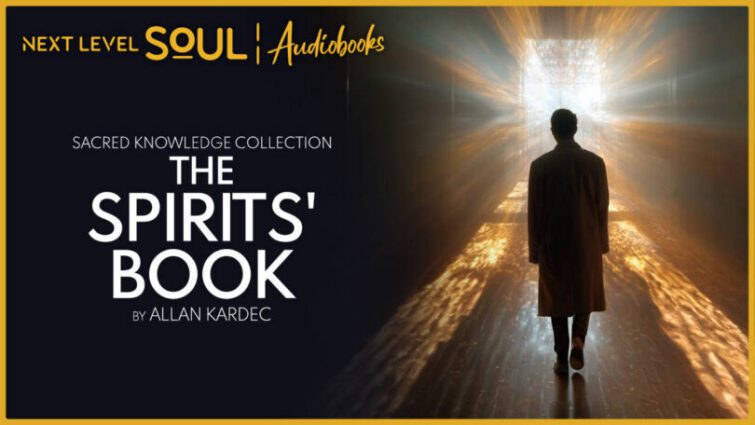
Listen While You Study
The audiobook is available on Next Level Soul TV. Play a book, then come back here for the notes and the workbook prompt.
Key Takeaways
- The book is a set of questions and answers, which the author presents as replies from spirits that he arranged by theme.
- It is split into four Books, moving from God and creation, to the spirit world, to moral laws, to hope for the future.
- Kardec teaches that we live more than one life, and that the spirit grows and learns across many existences.
- Moral law sits at the heart of the third Book, where the author describes laws such as work, progress, equality, liberty and charity.
- The last Book speaks of comfort, offering the author’s view of joys and sorrows, both here and in the life to come.
The Book at a Glance
| Detail | What to Know |
|---|---|
| Author | Allan Kardec (pen name of Hippolyte Léon Denizard Rivail, 1804 to 1869) |
| First published | 1857, in France, as Le Livre des Esprits |
| Books | 4 |
| Tradition | Spiritism |
| Audiobook | Available on Next Level Soul TV |
What Is The Spirits’ Book About?
The Spirits’ Book was first published in France in 1857. Its original title is Le Livre des Esprits. The author, writing as Allan Kardec, presents it as questions put to spirits and the answers he received. He then arranges those answers by theme, from the nature of God to the future of the soul.
The work is divided into four Books. The first looks at God, the universe, creation and the vital principle. The second describes the spirit world. The third sets out moral laws. The fourth turns to hopes and consolations. Spiritists see it as the first of their basic works, and the author teaches that the soul keeps learning across many lives.
The Board: 4 Books
Each square is a book. Tap one to jump to its study notes.
Book-by-Book Study Notes
These notes are our own summary, written to help you follow the book. Each one ends with a small practice you can try this week.
Book One
Book One opens the whole work. Its four chapters are titled God, General Elements of the Universe, Creation, and Vital Principle. The author begins with the biggest questions: what God is, what the universe is made of, how things came to be, and what gives living things life. Think of it as the foundation the later Books stand on. Read it slowly, and notice which questions you would have asked yourself.
Book Two: The Spirit-World
Book Two is the longest. It has eleven chapters, from Spirits and Incarnation of Spirits to Spirit Life, Emancipation of the Soul, and The Three Reigns. Here the author describes what spirits are, how they come into bodies, what life after the body may be like, and how spirits may touch our world. It is also where the teaching on several lives appears, in the chapters on Plurality of Existences.
Book Three: Moral Laws
Book Three turns from the spirit world to daily conduct. The author sets out laws, including the Divine or Natural Law, Adoration, Labour, Progress, Equality, Liberty, and Justice, Love and Charity, and ends with Moral Perfection. In this Book the author argues that a good life rests on these principles. Many readers find it the most practical part, because it speaks about how we treat work, rest, other people and ourselves.
Book Four: Hopes and Consolations
Book Four is the shortest, with two chapters: Earthly Joys and Sorrows, and Future Joys and Sorrows. The author looks at why life brings both happiness and pain, and what he teaches about what may await us afterward. The tone moves from rules to comfort. Read it as a closing note, and ask what it offers you about loss, patience and hope in your own life.
Key Ideas in Plain Language
| Idea | What It Means | Book |
|---|---|---|
| Question and answer form | The book is built from questions and the replies the author presents as coming from spirits. | 1, 2, 3, 4 |
| God and creation | The first Book asks what God is and how the universe and life came to be. | 1 |
| The spirit world | The author describes spirits, how they enter bodies, and what spirit life may be like. | 2 |
| Plurality of existences | The author teaches that a spirit lives more than one life and grows through them. | 2 |
| Return and emancipation | Book Two covers the return to spirit life and the freeing of the soul. | 2 |
| Moral laws | The author sets out laws such as work, progress, equality and liberty as a guide for living. | 3 |
| Justice, love and charity | One chapter of Book Three joins these three ideas as a single law. | 3 |
| Moral perfection | The author closes the moral laws by pointing to inner improvement as the goal. | 3 |
| Joys, sorrows and hope | The last Book speaks of earthly and future joys and sorrows, offered as comfort. | 4 |
Who This Book Is For
This guide is for curious beginners who want to understand what The Spirits’ Book says without wading through it alone. It suits readers of spiritual history, people drawn to ideas about life after death and reincarnation, and anyone who has heard of Spiritism and wants a clear starting point. You do not need any background. You can come as a believer, a skeptic or simply curious.
A 7-Day Way to Use It
- Days 1 and 2: Read the guide, then start Book One. Write down three questions you hope the book answers.
- Days 3 and 4: Move to Book Two, The Spirit-World. Note one idea that surprises you and one you question.
- Days 5 and 6: Take up Book Three, Moral Laws. Choose one law and practice it in a small way each day.
- Day 7: Read Book Four, Hopes and Consolations. Review your notes and write what you will keep.
Your Workbook
Your answers save on this device as you type. They are not sent anywhere. Use the copy button to move them into your own notes.
Watch More on Next Level Soul TV
Next Level Soul TV brings together full episodes, courses, movies, series and audiobooks, ad-free. Join Next Level Soul TV and keep exploring.
Keep Going
- Reincarnation: Beliefs, Research and What Past Lives Really Mean
- Near-Death Experiences
- The Egyptian Book of the Dead: Study Guide and Workbook
- Best Spiritual Audiobooks: 10 Essential Listens (Plus 2 Bonus)
Sources and Further Reading
Go Deeper with NLS Mastery: Awaken the Inner Medium
The Spirits’ Book is one of the best-known Spiritist works on the spirit world and the afterlife. If you want to take that further, Nikki Dutta teaches mediumship in Awaken the Inner Medium, part of NLS Mastery. Watch the course preview below.

Frequently Asked Questions
What is The Spirits’ Book about?
It is a work of questions and answers about God, the universe, spirits, moral law and the life to come. The author presents the answers as replies from spirits and organizes them into four Books, from first principles to hope for the future.
Who wrote The Spirits’ Book and when?
It was written by Allan Kardec, the pen name of the French author Hippolyte Léon Denizard Rivail (1804 to 1869). It was first published in France in 1857 under the title Le Livre des Esprits.
What kind of book is The Spirits’ Book?
It is a foundational text of Spiritism, a doctrine that Kardec established in France in the mid 1800s. It teaches that people live more than one life. This guide describes the ideas as the author’s teaching, without asking you to accept them.
How many Books does it have and what are they?
It has four Books. Book One covers God, the universe, creation and the vital principle. Book Two is The Spirit-World. Book Three is Moral Laws. Book Four is Hopes and Consolations. Each Book is divided into chapters.
What does the book teach about the spirit world?
In Book Two, the author describes spirits, how they take on bodies, what spirit life may be like, and how spirits may take part in our world. The author presents this as a view of life after the body, which readers can weigh for themselves.
What does it say about living more than one life?
Book Two includes chapters on the plurality of existences. The author teaches that a spirit returns to bodily life more than once and learns and improves through those lives. This idea is central to the wider Spiritist tradition.
What are the moral laws in Book Three?
The author sets out laws including Divine or Natural Law, Adoration, Labour, Reproduction, Preservation, Destruction, Social Law, Progress, Equality, Liberty, and Justice, Love and Charity. He ends the Book with Moral Perfection.
What is the point of Book Four?
Book Four, Hopes and Consolations, has two chapters on earthly joys and sorrows and future joys and sorrows. The author offers it as comfort, speaking to why life holds both happiness and pain and what may follow.
How should a beginner read The Spirits’ Book?
Take it one Book at a time. Read this guide first, then read a Book, then try the practice for it. Because the text is in question and answer form, you can pause often. Note what you agree with, what you question, and what you want to explore.
Is The Spirits’ Book hard to read?
Some readers find it demanding. It is old, the topics are big, and the question and answer style can feel dense. Reading in small sections, with a guide beside you, makes it much easier. You do not have to take it all in at once.
How long does it take to get through it?
That depends on how you read. This guide offers a 7 day plan that touches all four Books, but you can stretch it over weeks. Going slowly and reflecting on each Book usually helps more than rushing to the end.
How does this study guide help, and where can I listen?
The guide explains each Book in plain language, picks out key ideas, and adds a short practice for each. It also answers common questions. The audiobook is available on Next Level Soul TV. For what to read or listen to next, try other writings on life after death and the soul’s growth.
Spirituality for the Rest of Us™
Movies, teachings and community on Next Level Soul TV.