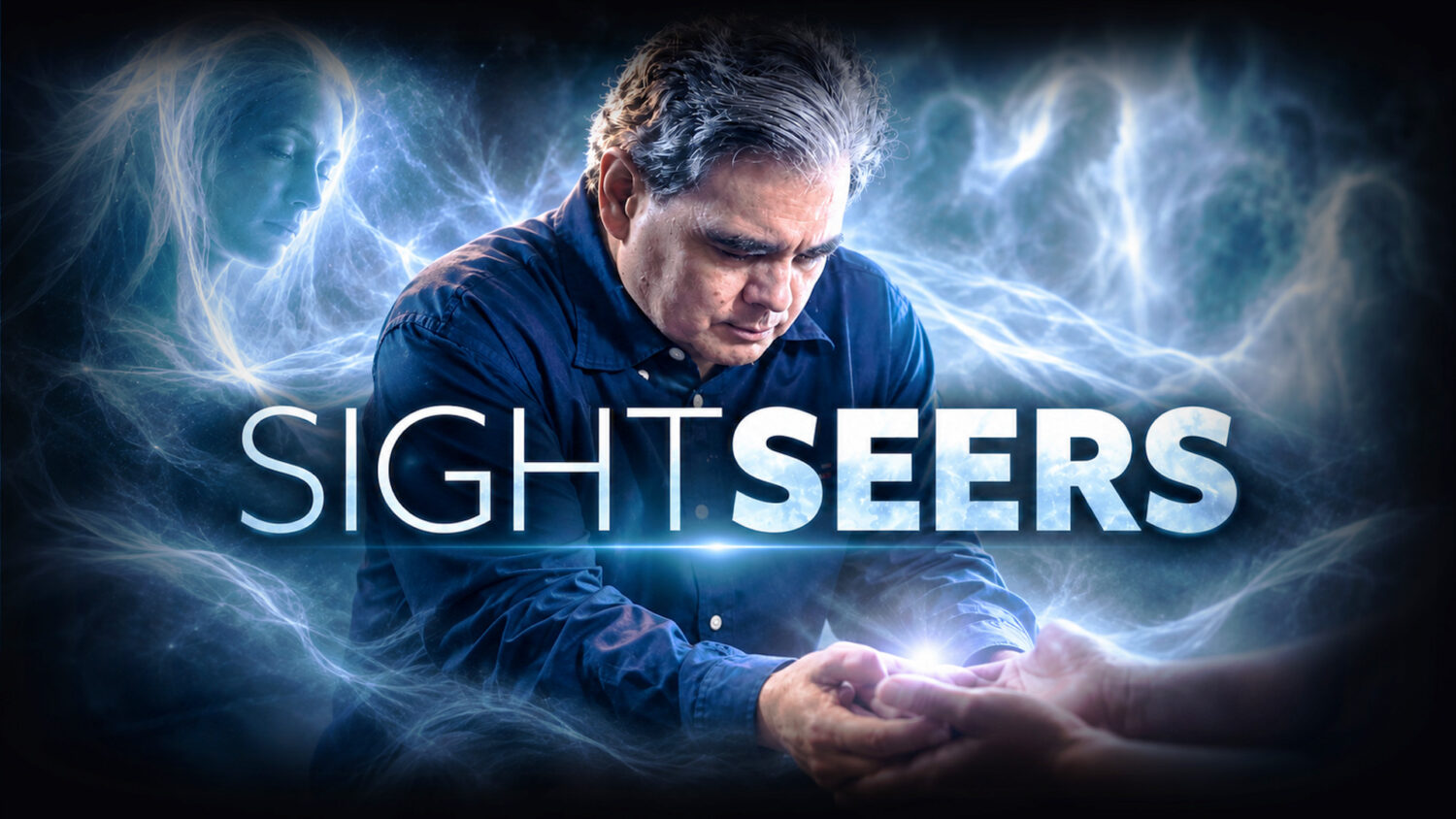
Eight old buildings. Two sensitives who read them with their hands and their hearts. Two skeptics who read the same rooms with meters and flashlights. Sight Seers puts all of it side by side, then does something rare. It refuses to tell you who is right.
Mark Joly introduces himself as a psychic and modern day oracle who has been blind since birth. He says that when he touches someone’s hand, he gets flashes of their past, present and future. Laura Warren, a professional psychic medium, says she has been communicating with spirit since she was a child. Together they travel through Nova Scotia, investigating some of the oldest places in North America. Every episode ends the same way, with the decision handed to you.
This review walks through all eight cases, what each one asks of you, and the larger questions running underneath. If a haunted museum makes you curious instead of nervous, you are in the right place.
How Sight Seers Works
The format is simple and it works. Mark and Laura arrive at a place where people have reported something they cannot explain. Mark sits with the person at the center of the case, takes a moment with eucalyptus oil, and reads that person’s hand. Laura walks the rooms, touches objects, grounds herself, and speaks directly to whatever she senses. At the end, they report together and often confirm each other, as when both felt the same push back at the door of Randall House.
Then the second half begins. Paranormal analyst Darryll Walsh and home inspector Rick Senior visit the same places on their own, using what Mark and Laura call a down to earth approach. Darryll brings electromagnetic field meters, infrared photography and even a camera lowered into a well. Rick brings a flashlight and a long career looking at attics, ductwork, fuse panels and door latches. Darryll scores some cases from 0 to 10. The two camps never debate on screen, which gives the series a calm, fair feel that most paranormal shows lack.
What you gain from that structure is a real exercise in discernment. You hear a sensitive describe a child in 1800s clothing, then you hear an inspector explain what an old building does on a windy night. You are invited to hold both. That is a very Next Level Soul way to watch television.
The Eight Cases
Episode 1: Queen’s County Museum, Liverpool
Liverpool began as a shipbuilding town, and the museum holds the tools, wartime memorabilia and donated household items to prove it. Staff describe a man in a brown suit who vanishes, muffled voices, dark wisps that move in waves, a cat that meows when no cat is there, and a little girl who holds a staff member’s hand. Director Linda Rafuse says the man in the brown suit straightened up and disappeared the instant she switched on a light.
Mark reads summer student Kinsey Francis and sees a girl tugging at her clothes as if to say come play, plus a record player that never stops. Laura, standing in author Thomas Raddall’s recreated den, feels crushing pressure across her temples. The detail that stays with you is the cat. A visitor mentions a big orange spirit cat on a ship exhibit, Laura feels a ginger cat brush her leg, and Linda confirms the museum’s cat Curtis was an orange tabby who died on the road. Laura also chooses not to cross the child spirit over, because the staff have grown attached. Darryll explains the voices through the vents and cannot explain the black cloud, scoring the case a 2 for that reason alone. Rick finds a clean, well kept building. It is a gentle and very good opening.
Episode 2: Boscawen Inn, Lunenburg
The Queen Anne mansion was built in 1888, and the owners say the original owner, Edna, has never fully left. Swinging kitchen doors, a piano whose keys move, perfume out of nowhere, and a rocking chair in room 202 that two housekeepers say rocked on its own and felt ice cold. Mark says he felt watched the whole time. At Edna’s grave he touches the stone and says she is not there. She is in the inn.
The scene that lands hardest is Mark’s reading of Frieda Martin, who has worked at the inn for 23 years. He sees a stormy night and hears a bell. Frieda confirms a thunder and lightning storm, a fire alarm, and a window pane that blew out and landed on a table without breaking. Laura sits in the rocking chair, vibrating from head to toe, and says Edna is not trying to frighten anyone. She says Edna’s happiest memories were rocking her babies here. Darryll gives it a 0 and Rick points to a leaky hundred year old window and a drafty fireplace. Owner Judy Rodden has the last word, joking that she can still blame Edna when she loses her keys. This is the warmest case in the series.
Episode 3: The Halifax Club, Halifax
Established in 1862, the private members’ club has a famous legend about a woman thrown from a third floor bathroom window, plus tunnels uncovered during construction. Staff report voices, lights flickering and doors banging. Sasha, the cigar sales manager, describes being physically stopped at that bathroom by something like a wall, with despair and fear. Mark says the third floor felt like the walls were closing in and that it should be boarded up and never used again.
This is the heaviest episode and also the most tender. Mark tells Sasha to collect feathers and put them in the ocean, and Sasha later reveals that feathers were on that bathroom window. Laura speaks with the woman at the center of the legend and hears that she broke a code of silence and was silenced for it. She wants her story retold as that of a woman who spoke her mind. Laura helps her cut her ties and says she is leaving. Darryll, who admits he wanted this to be truly haunted, finds a regular old building with a good legend and scores it 0. Rick points to drafts through the tunnel, knocking radiator pipes and dumbwaiters moving chains. I appreciated that the series lets the woman have a voice here instead of turning her story into a jump scare.
Episode 4: Barbara Nicholls’ Farmhouse, Hampton
Beside Hampton Cemetery on the Bay of Fundy, Barbara and Michael Nicholls live with an odd mix of events. A stereo that turns on by itself, a gate that swings with violence, a fire extinguisher that moved two feet, a small leopard figure that flew off a counter and landed in a colander, and a heavy trivet that left the woodstove, rolled and landed on its feet. A trail cam captured glowing globes moving down the hallway.
Mark tells Barbara something worth pausing on. The activity seems tied to her more than to the house. Laura reads a pinging bed spring as emotional clearing at the solar plexus, and she is drawn to a sunflower growing from the sidewalk, which she calls a shrine for the faeries. Both land on faeries, mischievous and not malicious, and Barbara says they have validated her beyond belief. Darryll offers mini earthquakes and insects on camera, but he cannot explain the leopard’s turn into the colander and leaves three items unexplained. He does something I loved. He says he has no idea, and he gives no rating. This is the most playful case and the most open.
Episode 5: Annessa Brooks’ Home, Millbrook First Nation
In the Mi’kmaq community of Millbrook, Annessa Brooks finds words written backward in the dust of a black shelf, including a name that Mark reads as Sam written in reverse. A dime keeps reappearing, and she says dimes are messages from the spirit world. After she says aloud that she wants to test it and moves the dime, it is back the next day. A Buddha statue flips and her bathroom door locks.
This is the most personal episode. Annessa’s grandmother survived residential schools, and Annessa speaks openly about generational trauma and lost culture. Mark sees a chain of hearts and a cave where she pulls people into the light. Annessa shows she has just had a family tree tattoo with long roots and a heart. Laura burns sweetgrass and white buffalo sage in the backyard and says the grandmother has been orchestrating the events to look after her. Darryll proposes deep stage sleepwalking, and Rick points to a door that binds and a blocked air intake. Annessa calls the experience the last piece of the puzzle. Whatever you believe about the dust, the comfort she finds is real and the series treats it with respect.
Episode 6: Randall House Museum, Wolfville
Wolfville sits on the Minas Basin, where the tide rises and falls about 40 feet. The Randall family owned the farmhouse from 1812 to 1927, and the last two Randalls were a brother and sister, with the sister confined upstairs and her brother caring for her. Staff hear footsteps, and volunteers do not stay long. One volunteer saw a completely black male figure that zoomed at her. Visitors’ phones stop working.
Both Mark and Laura feel a barrier on entering, a feeling of we want you out. Mark explains that he reads mostly in symbols and sees an exit sign, a boot and a harp for curator manager Krystal Tanner, which he decodes as spirits who want visitors out, yet like her and keep her calm. Krystal’s response is a quiet highlight. It is their home too. Laura then does something remarkable. She places the sister in front of the brother so he can finally see her, and the two take hands. Krystal confirms the names Annie and Eardly. Darryll scores it 1 and cannot explain the cell phones. Rick finds a crooked door that opens by itself. For me this is the best showcase of how Laura works.
Episode 7: The New Ross Property, New Ross
The so called castle is the remnant of foundation walls beneath a house under renovation. Legend says Knights Templar brought treasure here in 1307, and an old stone well is said to have healing water. Alessandra and her husband Timothy bought the land to protect it from treasure hunters. Laura senses a platform with a hatch in the well before anyone on screen confirms it. Mark sees a Templar thrust a sword into a man’s shoulder and names ley lines at the relocated standing stone.
This episode swings biggest and plays most like an adventure film. Laura describes a tall knight in armor with a red cross on his chest, a protector. She says he told her that as long as people seek material treasure, he will not reveal the Holy Grail, because the key is within each person. Whatever you make of that, it lands exactly where Next Level Soul teaches, that the power is within you. Darryll lowers a camera into the well and finds a stone carved with a triangle and an eye, a symbol linked to secret societies. He rates the haunting 1 and the archaeological evidence 5. Rick calls it a standard dug well. The ending stays open.
Episode 8: The Kerr Home, Hantsport
The closing case is a Victorian house, roughly 175 years old, where Jane Kerr has lived for about 15 years with her husband and three children. Someone walks the steps a couple of times a week. Her youngest daughter, terrified, will not do time outs on the bottom step. A TV came on to a church channel, and when Jane said aloud she would go to church, the TV stopped.
Mark sees a footstep and a peg leg, and Jane remarks that the house once had an elevator. Laura describes a stern woman in a black jacket, white shirt and bow tie, arms crossed, very religious, strict about schedules. She says the woman is in the wrong time period and willing to work with the family. Darryll finds a frayed wire and rates it 0, an old house doing what old houses do. Rick cannot explain the kitchen door latch. Jane’s closing line is why this finale works. She says she would be sad if they left now. It is a ghost story told like a story about a houseguest.
What the Skeptics Add
Darryll Walsh is a sympathetic skeptic. He says more than once that he wants a place to be truly haunted, and he is honest when he cannot explain something. Rick Senior calls himself a doubter, yet he keeps an open mind. Their explanations repeat across the series, which is a useful lesson in itself. Drafts and air movement, vents and ductwork, loose latches, old wiring, humidity, mini earthquakes, car headlights, insects on camera, even sleepwalking.
The series also keeps a short list of loose ends that the experts could not close. The black cloud in the museum, the leopard, trivet and gate in Hampton, the dime if Annessa was awake, the cell phones at Randall House, the radio needle and kitchen door in Hantsport. You decide what those mean.
The Ideas Underneath
Beyond the scares, a handful of ideas show up in nearly every episode. Spirits often want recognition more than removal. Names matter, which is why Curtis, Audrey, Edna, Annabelle, Annie and Eardly each land so strongly with the people who live there. Laura rarely recommends driving a spirit out. She talks to them, explains that time has passed, asks them to respect the family or share the home, and in the Halifax case helps one leave. She says she weighs what the living want against what spirit needs.
The second idea is that the body is an instrument. Laura reports headaches, goosebumps, pressure and dizziness as information, and she grounds herself before she opens up. Mark relies on symbols and on a pinch of ritual, eucalyptus oil, to focus. Whether or not you share their gifts, the practical takeaway is available to anyone. Notice how a room feels in your body. Slow down and ask what it is telling you.
The third idea is that stories shape experience. Darryll says several times that people are primed by a place’s legend. Mark and Laura do not argue with that. They suggest some people are simply more sensitive. Both can be true, and the series is at its best when it leaves that tension alone.
A Few Honest Notes
If you are deciding whether to watch, here is what I would tell a friend. The series is atmospheric, not graphic. It is gentle in pace and rich in local history. It touches on real grief, including a child lost to illness in the 1800s, generational trauma in a First Nations family, and a legend of violence in Halifax, and it handles them with care.
Mark and Laura do sometimes fold natural details into their readings. In Hampton, Laura says a gust of wind may have moved the leopard and then reads it as spirit. The experts and the sensitives never meet, so there is no real debate, and some captions in the transcripts are unclear, so I have kept names and details to what is plainly stated. None of that spoils the experience. It simply reminds you to watch with your own judgment awake.
Questions to Carry With You
- Which case felt most real to you, and what made it so?
- When a place feels heavy, where do you feel it in your body?
- Is a spirit that wants attention and respect something to fear, or something to listen to?
- What would you want a guest in your home, seen or unseen, to know about the people who live there?
Keep Exploring
If this series stirred something, try connecting with your higher self, step into the sacred sites of Sacred Earth Expeditions, or browse the full Spiritual Cinema collection on Next Level Soul.
Frequently Asked Questions
What is Sight Seers about?
Sight Seers follows psychic Mark Joly and psychic medium Laura Warren as they investigate eight reported hauntings across Nova Scotia, while paranormal analyst Darryll Walsh and home inspector Rick Senior look for natural explanations.
Where is Sight Seers set?
All eight cases take place in Nova Scotia, in museums, an inn, a private club, family homes, a First Nations community and an old castle site.
Who are the people in Sight Seers?
Mark Joly describes himself as a psychic and modern day oracle who has been blind since birth. Laura Warren is a professional psychic medium. Darryll Walsh is the paranormal analyst and Rick Senior is the home inspector.
Is Sight Seers scary?
It is atmospheric more than frightening. The tone is calm, curious and respectful, and the episodes end with a question for you instead of a shock.
Does the series prove ghosts are real?
No. Each episode ends by leaving the decision to the viewer, and the skeptics offer natural explanations for most reports while admitting a few events remain unexplained.
How many episodes are there?
Sight Seers has eight episodes, each focused on a single location or case.
Where can I watch Sight Seers?
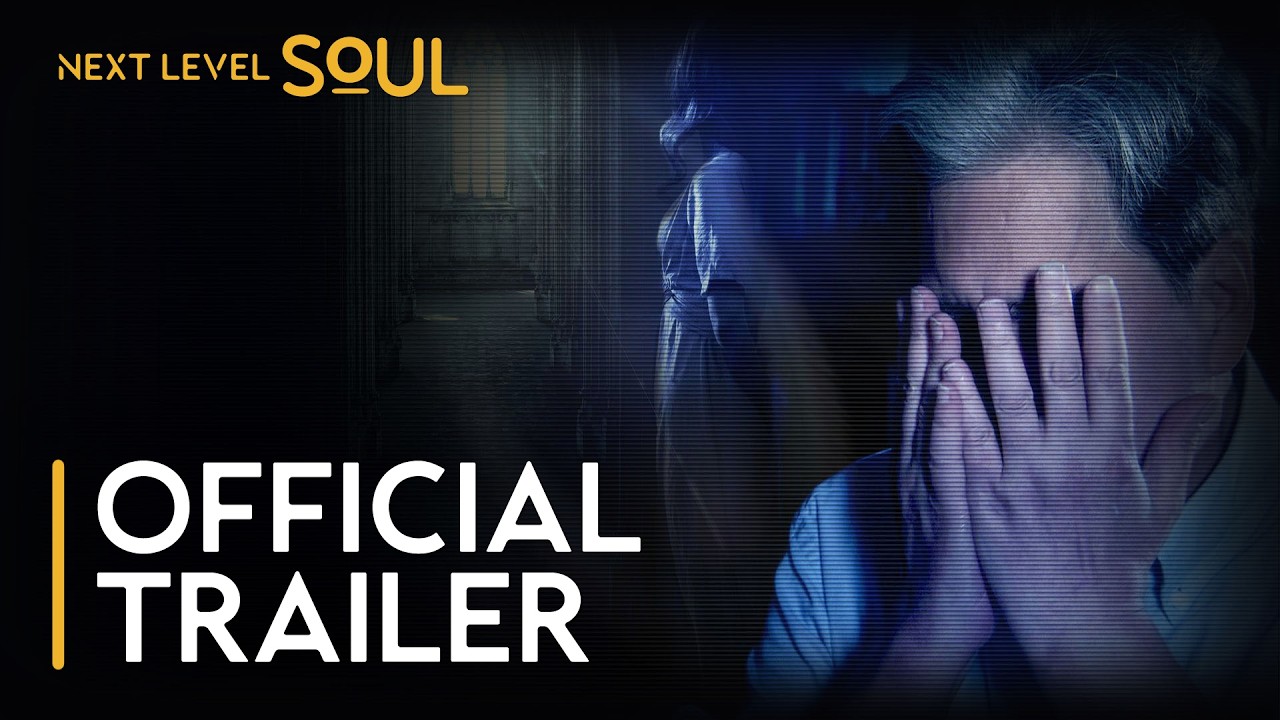
Sight Seers is available on Next Level Soul TV. Watch Sight Seers on Next Level Soul TV.