
How does a story from the seventh century speak to a child growing up amid violence today?
The Lady of Heaven tells the story of Lady Fatima, daughter of the Prophet Muhammad, through a modern narrative that connects past and present. The film weaves together historical drama and contemporary conflict, exploring themes of faith, oppression and resilience. It is available on Next Level Soul, and the trailer above gives a first impression.
This guide is our review, with a respectful look at the themes the film raises and how to approach a film that touches sacred history.
What the film is about
The film has two timelines. In the present, a young Iraqi boy learns about Lady Fatima’s life from a wise elder. In the past, the film dramatizes events from her life and the world around her.
By moving between the two, the story highlights her message of compassion in the face of violence. It asks how sacred history can inspire healing in a fractured world, and it treats the question as urgent rather than academic.
Review: a bridge between past and present
The structure is the film’s greatest strength. Framing an ancient story through a child’s eyes gives viewers an emotional doorway, whether or not they know the history well. You learn as the boy learns, which makes the material approachable.
The historical drama is staged on a large canvas, with themes of faith, oppression and resilience at the center. The contemporary thread keeps the story grounded, reminding us that these are not distant concerns. Communities around the world still wrestle with violence and the search for compassion.
The film treats its central figure with reverence, and it invites reflection rather than argument. Viewers who come with curiosity about the story will find a lot to think about. Those who already hold the history dear will see it presented with sincerity.
A respectful note: the film deals with sacred figures and historical events that carry deep meaning for many people. It is best viewed with an open heart and a willingness to listen. If the subject is new to you, further reading from a range of trusted sources can add helpful context.
Who Was Lady Fatima? The History Behind the Film
The film leaves many viewers asking the same question: who was she, really? What follows is a plain, respectful introduction to Fatima, the daughter of the Prophet Muhammad, and the world she lived in. It draws on the broad outlines that Muslims of every tradition share, and it tells you honestly where Sunni and Shia accounts differ. Where sources disagree, we say so. The film itself is told from a Shia perspective, and understanding that helps in watching it.
Timeline at a Glance
Dates below are approximate, and Sunni and Shia sources sometimes differ.
- About 570. Muhammad is born in Mecca.
- About 595. Muhammad marries Khadija.
- About 605 to 615. Fatima is born (Sunni sources favor the earlier date, Twelver Shia sources the later).
- About 610. The first revelation, in the cave on Mount Hira.
- About 619. Khadija and Abu Talib die. The Year of Sorrow.
- 622. The Hijra to Medina.
- About 623 to 625. Fatima marries Ali.
- 625. The Battle of Uhud.
- 632. The Prophet Muhammad dies. Within about six months, Fatima dies too.
- 680. Husayn is killed at Karbala.
- 909 to 1171. The Fatimid caliphate, which claimed descent from Fatima, rules in North Africa and Egypt.
The World She Was Born Into
Seventh-century Mecca was a trading town in the dry hills of western Arabia. It sat on caravan routes that carried goods between Yemen, Syria and the wider world, and it was already a pilgrimage site, home to the Kaaba, a sacred cube-shaped sanctuary that Muslims trace back to Abraham. Society was organized by tribe. The most powerful tribe in Mecca was the Quraysh, and Muhammad was born into one of its clans, the Banu Hashim, around the year 570 of the common era.
It was a world of wealth and hardship, of loyalty and feud, and of many gods. Orphans, widows and the poor had little protection. Women could be powerful, but mostly if they held property or family standing. That background matters, because the story of Fatima is in many ways a story of how a new message tried to change who was protected and who was heard.
Muhammad and Khadija: Her Parents
Muhammad grew up an orphan, raised first by his grandfather and then by his uncle Abu Talib, the father of Ali. As a young man he became known in Mecca as honest and trustworthy, and he worked as a trader. One of the people who noticed was Khadija bint Khuwaylid, a successful merchant and a widow, and one of the most respected people in the city. She hired him to lead a caravan, was impressed by his character, and, according to tradition, proposed marriage herself. He was about twenty-five. She was older and wealthy, and by every account the marriage was a deep partnership.
Around the year 610, Muhammad was meditating in a cave on Mount Hira, outside Mecca, when he experienced the first of the revelations that Muslims believe were delivered by the angel Gabriel and that became the Quran. He returned shaken. It was Khadija who steadied him, believed him, and became, in Muslim tradition, the first person to accept Islam. For the next ten years she stood beside him through ridicule and a long social boycott of his clan. She died around 619, a loss so heavy that the period is remembered as the Year of Sorrow.
Fatima was their daughter. Sources disagree on when she was born. Sunni tradition places her birth around 605, when Khadija was about fifty. Twelver Shia sources give a later date, around 612 or 615. Sunni sources describe her as one of four sisters, Zaynab, Umm Kulthum, Ruqayyah and Fatima. Many Shia sources hold that Fatima was the Prophet’s only biological daughter and that the other girls were raised in the household. Her brothers all died in childhood.
A Childhood of Hardship in Mecca
Whatever the exact year, Fatima grew up in the hardest stretch of her father’s mission. The early Muslims were few and often mocked. Some were beaten. For about three years the Prophet’s clan was boycotted, cut off from trade and marriage, and hunger was real. Children in that world learned early what loss and loyalty look like.
Tradition remembers Fatima as a girl who tended her father with remarkable devotion, wiping his face when he was insulted, and she carries the title Umm Abiha, which is usually translated “the mother of her father.” It is an affectionate title that says something about how she is remembered: as someone who held her father up when things were at their worst. When Khadija died, Fatima was still young, and she carried that grief for the rest of her life.
Migration, Marriage and Medina
In 622 the Prophet and his followers left Mecca for the city of Yathrib, soon renamed Medina. This migration, the Hijra, marks the first year of the Islamic calendar. Fatima followed with other women of the household.
Fatima married her cousin Ali ibn Abi Talib in Medina in the first or second year after the Hijra, which is roughly 623 to 625. Ali had been raised in the Prophet’s own household and was one of the earliest Muslims. He was around twenty-two. Reports of Fatima’s age at marriage vary widely, from nine to twenty-one, and this is one of the points on which historians and traditions differ. Accounts also differ about how the proposal was made. In many tellings, her silence in response to the proposal was understood as consent, which is often cited as a root of the principle in Islamic law that a woman’s consent is required for marriage.
The couple were poor. Fatima ground grain, carried water and did the household work with her own hands, until her hands blistered. According to a well-known tradition, she once asked her father for a servant, and he taught her and Ali instead a short remembrance to say each night, now known as the Tasbih of Fatima: 34 repetitions of “God is greatest,” 33 of “Praise be to God” and 33 of “Glory be to God.” Many Muslims, Sunni and Shia, still recite it after their daily prayers. Their circumstances eased after the conquest of Khaybar, a few years later.
A Mother of Imams
Fatima and Ali had children who would carry enormous weight in Islamic history. Hasan and Husayn, her sons, are remembered by the Prophet’s description as the “leaders of the youth of Paradise,” and Shia Muslims count them as the second and third imams. Husayn’s martyrdom at Karbala in 680 is the central event of Shia remembrance. Her daughters Zaynab and Umm Kulthum survived her, and Zaynab’s courage after Karbala is a story that many Muslims know by heart. The fate of a third son, Muhsin, is disputed. Shia sources say he was lost in a miscarriage after a raid on her home, while Sunni sources say he died in infancy.
Through Hasan and Husayn, the Prophet’s bloodline continued. Her descendants are known as sayyids and sharifs, and are respected in many Muslim societies. The Fatimid dynasty, which ruled Egypt from the tenth to the twelfth century, took its name from her and claimed descent from her. Cairo’s great mosque and university, al-Azhar, founded by the Fatimids around 970, is traditionally said to be named for her title al-Zahra.
Moments Remembered: Uhud, the Cloak and the Mubahala
The Battle of Uhud
In 625, after the Muslims suffered a painful defeat at Mount Uhud, Fatima went out with the other women to find the wounded. She is remembered tending her father’s injuries and washing the blood from his face. In later years she would return to pray at the graves of those who had died.
The People of the Cloak
One of the best-known stories among Shia Muslims, and one that is also found in Sunni collections, is the Hadith of the Cloak. In it the Prophet gathers Fatima, Ali, Hasan and Husayn under a cloak and prays over them, and a verse of the Quran, usually called the Verse of Purification, is understood to be about this household. Those gathered under the cloak are called the Ahl al-Kisa. Shia tradition limits the “People of the House” (Ahl al-Bayt) to this group, along with later imams. Some Sunni authorities include the Prophet’s wives as well. The disagreement is real, and it is part of why Fatima holds a particular place in Shia devotion.
The Mubahala
Near the end of the Prophet’s life, a delegation of Christians from Najran came to debate him. When the discussion reached an impasse, the Quran proposes a mutual invocation called the mubahala, in which each side would pray that God’s curse fall upon the false one. Shia sources identify “our women” in the verse as Fatima, “our sons” as Hasan and Husayn, and “ourselves” as Ali. Sunni accounts are less specific, although some agree with the Shia reading. In the story, the Najran delegation declined to go through with it when they saw the Prophet arrive with his family, and agreed to terms.
The Hard Months After the Prophet’s Death
The Prophet Muhammad died in 632. Fatima was by his side, and tradition records that he whispered something to her that first made her weep and then made her smile. The film dramatizes what followed, and it is worth knowing that these events are among the most contested in Islamic history. We will summarize them without taking a side.
Succession. While Ali and the family were preparing for the burial, a group of leaders gathered at a place called Saqifa and chose Abu Bakr as the first caliph. Shia Muslims hold that the Prophet had designated Ali as his successor at a gathering at Ghadir Khumm, and see Saqifa as the point at which that was set aside. Sunni Muslims hold that the community chose Abu Bakr in a legitimate way.
Fadak. Fadak was a village with palm groves near Medina. Shia sources say the Prophet gave it to Fatima as a gift. Sunni sources generally dispute this. According to Sunni tradition, Abu Bakr refused Fatima’s claim to Fadak and to an inheritance, citing a hadith that prophets leave no inheritance. Shia sources reject that hadith. Historians are divided on whether this was a financial dispute or a political move concerning the Prophet’s clan. Fatima is remembered, especially in Shia tradition, for a speech she gave on the matter, known as the Sermon of Fadak.
The raid on her house. Shia and some Sunni sources describe a confrontation at the home of Ali and Fatima in which supporters of the new government sought to bring Ali to give his pledge, and Fatima pleaded with the men at her door. The sources disagree about whether force was used and whether she was injured. Shia tradition holds that she was, and that her injuries led to her death. Sunni tradition does not. Sunni sources say Ali pledged allegiance after Fatima’s death. Shia sources say he did so earlier and under pressure.
Her death. Fatima died in 632, within about six months of her father. She was young, still young, in her late teens or twenties depending on which dating you follow. Sunni tradition says she died of grief. Shia tradition says she died of her injuries. Some Sunni accounts say she reconciled with Abu Bakr before she died, though some historians have expressed doubt about them. She asked to be buried at night and in secret. Her burial place remains uncertain, with her house and the cemetery of al-Baqi’ in Medina being the two leading candidates.
Historians who study this period note that accounts were written down generations later and sometimes reflect the politics of the writers. That is why serious readers consult many sources, and why a film made from one tradition’s point of view should be watched with that in mind.
Titles and Names: Al-Zahra, the Radiant
Fatima is known by many titles, which tell you how she is seen. The most common is al-Zahra, “the radiant one.” Shia tradition connects it to the belief that she was created from light. Both Sunni and Shia collections call her Sayyidat Nisa al-Jannah, “leader of the women of Paradise,” and Sayyidat Nisa al-Alamin, “leader of the women of the worlds.” Other titles include al-Siddiqa, the truthful, al-Muhaddatha, one to whom angels speak, and in Twelver Shia tradition Umm al-A’imma, mother of the imams.
Shia Muslims often compare her to Mary, mother of Jesus, who is also honored in the Quran as a woman of purity and surrender. Many Muslims, whatever their tradition, hold Fatima up as a model of patience, modesty and moral courage, and the name Fatima remains one of the most loved names for girls across the Muslim world.
The Mystical Lens: Light, Love and the People of the House
Beyond history, Fatima has a rich place in the spiritual imagination of Islam. In Sufi tradition, the family of the Prophet are honored as the lights through which the teachings of love and nearness to God flow. Many Sufi orders trace their chain of teachers back through Ali, and so, indirectly, to Fatima’s household. Poets and saints have written of her as a symbol of purity, longing and inner radiance.
In popular culture across the Middle East and North Africa, the open-hand amulet known as the hamsa is often called the Hand of Fatima. Its roots are older and shared across several faiths, but in Muslim communities the name has attached itself to her as a sign of protection.
For a living voice from this tradition, see our conversation Sufi Mystic’s Message to Humanity with Salima Adelstein, and for a near-death account from a Muslim woman, Muslim Woman Meets Jesus in NDE with Rev. Honi Borden.
About the Film: Facts, Faith and Controversy
The Lady of Heaven is a British historical drama directed by Eli King, with a screenplay by Yasser Al-Habib, a Shia cleric based in the United Kingdom. It was filmed in Georgia in the late summer and autumn of 2019, with additional filming in London, on a reported budget of about $15 million. Its framing story follows an Iraqi boy orphaned by ISIS who is taken in by an elderly woman and told the story of Fatima. The film dramatizes her marriage to Ali, the Battle of Uhud, the gathering at Ghadir Khumm, the death of the Prophet, the events at Saqifa, the confrontation at her house, the Sermon of Fadak and her burial.
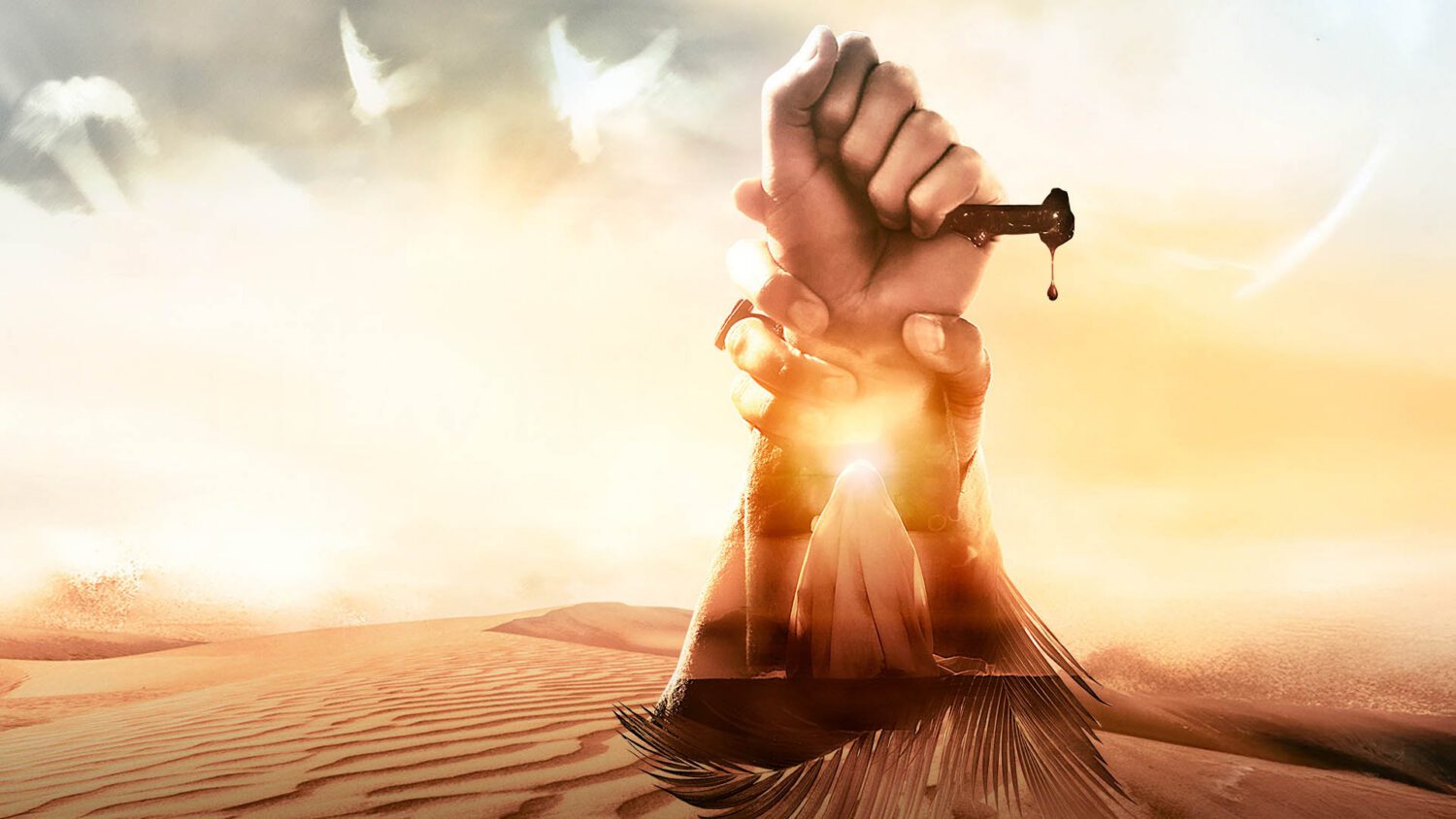
The filmmakers said they portrayed holy figures through light and visual effects in keeping with the Islamic tradition against depicting them. The film opened in the United States in December 2021 and in the United Kingdom in June 2022.
The reaction was strong. Shia and Sunni scholars alike criticized the film, and protests took place outside cinemas in several English cities. One major cinema chain cancelled all of its showings, while another continued to screen the film. It has been banned in Iran, Pakistan, Egypt and Morocco. Critics objected to how some revered early companions of the Prophet are portrayed, and said the film risked deepening sectarian tension. Others, including free speech advocates, objected to the cancellations. The filmmakers have said the film reflects mainstream Shia belief and rests on extensive research. Film critics were, on the whole, unimpressed by the craft, citing clunky writing and special effects.
We include it on Next Level Soul as a window into a spiritual tradition that many viewers know little about. Watching a film is not an endorsement of every choice it makes, and we encourage you to treat it as one voice among many.
The Film’s Point of View
Every telling of this history has a point of view, and The Lady of Heaven says openly that it speaks from a Shia one. The screenplay was written by a cleric who is known for his devotion to the family of the Prophet, and the film centers Fatima, Ali and their household while portraying some of the leaders who opposed them in a harsh light. That choice is the heart of the controversy. For many Shia viewers, the film gives long-silenced grief a voice. For many Sunni viewers, it condemns people they revere. Both reactions are sincere, and both come from love.
The modern frame, a boy in Iraq who has lost his family to ISIS, is the film’s way of asking what this ancient story means now. In that frame, Fatima is not only a historical figure. She is a symbol of resilience, of a woman who held to compassion and truth when she had little power. That is the thread we think is most worth carrying out of the room.
How to Approach This Story with an Open Heart
- Start with the human story. A young woman loses her mother, marries into hardship, raises children and loses her father within a few years. You do not need to hold any belief to feel that.
- Hold the disagreements gently. Where Sunni and Shia accounts differ, resist the urge to decide in a hurry. Learning what each tradition holds is a form of respect.
- Read beyond the film. Scholarly introductions, and books and talks by Muslim teachers from both traditions, will give you a fuller picture than any dramatization can.
- Notice what moves you. Many viewers, of every background, are moved by the theme of compassion in the face of violence. That is a good thing to carry out of the room.
Questions to Carry With You
- What does it mean to hold a person up when the world is turning against them?
- How do we remember painful history without passing the pain on?
- Can sacred stories be told by more than one tradition at the same time?
- What would it look like to meet violence with steady compassion in your own life this week?
The big ideas underneath the film
Compassion is a form of strength. The film’s core message holds that compassion in the face of violence is courageous, not passive. It echoes across many spiritual traditions, which teach that meeting harm with steadiness can change what comes next.
Stories pass wisdom from one generation to the next. The elder and the boy remind us that teaching often happens one conversation at a time. Who tells us the stories that shape us, and who are we telling them to?
Faith can respond to suffering. The film explores how belief gives people resilience when life is hard, and it keeps the focus on the human cost of oppression.
Sacred history is alive. Rather than treating the past as closed, the film suggests it continues to speak to the present. The lessons of one era can guide the healing of another.
Compassion as a daily practice
You do not need to share the film’s tradition to take something practical from it. Compassion can be practiced in ordinary ways: listening without interrupting, offering help quietly, choosing patience in a tense moment.
To go further, our guide to spiritual enlightenment places this kind of inner work within the wider spiritual search, and understanding karma explores how our actions shape what returns to us.
How to watch it well
Watch when you can give it your full attention. Afterward, sit for a few minutes with what you saw before discussing it.
- What stayed with you most from the elder’s storytelling?
- Where in your life could patient compassion change the outcome of a conflict?
- Who in your family carries stories you would like to hear?
The power is within you, and so is the choice of how to respond to the world around you.
Who will connect with this film
It suits viewers interested in religious history, people drawn to stories about faith and resilience, and anyone looking for a film that speaks about peace in the midst of conflict. It can also be a starting point for respectful conversation across traditions.
Browse the Spiritual Cinema collection for more films that explore faith, history and the human spirit.
Keep Exploring
Keep exploring with spiritual enlightenment, understanding karma and Spiritual Cinema collection.
Frequently Asked Questions
What is The Lady of Heaven about?
It tells the story of Lady Fatima, daughter of the Prophet Muhammad, through a modern narrative that connects past and present, exploring faith, oppression and resilience.
Who is Lady Fatima?
She is the daughter of the Prophet Muhammad, and the film follows her life and her message of compassion.
Where can I watch The Lady of Heaven?
It is available on Next Level Soul. Watch the trailer on this page and find the full film on NLS TV. Watch The Lady of Heaven on Next Level Soul TV.
What is the modern storyline in the film?
A young Iraqi boy learns about Lady Fatima’s life from a wise elder, which connects the historical story to present-day conflict.
What is the main message of the film?
That compassion in the face of violence can inspire healing, and that sacred history can speak to a fractured world today.
How should I approach a film about sacred history?
With an open heart and respect. Further reading from a range of trusted sources can add helpful context.