Next Level Soul Podcast Episode 661
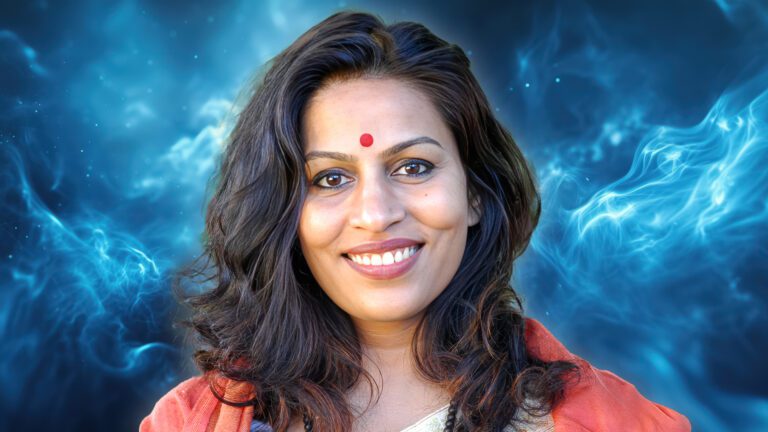
Acharya Shunya is a lineage holder of non-dual wisdom who speaks from embodied realization rather than theory. In this episode of the Next Level Soul Podcast, she talks about what she calls fake spirituality, why she says awakening moves into the body rather than above it, and how to cultivate discernment.
Key Takeaways
- Acharya Shunya says much of contemporary spirituality has become a performance.
- She says: “If spirituality helps you avoid your wounds, it is no longer spiritual.”
- She says true realization moves into the body and the emotions we would rather bypass.
- She says: “The shadow is not your enemy. It is your unfinished conversation with yourself.”
- She invites us to stop seeking experiences and start cultivating discernment.
Who Is Acharya Shunya?
On today’s episode, we welcome Acharya Shunya, a lineage holder of non-dual wisdom and author of Roar Like a Goddess. She does not argue against spirituality, she says; she wants to rescue it from distortion.
What She Calls Fake Spirituality
Acharya Shunya says much of contemporary spirituality has become a performance: the language is elevated and the aesthetics soothing, but the willingness to face discomfort is often missing. She says it is not malicious, but seductive. It promises peace without pain, love without accountability and transcendence without integration. “If spirituality helps you avoid your wounds, it is no longer spiritual,” she explains.
Into the Body, Not Above It
Acharya Shunya challenges the idea that awakening means rising above the human experience. True realization, she says, moves in the opposite direction, into the body, the nervous system and the emotional residue we would rather bypass. Enlightenment is not an escape hatch, she says, but radical intimacy with reality.
Spiritual Dependency
Acharya Shunya explores the subtle ways seekers hand their authority to teachers, gurus or methods instead of cultivating inner discernment. When spirituality becomes a drug, she says, it loses its power to liberate. Devotion turns into dependency, and wisdom becomes borrowed rather than lived.
Shadow Work
Acharya Shunya speaks about shadow work as an inevitability. Avoided pain does not disappear, she says; it waits. Ignored long enough, it expresses itself as anxiety, projection, spiritual arrogance or quiet despair. “The shadow is not your enemy. It is your unfinished conversation with yourself,” she says.
Eastern Wisdom in the West
Acharya Shunya addresses the cultural confusion around Eastern wisdom in the West. Practices lifted out of context become tools for self-soothing rather than self-realization, she says. Sacred disciplines require patience, humility and surrender. She describes real spirituality as inconvenient because it dismantles identity rather than decorating it. She also points to the inner witness as the one stable thing in uncertain times, and mentions her book Sovereign Self.
Spiritual Takeaways
- Don’t use spirituality to dodge pain. Acharya Shunya says it then reinforces the ego.
- Embody it. She says true awakening needs emotional honesty and discernment.
- Subtract illusion. She says awakening is not about accumulating insights.
Please enjoy my conversation with Acharya Shunya.
Guest Links: Connect with Acharya Shunya
- Acharya Shunya official site
- Roar Like a Goddess (book)
- YouTube
- Her earlier visit: Episode 214, Roar Like a Goddess
Listen to the Episode
- Watch this episode ad-free on Next Level Soul TV
- Download the MP3
- More episodes: Next Level Soul Podcast
Frequently Asked Questions
Who is Acharya Shunya?
Acharya Shunya is a lineage holder of non-dual wisdom and the author of Roar Like a Goddess.
What does she mean by fake spirituality?
She means spirituality that has become a performance and promises peace without pain, love without accountability and transcendence without integration.
What does she say about shadow work?
She says it is an inevitability, because avoided pain waits and eventually shows up as anxiety, projection or despair.
What does she say about spiritual dependency?
She says seekers can hand their authority to teachers or methods instead of cultivating inner discernment, and that devotion can turn into dependency.
Where can I learn more about Acharya Shunya?
Visit acharyashunya.com, find her on YouTube, or watch her episode on Next Level Soul TV.
Keep Exploring
- Take Acharya Shunya’s Next Level Soul Mastery course: Ancient Meditation for Inner Stillness
- Watch Acharya Shunya’s Free Masterclass on meditation: Ancient Meditation for Inner Stillness
- Explore all of our free masterclasses
Follow Along with the Transcript
Alex Ferrari 0:00
Where do you think modern spirituality is gone off track?
Acharya Shunya 0:04
One thing is really clear, that we don't want to objectify spirituality. More is not better. But I say to you, nothing lasts. Not even your body will last. Not even your memories will last. This is a realm of impermanence, and it's ruining itself and eating itself. And so really, the Veda is not ever about control or, you know, following a scripted way of life. We go into professions under the illusion that this is the meaning of our life.
Alex Ferrari 0:40
It almost brought a tear to my eye, to be honest with you, how can you remain compassionate without absorbing this collective fear?
Acharya Shunya 0:48
Because this kind of spirituality is as
Alex Ferrari 1:03
Now before we jump into this episode, if this conversation resonates with you, please like subscribe and share this with whoever you feel that needs to hear it. Your support helps us keep bringing this information out into the world and helps us awaken this planet. Thank you. I like to welcome back to the show, returning champion, Acharya Shunya. I hope I got it right.
Acharya Shunya 1:30
You got it right.
Alex Ferrari 1:32
Acharya, thank you so much for for coming back on the show our it's been a while since you've been on the show. And I was I was telling you before we started, you were one of those conversations that really impacted me, and it was really powerful, and your point of view on spirituality, being a female leader of a lineage, a female spiritual teacher in a mostly male dominated, historically male dominated space, was very fascinating to me and very profound. And I think voices like yours need to have a light shined on more and more as this world continues to shift, hopefully to higher consciousness. So welcome back to the show.
Acharya Shunya 2:14
Thank you. Thank you for having me back, Alex. It's been a minute, and I'm I'm grateful to be back. I enjoy your energy very much.
Alex Ferrari 2:23
Thank you so much. Thank you so much. So can you tell everybody a little bit about your background? Because if they haven't seen the first episode, I just want them to get a little bit of an understanding of your path and the some of the challenges you kind of over have overtaken to become who you are now, and to do the work that you're doing now.
Acharya Shunya 2:43
I come from the oldest spiritual tradition, not only of India, of the world, and it is known as the Vedic tradition. It is several 1000 years old. The Vedic civilization flourished in India with paleontological and historical evidence, something like 10,000 years ago. But this was not a religion. It was a way of life, a way of living with higher consciousness. Was Dharma, the way of the human soul leading forward. And the Vedic tradition has given inspiration to the four main religions that come out of India, Hinduism, Buddhism, Sikhism, Jainism, but in itself, it doesn't have a single institution or a single head. It believes in universal divine consciousness that can take a form but remains boundless cosmic intelligence. So it's really the source of all that is beautiful and wonderful and shared in this world, in my family, Alex has been in this work of promoting this, of living this, first teaching it, promoting it in India, in the heartland of India, in northern India, in a tiny holy city called Ayodhya, which is which is established near a flowing, beautiful river called Sarayu. And I come from that ancient town, from that ancient family, and now I am an Acharya, the named leader of this 2000 year old lineage, speaking to you from California, USA, because this is my new home, though I travel back and forth.
Alex Ferrari 4:29
That's beautiful. That's beautiful. What thing I when you were saying that the Vedic, the vedics, or the Vedas, or it's one of the oldest, if not the oldest, known spiritual tradition. It's very interesting, because I was raised a Catholic, and I'm a recovering Catholic, as I like to joke all the time, but the older, the older, like something like the Vedas, seems to be closer to. To in the Yuga cycle, closer to the enlightened age. So as if you're, if you're going through the yugas as Yukteswar, the Great, the great guru and Master yushka, talked about the 26,000 year cycle at the beginning of, quote, unquote, when Atlantis ended, let's say which is around 12,000 years ago the great flood. Whenever that great flood happened, it was around that time. It seemed that that time was closer to the Enlightened time in the yugas. And as we got closer and closer to where we are now, or at least towards the Dark Ages, religions that started to pop up were a lot more about control, where the Vedas, like you were saying, it's about universal consciousness. It's about way of life. It seems a little bit more holistic than control and fear. And you need to go through me to get to you have to go through me to get to a certain God and so on. Does that make any sense to you?
Acharya Shunya 5:56
Complete sense. And if we want to go back to the beginning of 26,000, years ago. I wouldn't be surprised at all that timing feels right by Sri yukteswarra, because the Vedas were not books. They were a lived knowledge. They were orally transmitted, and they were also what, in Sanskrit is known as up or she, they've not been written by humans to become a doctrine and later a dogma. They were channeled from Universal Consciousness in that yoga. In that yoga where gods and humanity are, what I call God is the great omniscient dimension, G.O.D, when that dimension was speaking through the meditating minds, and that is when the Veda was received Alex. And you know, the Veda itself comes from the Sanskrit root sound with the vid. And you know what vid means. It means to be aware, to come into the knowing, to no longer have the veil. And so really, the Veda is not ever about control or, you know, following a scripted way of life in to be holy. It's more about wholeness and wholeness way supersedes holiness. Holiness is a narrow definition of it that religions used to really control the masses.
Alex Ferrari 7:31
Beautifully said, beautifully said. Now in there seems to be a shift happening. And even within our lifetimes, consciousness needs to be rising. There seems to be more people awakening to these ideas. By the success of what you've been doing, by the success of what we've been doing, these conversations are much more public than they used to be. They used to be in ashrams before or in the back of a metaphysical bookstore in Berkeley somewhere, where someone like you would come in and just do a talk for 15 people, where now there's, there's millions and millions of people looking at this, but I, I've been seeing an issue with this. The term awake. Many people say they're awake, but yet they still are awakening, but yet still feel so anxious and disconnected. What do you think is missing from this idea of awakening? Because it is starting, that term is starting to be hijacked by, I wouldn't say the mainstream, but the mainstream spiritual space, but yet you can't be awake and also being anxious and fearful and all of these kind of things. Does that make sense to you?
Acharya Shunya 8:40
Yes, because the Vedic tradition is about connecting with the awakened realm within ourselves, which is the realm of spirit, which is the realm of higher consciousness, which is the observer within when the ego awakens, when the ego, or that small self or the shadow within us has this high and feels okay. I wouldn't quickly label it as awakening, because awakening doesn't come and go. Awakening is not something that happens in the mind momentarily and then becomes taken over by whatever else is overwhelming the mind. So I agree with you that awakening has become like a buzzword, and simply having a quick vision or an inspiration or a few days, months, or even a season of a higher consciousness does not mean awakening, but there is good news. Definitely the windows to your soul is opening. The windows to your soul is opening. There is something that's tugging at us, and this is when we need to settle down with a teacher, a tradition, a path and go more inwards. This is the path where yoga, the huge, the union with a greater consciousness, and the engagement with it in a systematic manner should begin, not Monday, Wednesday, Thursday evenings I do yoga, but more like I am entering into a steady state of a yoga a union with that higher consciousness that's ever awake, there's a part of me that fell asleep and hijacked the car of my life and started driving it, but the real me, the higher me, the true me, the divine me is the observer within me, the witness within me. And how can I connect back to it? So for me, awakening is a lifelong dedication, a dedicated journey, if I can stay awake moment to moment, and then continue it in the next moment and be awake in the moment of death. That would be the real litmus test. One is awakened or not.
Alex Ferrari 11:11
Beautifully said. Beautifully said. Now there is a couple of misconceptions in regards to enlightenment, awakening or even just spiritual opening, is that so many people think it's is a very peaceful process all the way through and historically, if you study the Masters, every one of them had to go through struggle to open those doors. Buddha being a perfect example of that, all of the journeys he went through after he left the palace, and all of the different things that he went through to finally, and wrong paths he took, or right paths, depending on how you look at it, that he took to finally get to the place where, like, Oh, I get it. But a lot of people think that it's all of a sudden, you're in the Himalaya somewhere, you're in a cave, you're in babaji's cave, and all of a sudden you just sit there, and it's all peace all the time. But there is, there are elements of that, but to my understanding, but it there is struggle, and there is things you have to overcome to open those doors. It's not just going to be given to you on a silver platter. It wasn't like that for Christ. It wasn't like that for Buddha, or any of the walking masters, or ascended masters that walked the earth. So what's your thoughts on that?
Acharya Shunya 12:27
The part of us that is engaging in the world, initially, we just think there's that's just I, I'm engaging and suffering is a way of the world. This is called samsara, and samsara means that which goes round and round in circles, and there are six waves of samsara, we are born and we die, but in between, there are six waves of suffering. The body suffers through repeated infliction of hunger and thirst. It can never be at peace. The mind suffers from repeated sense of frustration and its own delusions and illusions. These are some waves, then decay, aging, and finally death is the are the waves that disrupt the cycle of the soul, because now it has to take birth again and find another womb and then be born again and start its journey. So these waves of suffering come to our sets in samsara. And to think that now that I'm meditating 20 minutes a day, now that I have had done a pilgrimage, now that I'm wearing I have the right Mala in my neck, I am going to transcend this suffering like this, then that is just in a sense, I would say to I hope our conversation can reassure those who wish to truly awaken to their true nature that already exists within them, to recognize it that they will be Dark Nights and the suffering and the waves shall continue. The only difference would be that now you would know who is suffering. You will know that there is a part of you that is engaged in the world, identified with the world is suffering, but the true you, the observer in you, this consciousness in you is beyond suffering, where I have recently cremated my father, few weeks ago, and my uncle, his younger brother within within matter of days, and I was their caretaker. And the daughter in me and the niece in me shed tears, but I also know this, that there was a big part of me that was okay and not just okay, because she is older and wiser and has studied the Bhagavad Gita and can sing it, but she was truly okay because she is unbreakable, because she is complete. And because she is whole. So what I'm saying is that suffering continues. We should not be afraid of suffering, and nor should we quickly deduce that suffering will be over and that somehow awakening is about going beyond suffering, going beyond this realm of suffering, till the great masters dwelled in the world, whether it was Ramakrishna cancer, whether it was Ramana maharishi's cancer, whether it was any great teacher, where Krishna Himself quit his body due to an arrow in his toe, their suffering continues, decay continues, death continues, but you too not. But as you awaken more and more, the quality the timber and and the clutch of suffering upon you loosens. And this is what I would like to offer,
Alex Ferrari 15:59
That's that's that's such, that's such a beautiful perspective. And I love the six waves. I've never heard it put that way before, but it's so true. There is, if you are incarnated in this, in this reality, these are the rules of the game, regardless of who you are or what, who's walking on this earth. Every one of them had to deal with it, and it's I just wanted. I'm so glad you put it out in the way you did, because it really hopefully illustrates to people, oh, I can't escape suffering in the way that maybe you thought you could. Even Buddha when he found enlightenment, he still lived many years, and he suffered during those years. Even though he was an enlightened Master, he still had to go through obstacles, go through things, deal with people and their and their stuff throughout all throughout his life, even to the end when he was poisoned or he died. I don't know if he was poisoned if I don't remember if he was poisoned or he just asked. Poisoned, or he just happened to eat something that was poisonous. I don't remember
Acharya Shunya 17:07
He ate some infected food and he developed the centry, which is a very commonplace thing for God, a God like character. But then that's the body belongs to this realm of samsara, and the Samsara waves are we're drowning on them. The only difference is, those of us who are on this podcast, speaking or listening, bring on our heads above the water.
Alex Ferrari 17:33
But, but every once in a while you get a little a little bit,
Acharya Shunya 17:45
Indeed, but then the knowledge that these waves are going to come at me, and it's not my responsibility to I'm not I'm not less awake also, because this suffering is here. Buddha is not less of a Buddha because he gave up his body, you know, to an infection or Krishna. Is not less of Krishna because the body bled to death. This is what matter. This is the fate of matter. Body is made of matter, and the definition of the body in Sanskrit. Sanskrit, the body is called Shari Raha. They it is Shari Raha that which will decay. That is the body that you are wearing.
Alex Ferrari 18:33
Exactly. But let me ask you this question, because I've in all of my research and studies of the yogic masters and the Ascended Masters, many of them transcended the physical form by doing things like, you know, levitation, bio location. They seem to have a complete control of their physical form. I think it was, oh god. Ram Dass is guru. I always forget his name. But that Guru, you know who I'm talking about that, that Guru, I remember, they gave him some mushrooms, some psychedelic mushrooms, and he ate it, and he's like, nothing happened. He's like, I'm already there. It didn't so that seemed to me a complete control of his, his physical form. But yet they allow this is my confusion, maybe you can shed some light on it is that it continues to, they continue to evolve, and they are masters, and they have, you know, they are walking masters and enlightened and so on. And they had, they seem to have complete control over their physical form, but yet they can, like you said, with Buddha, just leave the body.
Acharya Shunya 19:44
This has also been my understanding that the Rishis have country, complete control over their mind, and they also go into a timeless dimension of where birth and death do not really influence, do not have a sway. When you've gone beyond time, then what is the beginning of time for you? Called birth, and what is the end of time for you called death. But still, there is a cooperation with the laws of nature, at least, that is what all masters have shown. They have exited through the passageway of death, though they had defied death a long time ago by entering their atmic or their timeless, boundless nature. And that is why none of these masters, the true masters, ever showed dismay when faced with death. They were calm, they were composed, and they were as they always were. So they truly were in a transcendent state. And I could not agree with you, with you more and Ram Dass, his guru named Kalari Baba, who we call Maharaji, and many others like him, show that. In fact, I would like to speak about my grandfather, who was my guru at his time of, you know, setting it aside his body. He literally gave this direction. We were all coming and going. And he said, Now no one leaves. I have to leave. He sat in a lotus position, he chanted a couple of OMS, he opened his eyes with a smile, and that is how he left. So it was a decision to exit so that the cosmic timing and your personal timing coincide. This is not Oh no, death has come, or death comes when we are in a state of not knowingness. This was very clearly a meeting of the cosmic flow, and to be one with that flow, to transcend the management and to become the manager of life, that is what we are witnessing here
Alex Ferrari 22:22
Now, with everything that we've been talking about, in regards to you are speaking about ancient spirituality, but there is a modern take on spirituality. Where do you think modern spirituality is gone off track, and where they need to kind of come back to find true spirituality, true connection to the one within themselves, and the connection of one, which is the universe and God.
Acharya Shunya 22:51
That's a loaded question.
Alex Ferrari 22:52
It is.
Acharya Shunya 22:55
And to ask someone like me who just says it like it is.
Alex Ferrari 23:00
This is this is why I love having you on the show, and I am also someone who says it as it is. So that's why people listen, but it's comfortable as you want to be.
Acharya Shunya 23:08
Yeah, of course. I mean, one thing is really clear, that we don't want to objectify spirituality. More is not better, and we don't want to get caught up in illusions around spirituality. There are three classic illusions that bind a human being, according to the Vedas. And I'll just quickly go over that to come into the question, to answer the question you're answering. These are, these are super illusions that we carry forth with us over lifetimes. One of them is known as they are known as vasanas, or illusions, and their unquenchable desires. And the first one is based in the realm of the body. We want to live and live forever. We always want to be healthy. We always want to be youthful. We want to have the biggest breast, the thinnest waist, if you're a woman, the you know, bulky chest, if you're a man. We want to look a certain way. We compare, we compete, we are disappointed, we suffer, and we undergo all kinds of surgeries and cosmetics to look better, younger and live forever. But it's kind of an illusion we It separates us from our spiritual existence. Then there is the worldly vasana, where we want to always compare ourselves with the world. We always want to get ahead, be famous, be richer. Now, there is the kind of wealth that comes to us naturally. There's the kind of fame that comes to us naturally, but there is the one where we grasp and where we huff and we puff and we are miserable and we're unhappy. And even if we get that wealth, we don't really enjoy it, we often get cardiac arrest and we suffer because of all the stress of actually. Stimulation, possession, competition and the misery that comes from that clutching state of mind. There is the third vasana, and this is the scary one, and this is the spiritual illusion, the illusion of being in the spiritual field. And so we wear. If so we think that if we dress a certain way, if we have dread logs and malas, for example, in the Vedic Hindu setting, if we have a big Tilak, not a small one, if we have if we follow a guru who has a large audience, if and we neglect the real teacher who is sitting quietly under the tree, for example. So these illusions come at us in the spiritual world. And I feel currently, Alex, that this third vasana, the spiritual vasana, is really taken over. Now there are some truth speakers, and this is why I like coming back to your podcast that wants to bring us back to what's the real deal. Is there just performance, or is there presence? Is there simply information, or is there transformation happening? Is it a short burst of feel good, spiritual techniques, or is there a layer by layer? Change where we are, come face to face with our shadow and we change it, transform it into light with what we know, what we have seen from our masters, what we have learned at the feet of great teachers, and not all gurus are grabbers, and not all gurus are hoppers. And we need to discriminate and discern between the true teachers and between those who are, you know, pretending and cheating us and and we really have to then make spirituality and important and perhaps the most important dimension of our life, illusion free. But illusions come at us, and why not? Because this, again, samsara is a field of illusions, and the wave that hits the mind is frustration, and the second one is moha, which means illusions, and we get caught up in them. We walk down the aisle with the wrong person under the illusion that this person is our life soul. We go into professions under the illusion that this is the meaning of our life. We reduce ourselves and we lose confidence, and we sabotage our own journeys under the illusion that we are not worth it. So why will illusions not come to us in the field of spirituality, and right now in the 21st Century, the illusions are ripe, and we have to be alert.
Alex Ferrari 28:02
Listen from someone like myself, who is in this space. I have seen many and have met some of the most interesting and arguably diabolical people who who present themselves in one way, but are not when the doors are closed. So I've seen that firsthand, and it's my goal to shine a light on the teachers who are as authentic as possible. And we're coming at this from a good place. And you know, are we perfect? No, no one is. We do the best we can, but when we see something, we should try to help and get the good, the good energy, out into the world. And I'm so I'm loving this conversation because it's something that it's not spoken about very often in and we're going into deep, dark corners that generally don't have light shined upon them, which I absolutely love, and I appreciate you going along the journey with me for it now that as you were talking about these false teachers and in people who are not aligned with what we're talking about, I've come across, and I've probably been back when I was a younger man decades ago, where you get caught up in the spiritual ego, meaning that you were saying, You dress the right way, you said. And when you were saying that, I was thinking, you read the right books, you take the right course, you go to the right events, or you pray at the certain temple and and all of this kind of stuff, and that automatically you feel the ego says, Oh, I'm spiritual. I'm the most spiritual. I look down upon others who are not as spiritual at me because I they haven't had the opportunity to meditate inside the king's chamber. Um. In the Great Pyramid where I saw my past life, these poor souls walking around are not as good as me, you know. And we laugh because it's so ridiculous. But there is a that is a trap of people walking this path. Is it not?
Acharya Shunya 30:15
It is it totally is. And I think this is just more of that illusion, more of that vasana. And these people are not evil, they're just ignorant. They are, in the Vedic tradition, no one is evil, they just don't know better. And it's and that is why, if you, if you in today's world, if you can find a book that is speaking to you straightforward in a straightforward way, if you can find a podcast, if you can find a teacher that gives you the real deal, then that should be valuable to us, because what it helps us hone is discernment, known in Sanskrit as vivekans. Discernment is very important because it helps us discern between what is ephemeral, that King's, you know, chamber where I was meditating, and I had this special moment where I saw colors and whatnot, and then what is lasting one hour after that meditation, was I a different person, or I was squealing at the waiter who was giving me coffee, you know, outside the pyramids, like I've seen people who, like, go away for meditation for 10 days, and then They come back and they watch Netflix. I literally, I literally have a cousin who did that, who came from a 10 day meditation and then said, I deserve it. Four days of Netflix, non stop. So the discernment between, you know, what's real and what appears to be real, but it may just be a transitory, you know, a transient experience that's really important, and that discernment, the teachers, the elders, those books, those those those communities where You can get that ability to discern is going away. I have my own community of students, and I teach discernment. If the students end up worshiping Me as the final answer, then it Where have I led them, just into a blind alley? But if I can be an example of a life lived with discernment, then I can pass on that trait. So it's a teacher teaching us something universal and eternal, or is the teacher teaching us something temporal and regional and seasonal? You know, that's also really important. And so the egos of these people. From great compassion. I look at these people, and I hope for them, and I pray for them, that they that they go beyond, beyond the walls of what they think they know. And it's also about being teachable. You know, because when somebody's ego is very I know better, and there is nothing like that shiveling in that temple and that deity, and you have to offer six cups of milk on Shiva Lingam and not four. And that's when things happen, they're not really teachable at this time, so they will, in my Vedic understanding, have a couple of lifetimes. Then samsara itself is a teacher. These waves of disappointment and disillusionment will one day create a yearning within them to really know and at that time, the Bhagavad Gita will knock on, will fall on their head while they're going through a library aisle. Or, you know, yogananda's lecture would reach them. Or, you know, some true teacher. We've had teachers across the world, not just in India, true teachers, true voices, who are waiting for us and they will reach us. They were always there. We just couldn't hear it because our ego was so crusted with its own knowingness. I have, I have relatives who say, Oh yeah, right, right, right, yes, we know you're a good teacher. We know you're carrying forward your lineage. How wonderful. And then they bite into their sandwich and move on. And then I have students who travel, I don't know, millions of miles to come and talk to me for 10 minutes. So it's like they I'm I'm in. Their living room, and they are more consumed with their sandwich. And I am a person who people come to meet across nations. So what's the difference? I'm not saying I'm such an important person. I'm just giving an example. Sure that it's the ego you either see or you don't see. That's just how it is.
Alex Ferrari 35:25
It's very true. Very true. You've mentioned a little bit in your work about non dual non dual awareness. What does that mean to embody non dual awareness in your everyday life?
Acharya Shunya 35:40
This is the main focus of my lineage. Is non dual awareness, cultivating that and surrendering to that. It is known as Advaita, not too this is found in the Upanishads, which are the later sections of the Vedas, and cultivating it in a daily life, what it does for me is at a very simple level, when I'm speaking to you, though we are two different people from two different nations, cultures, upbringings and and doing different things in Life, I feel this intense comfort with you, because that same awareness within you, which we call the self with a capital S, is the same awareness within me. So it is a same self wearing two bodies and two different mind suits, but really it's one. So there is a radical experience of oneness. Now you're very friendly, you're supportive, you're a beautiful speaker, you you you bring out the right you challenge in the right way for the conversation to happen for the benefit of all who listen. So I really appreciate you. But if you were judging me, if you were critical of me, if you had some biases within you, of the way I look, the way my you know, way what I wear, what I represent. If you are not doing the work you are doing to bring about a universal elevation of consciousness, but instead, you had a private agenda to somehow put put me down. You know, these things also happen, I would still be comfortable with you, because then I would know that the same self has shown up as a challenger. Do you see what I mean? And I would accept that challenge, and we would have a much more, you know, Sparky conversation in a different kind of way. But still, I would be comfortable, and at the end of the podcast interview, I would not hate you, right? I would still see you as self showing up in a more, you know, in a more negative orientation. So in an everyday sense, I feel comfortable in an everyday sense, and experience a radical unity and in an everyday sense, I can establish boundaries, but still not be bitter deep inside. Oneness does not mean sweetness or rolling over and letting others walk all over you, but oneness definitely gives me a sense of deep inner regard when I see people who challenge me or who frustrate me, my second thought about them always is if my first thought is frustration, my second thought is compassion. And so you were asking me what it feels like in a lived way. In a lived way, this is my reality. When I see animals, when I see birds, when I see a tiny pebble, we all belong. And that sense of belonging makes me breathe. That breath makes me healthy. That health makes me shine, and that shine makes me be able to be of service.
Alex Ferrari 39:01
Let me ask you this. You mentioned before that, and that was such a beautiful dialog in regards to how you saw me, and how it could go two different ways, and how you actually are, how it wouldn't affect you in in the same way. In other words, the way you reacted with would be, but not the way you felt, if you will. There's so much going on in the world, and has been since the beginning of time that are good players, quote, unquote good. Quote, unquote, bad players doing negative things or doing things that are not in the benefit of the whole there seems to be a lot more light on those things happening in today's world, and seems to be growing more and more on a daily basis. What do you say to someone who has someone on what you just said was so beautiful, someone on the other side? Let's say you and I are completely like, if you came on the show, and let's say I was the the person was like, I. Can't believe there's a woman guru, this is ridiculous. I can't handle this. I'm sure you've dealt with this in your life. And she's from India. All people from India are this, this, this, and this, and I and that kind of energy came to you. And this is a very small example, but on a Mac on a macro level, there are people, governments and presidents and political leaders and spiritual leaders doing horrible things to the world. How can, how can you, what advice would you give to somebody who has a problem dealing with those kind of feelings of either hate like you said you wouldn't hate me. How can you what advice would you give to somebody else to feel that same way about someone who is harming either them, people they love, or just harming humanity or the planet or animals or anything else in the world, because it's a very big, very big thing.
Acharya Shunya 40:55
I wouldn't hate you, but I can go to battle with you. See, that's what the Vedic tradition prepares. Krishna spoke the spoke the Gita of 700 verses, 648, were his words, verses to Arjuna and compelled Arjuna to pick up the bow and arrow and go to war. And he said, Don't be a coward and don't be a coded quote, unquote good person. Go to war, because that's the ultimate goodness. I come from a tradition that does not hesitate to go to battle, but I come from a tradition which says battle is what you're doing outwardly. Inwardly, you're peaceful. Inwardly, you're okay, because Wake up and smell the coffee, is what Krishna told Archana. He said, look here, you did not create this universe. You did not create the good people and the bad people. You did not create the circumstances I did. I as in the universal consciousness taking form. This is all given to you. This is a chessboard now detach and act for the highest good, the highest dharma. So when I meet a racist, when I meet someone who is putting women down, patriarchal, when I meet people who are sexist, when I meet people who perpetuate gender violence, I am a different person with them. But yet the spiritual part of me knows that this is a realm of polarity, night and morning live together, age old, age and youth, birth and death, good people and bad people have always existed, exist today and will exist tomorrow. The question is not what we do with them. The question is, how do we navigate this realm and focus upon liberation of freedom from this realm? And that is why, if we have to go to battle, we will. That is why, if we have to make love, we will, but we will not be bittered and embittered forever, because we will know that the same polarity, the same dark forces, will wear different hats and come at us. And so the question is, how will you respond? I will respond as is required. I recently, you know, scolded a relative of mine who didn't have a concept of personal boundaries and was calling me 10 times a day and, you know, and doing the things that some nosy relatives do, you know, just but so I scolded that person. I had a 45 minute conversation, and you wouldn't want to be part of that conversation, because when I want to be fiery, I can be scaffing, but, but that scaffolding was not a was always about waking her up, showing her the boundaries and setting mine. And then when I closed my eyes, I said, may you find the light my child. I had compassion for this lost soul. So the thing is, it's a paradox. We can, yes, separate the world into, quote, unquote good and quote unquote bad, and then do the battling that we need to through our media, through our press, or through our instruments of war. But then, if we are truly spiritual, then we also have to see this whole thing as a working of the soul, a working of spirit. And if spirit wants to conjecture such dark forces, we enough do not allow the darkness to enter our heart. So I do inner work of a complex kind, which is what the Vedas want us to do. They want us to have non violence in our heart at times when we need to be violent outside. That's why many people say, Oh, the Gita, the Bhagavad Gita is a strange spiritual book, because Krishna. Krishna, you know your God, Your God is teaching how to go to war. And first of all, I say, first of all, Krishna is not my god. Krishna reveals that I am Universal Consciousness. I become Jesus, I become Krishna. I am that formless consciousness. I've just taken this form. And secondly, it's not going to war. It's doing what you need to do. As a soldier, a police officer has to do what they have to do. A judge has to do what they have to do. So you live up to your duty, you move forward with conviction, but you do not really take that into your being. When you and I come back, Alex, let's plan on not coming back or not, but moving to some better realms. And you know what fun that would be. But if we do come back, let's be real. This is the realm we are in where opposites thrive.
Alex Ferrari 45:58
It almost brought a tear to my eye to be honest with you, as you were explaining that it was so beautiful because it's again, these ideas that being spiritual is, is all this peace and harmony, and there is aspects of all of that, especially internally. But we live in a world with rules and laws, not man made laws, just the laws of duality, the laws of night and day, the Ying, the Yang, the dark, the light. It is part of nature. You know, like perfect example, there is a gazelle and there's a lion. The lion will do what the lion is going to do. The Lion's not evil. The lion is doing what the lion is doing and the Gazelle is doing what the Gazelle is doing, and that is the balance. And then in the the the play, the movie that is being played out, Yogananda spoke about this at length as well, but it's not something that is very popularly spoken about, because what the idea of spirituality is, is someone sitting in a cave somewhere or meditating, having the right clothes on, having the right beads on, and then everything is peaceful and everything's Kumbaya, which is not why we're here. If that was the end of the game, then why are we still here in this realm? This realm is to teach correct. This tends to teach us, to challenge us, to move us through, for us to go up and to go down. You know, nothing goes up and continues to go up. There has to be a down. There has to be cycles. And everything in this, in this realm, in this universe, is cyclical. Does that any of that make sense to you?
Acharya Shunya 47:39
All of it makes sense. I'm wondering, if you know, I have to add anything to this, because this is it like and and you've put your finger on the issue here. But it's the illusion. It's the illusion that somehow spirituality, because this kind of spirituality, is escape from the world. I will, you know, I will go away somewhere in a location that is separate from the hub and rub of the world, and then I will own away till the cows come home. But you know, you will be compelled to have a relationship with the spider in the cave, and you will wait for it. That's it. We are relational beings. So all, all of the Vedic tradition, is really relational, and that is why I want to say this to you. The Vedic tradition does not say that celibacy is necessary for spirituality. A lot of the rishis, a lot of the seers were either married or they were in living relationships or they were celibate. But it was a choice. It was not imposed. And also, I'm happy to say that the Vedas were channeled not just by males, but by female seers. Also 27 of them. And also the Vedas might be the first tradition that wondrously say beautiful things about the blended gender folks, and it says, but the self is the same, no matter which body it chooses such progressive ideas, which included this radical idea that spirituality happens in the here and now. Spirituality happens in the roar and in of battlefields that Gita was spoken in the middle of an actual battle is really an allegoric way of saying life is a battle. And so yes, we spiritual people cultivate a calm, but not by running away from it, but by facing it. And the calm is within. The calm is within. When I was quote, unquote, scolding my relative, I was not really scolding her to the point where then I had to go have my husband check my blood pressure, you know, or take. A calming jasmine tea afterwards. I was calm before the scolding, through the scolding and after the scolding. And that is the merit of spirituality that I follow. Because I knew that I was not scolding from hatred. I was scolding from love. There's a difference and and so when I see racist, sexist patriarchs, narcissists and all the different, you know, labels for unconsciousness, really, and I and, and I would never not address it. I do my part. I'm active, I'm I. I put my vote. I, I will stand and do whatever is needed in the world as a citizen of the world in the here and now. But still, I do it from a deeper place of love. Because not till everyone is awake and in a state of true compassion is my work done really.
Alex Ferrari 51:03
It's like every time we have an exchange, I feel emotional. I feel waves of emotion coming up because it's such a beautiful and profound conversation that we're having one question, one question I want to ask you. And this is something that people get confused about is the body. The body as a store of unresolved spiritual work, unresolved, not karma, but unresolved, spiritual work, emotional work. People don't understand how the body and what the body is. It's not just a vehicle for the soul. It also is the one of the greatest teachers in your in your lifetime. Can you kind of dive into that a little bit?
Acharya Shunya 51:49
I agree with you. I'm also a teacher of Ayurveda. And in Ayurveda, the body carries the mind and the mind carries the body. So they are both intricately, inherently connected. And the center of the being is the Sanskrit word is hidden, but here they am is not the physical heart or the brain. It is in the nexus of the nervous system, brain and heart and emotions. So that's the center. So definitely the body is important, and the kind and the body is not we should not. We should not. We should not neglect it in favor of spirit, that is another illusion. We have to respect it, take care of it, nurture it, listen to it. And it stores a lot of our memories and a lot of our traumas, but also a lot of our strength is hidden in it. Shakti is buried in it. In fact, when we look at the yogic understanding of the body, then this body is not just made of skin, plasma, bone, fat, tissued nerves and ganglion snow. This body is made up of 1000s of chakras with Divine Feminine Shakti moving through it, and the Shiva is in the center, which is the higher consciousness. So when we start going into the deeper yogic anatomy of the body, we realize that, my goodness, we've been given a cosmic super suit to wear in this scary realm of opposites and the waves coming through. And I was looking for my my sugar outside, but all the candy is inside, speaking about sugar and candy, because I'm writing a children's book on Ayurveda for grown ups.
Alex Ferrari 53:56
That's beautiful. That's beautiful now, with everything we've been talking about and the challenges that we have here, not only physically, but spiritually as well, there isn't one of us that gets out of this life without some sort of trauma or some sort of trauma that we are we have to deal with. Every one of us has to go through it. It's just part of the deal. Can trauma block spiritual realization, even if someone practices whatever they are, practicing to go inward, to understand who they are, to open themselves up spiritually? Can trauma block that spiritual realization? Do they have to deal with that trauma first before they can, quote, unquote, level up?
Acharya Shunya 54:50
That didn't happen with me. I had some drama, though. I had a beautiful childhood, but some situations transpired, and I had trauma. Yeah, and despite my trauma, there was a part of me that started growing and becoming balanced and evolving. Partly that was because I had a beautiful, real teacher, and partly because I had the grace of whatever you call it, Source Energy, great, ominous and dimension, Ishwara, whatever you call it. But then I did have to go back and and connect these two parts, because whatever is traumatic is disconnected from all of you. It's like a cluster of memories. This is psychological work, and awakening is spiritual work. But then, if you I don't think it completely blocks you, if you have the right knowledge, but there is some work that has to be done. So I don't want to poo, poo trauma work away completely. I want to say that we would bypass it otherwise. So I did have to go back and, but I had so much light to give to this part of me, this, this younger girl within me that needed the healing and the love, and also, because I come from a patriarchal culture, and and, and and I'm the first, the proud, first divorcee in my 2000 year old journey. But it had its own trauma. You know, where respect falls in people's eyes, like, if you're so spiritual, why couldn't you keep your arranged marriage together? Shunea was the question in everyone's eyes. It's because I was spiritual that I've walked out of my marriage, is my answer now, but back then, when you're in your 20s, you don't have the words, and you don't really know what's happening, and you're in a culture that's judging you, and you're judging you not good enough. And so shame came into me, and I have a book project that I'm working on called Becoming shameless, and so but it was good, because I had all this other light that was growing in other parts of me that were not shamed, and then I could bring that and do some work. And at that time, even, you know, hearing a podcast where Brene Brown helped. It's like, Oh, that's nice. You know, she's, she's naming it. And so there is some work that needs to be done. Just like, if my, if my skin is dry, I still need to put an Ayurvedic moisturizer. That doesn't mean it's going to stop my awakening, but it's going to be dry and itchy, I'm going to take care of it in the same way. If I have some memories that have become all entangled, I can bring knowledge to it about why it's happening. Understand the law of causation, karma. Understand that I'm a free will actor to respond. Understand that I can feel my emotions and then transcend it, rather than transcending too quickly. So it is some work to be done, and it only strengthened my spiritual journey. It didn't, it didn't digress or slow me down.
Alex Ferrari 58:14
Well, let me ask you, then, while you're going through the awakening process the spiritual journey to to, you know, to do what we're doing, what we're talking about, to awaken, if you will, or to connect to who you truly are. Why does it, why does pain, or old pain stuff starts to bubble up and get shown to the light? Why is old pain is shown for you to deal with, as opposed to just dissolving it naturally. If you're like, Oh, I'm now enlightened. All of my trauma, all of my pain, is gone now. But when you do this kind of work, like if you do ayahuasca, let's say or or plant based, some sort of plant medicine that forces you to do that, or in meditation or in in dark therapy, when you're in a dark room for six days and all of a sudden, you force to see all these things come up. Why does Why are you forced to see it and deal with it, versus it dissolving? Because you are now an enlightened soul, so why have to deal with that stuff?
Acharya Shunya 59:20
I don't know if one becomes enlightened that quickly. And I think, and and the door, the passage to the self, the Atman, the soul, goes through the bedroom of the mind. And so whether we're doing dark therapy, whether we are doing Advaita Vedanta, listening the moment we stop fixing ourselves in worldly ways and just stop, and the moment we stop, the first thing we have to deal with is all the burdens that we have not looked at so they come up naturally, to be healed, to be looked at. Now. Know, an enlightened soul will not get afraid of it. An enlightened soul will not become that. I have some students who've been with me for years, and whenever they speak to me, they say, you know, my trauma. They just carry trauma all the time that shows that their light is they're not enlightened. Yet the light is not on up in they don't have another part of them that is not traumatized. But in my case, for example, or in the case of many of my students, I noticed that because their inner light is going up, up up due to the study of the knowledge of the self and now their identity is not what is in the mind, but who they are beyond whatever happens. They are better able to look at it and say, Oh yeah, that shame coming up, oh yeah, that doesn't belong to me. So it's just easier to shuffle things around, to throw them into the, you know, recycle bin and not recycle. We don't want it recycling back.
Alex Ferrari 1:01:05
Let's bring that trauma back in about a year, if you could.
Acharya Shunya 1:01:09
Yeah, and so it keep comes back till it needs to, but then gradually, in the light of self, it dissolves. It does dissolve, but there is still work to be done. It's not a pop. Here's a button. Now I'm all you know, like 1000 watt light, and now they will in that light. Things will show that you've not looked at. And an honest teacher will do that work. A teacher who just wants to show themselves as a messiah will not do that work.
Alex Ferrari 1:01:43
Yeah, and from my studies as well all the Masters, I don't think there was one that I can think of that said now, I need you to start a religion around me. I need you to create these infrastructures. I need you to create this kind of dog like the one of my favorite quotes is no one ever leaves Christianity because of Christ his teachings. Oh, isn't that beautiful? Like no one ever leaves because of Jesus, they leave about because of everything else that was thrown on top of what Jesus said.
Acharya Shunya 1:02:15
I have such a soft corner for Jesus. Yes, indeed, absolutely.
Alex Ferrari 1:02:22
Now, in the world, in this kind of world that we're in right now, everything seems to be a little bit more unstable. Things seem to be getting a little scarier. What do the Veda do? The Vedas teach us about clarity during these global unstable times,
Acharya Shunya 1:02:38
there's only one thing stable, which is that inner awareness, that inner witness, these are scary times, and sometimes, when my mind spins, I just go back into that place, which is Nithya, which is which is neither born nor dies, then what changes and what scariness will come to it. It's a practice. It takes time to cultivate familiarity with something that is so steady, so powerful, so unbreakable, and it's right there within you. You don't need to pay someone to access it. You don't need 20 minute sessions, or, you know, half hour per month on Zoom. It's there. It's always constant, and I feel it all the time. So my whole personality has changed, because I always am aware of this deep, solid rock of of of consciousness, which is never changing within me, then I can play on the top. But when my mind sometimes say, I've been watching the news, or some people, you know, just things are happening at that time at night, I go in there and I rest there at this point, holding on to anything I can say, you know, chant this mantra, meditate twice a day. There are all these spiritual ideas which people are giving, and you can hold on to anything, but I say to you, nothing lasts. Not even your body will last. Not even your memories will last. This is a realm of impermanence, and it's ruining itself and eating itself every day, and it's been doing this for millions of years. You're only a visitor. Don't get caught up with it so much that you lose your peace of mind. Find your exit. That's what I would say.
Alex Ferrari 1:04:36
And when you say find your exit, you're saying, find your exit. From the insanity inward, correct
Acharya Shunya 1:04:41
From that insanity inward. Yes,
Alex Ferrari 1:04:45
Well, then let me ask you this. How can you remain compassionate without absorbing this collective fear that is so everywhere at this point,
Acharya Shunya 1:04:56
I remain compassionate because of what I know. That we are souls trapped in samsara. Some are embodying light, and we call these souls sattvic. Some are embodying restlessness, and we call them rajasic, and some are embodying darkness, and we call them tamsik. But if you think about it, I don't even know why I'm talking to you. I don't know why we are here. I don't know who we are, where we come from, and where we'll go. So I never forget that we are in a realm of experience without knowledge, of beginning and end. It just we're just like waves which will once again subside. And this knowledge is the knowledge of the Vedas. It is what I know that keeps me compassionate for every single prisoner in samsara. And that is why the Buddha said his first words in the sermon was this, samsara is full of dukkha sorrow, and let's find a way to to transcend it, to go through it and then transcend it. So all teachers from the Indian Heartland have accepted samsara, and I see these waves coming at us, so that's how I'm able to be compassionate. Deep inside, I'm not saying, Oh, look at that poor racist or poor thing, you know, let's just, let's just vote them back in again, you know, and give them the office. So I'm not doing that. I'm taking my responsibilities. But deep inside, I'm like, Oh, how lost is this person. That's this compassion has now come into me. It cannot leave. If it was just coming and going, then that was my ego, but compassionate is the state of myself, and that I cannot change Alex.
Alex Ferrari 1:06:55
Well, you mentioned the word prisoner, and I want you to clarify what that means, because that is for many people, fear of like we are trapped in a karmic circle, or trapped as a prisoner in this world, that kind of thing. Can you clarify when you mean? What you mean by when you said prisoner?
Acharya Shunya 1:07:12
Well, unfortunately, I cannot sweet sweeten it further. Each one of us has felt that dread at night where we feel existentially lonely and we know that every minute our cells are aging, our memory is fading, and we also have those deja vu moments, because we know we will die and we will come back, because there is deaths happening and births happening. This is a loka, or a realm in which, like an airport, flights are coming in, flights are taking off, and we're in between drinking at the bar some kind of weird soda that's gone old, thinking, I'll get my I'll get my high of happiness through this airport soda When it's not happening. And that's why I am not so fascinated. And maybe, as a teacher, I'm not able to give people a lot of happy, sweet talk about this. There is war happening because of the unconsciousness, because of the polarity between consciousness and unconsciousness and the V middle people. There is this, you know, there is this war happening, and crimes happening, crimes against humanity, against children, against, you know, against human Earth happening, right? And then there is these higher folks, our masters, our teachers, who are beckoning us. And we in the middle are being pulled this way, and then pulled that way. In between, our body is being diseased. In between, our memory is fading. We even forget. Wait, who am I? Then, how do we even complete our journey? And so this feels like a trap, and call it karmic trap. I call it existential trap. The Vedas name it. They call it samsara, which means going round and round and circle. And that is why for us, there is an urgency to awaken. Because when we awaken, living here, to that higher dimension of the self, of the truth, of that oneness, then our terror stops. And then we help, we help change others. So it's a matter of, I believe that is something that many masters have talked about, of spreading the light urgently, and of bringing more people this side, from unconsciousness to consciousness, which is what you are trying to do with the work you are doing in the world, and thank you for that. So isn't that what's motivating you? Isn't that your urgentness, that while I can, while my systems are going, while my body is working, mind's working, nervous system is cooperating, because we are at the war with ourselves at time.
Alex Ferrari 1:10:03
Very, very true. And finally, my last question to you is, what would you say to someone who feels spiritually lost right now?
Acharya Shunya 1:10:15
I think we can go back to what we were talking about, Alex, that we feel spiritually lost when we somehow think that spirituality is going to fix things for us, when we forget that, when we are in a realm that is teaching us right so our disappointment comes from God or God figures, or from religions which I understand, religions often disappoint us, but spirituality should not disappoint us, because spirituality is that is about you. You are spirit with a body. You're not a body with a spirit. And so this is your realm, and at some level, you chose it. And if you begin seeing the difficulties of this realm, which includes all that's happening and the difficult people in your realm as part of the necessary curricula for your soul to evolve and learn, then you will be less disappointed, and you will be able to breathe a little more. And I hope you keep, keep walking this journey, and inspiration will find you again. The universe doesn't forget us, even maybe, maybe part of this disappointment is rich fodder for you to look at. Why are you disappointed and who is disappointed within you, and what does that thing, that entity within you want, and to re evaluate and to discern what were you seeking and what is in front of you.
Alex Ferrari 1:11:56
My dear, where can people find out more about you and the amazing work you're doing in the world.
Acharya Shunya 1:12:00
I'm sure you will post my name, and there is a.com next to it, acharyashunyan.com and you will find my books. Sovereign self is a book that I wrote which very much has some of these ideas that I talked today. But I have other books too. You will find my podcast. You will find my classes and my blogs.
Alex Ferrari 1:12:30
Acharya, it has been such a pleasure and honor speaking to you today, like I told you before, I was almost brought to tears a few times in our conversation, I felt the the love and the energy that you were, that you were transmitting through this conversation. And I truly hope that this conversation helps anyone who watches it now and in the future and hopes and helps them on their spiritual path. So I appreciate you and everything that you're doing to help awaken people in an authentic way in this world. So thank you my dear.
Acharya Shunya 1:13:03
Thank You.
Our Sponsors
- Next Level Soul TV: exclusive spiritual films, series, audiobooks, courses and events. Get the app.
- Earthing.com: discover the science-based healing powers of earthing and grounding.
If you enjoyed today’s episode, check us out on YouTube at NextLevelSoul.com/youtube and subscribe.