Next Level Soul Podcast Episode 670
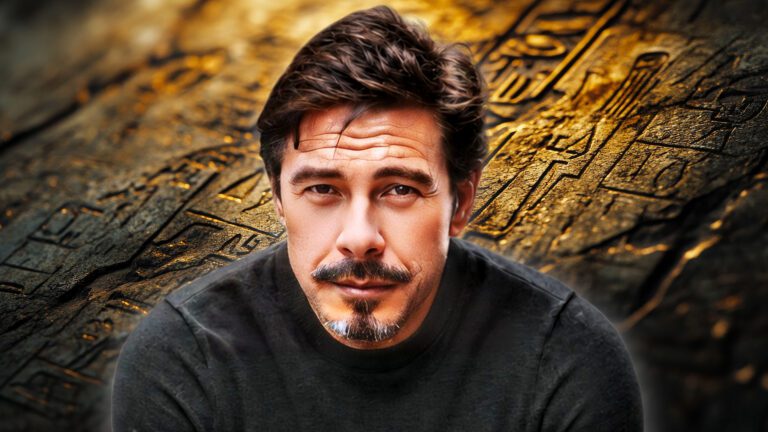
Noah benShea is a bestselling poet-philosopher and the creator of Jacob the Baker, a parable about humility, compassion and spiritual strength. In this episode of the Next Level Soul Podcast, he talks about kindness as a shared faith, humility as a compass, and the space between what the world delivers and how we respond.
Key Takeaways
- Noah says: people of all faiths are of one faith, if their religion is kindness.
- He says the greatest cause of stress is trying to control what is not ours to control.
- His line: you are in charge of your response.
- He calls humility the north on the compass of greatness.
- He has written Jacob the Baker for over four decades.
Who Is Noah benShea?
On today’s episode, we welcome Noah benShea, a bestselling poet-philosopher and the creator of Jacob the Baker, a parable about humility, compassion and spiritual strength in a divided world.
Kindness as a Shared Faith
Noah says people of all faiths are of one faith if their religion is kindness. He reduces spirituality to something simple: be kind.
Stress and Your Response
Noah says the greatest illness is stress and the greatest cause of stress is trying to control what is not ours to control. You are not in charge of what the world delivers to your door, he says. You are in charge of your response. There is a magic moment between stimulus and response, he says, if you grant yourself the right to that space.
Jacob the Baker
Noah describes Jacob the Baker as a humble baker who writes notes to himself while waiting for his ovens to warm. One note accidentally bakes into a loaf of bread, a woman finds it, and the world lines up at Jacob’s door. Noah shares that when Random House decided to publish Jacob the Baker, they had expectations about how it would do. He is also writing lyrics for songs in the Jacob the Baker movie.
Humility as a Compass
Noah calls humility the north on the compass of greatness. From humility comes honesty, he says. From honesty comes passion and compassion, and from compassion comes faith. He challenges the modern obsession with visibility, and says greatness is alignment rather than dominance.
Finding God in the Ordinary
Noah says there is not one stage in life but many. He shares that he spends time each year in Italy and speaks Italian,. His prayer, he says, is that the work Alex is doing continues to have its own impact on the people who connect with it.
Spiritual Takeaways
- Choose your response. Noah says that is where freedom lives.
- Let go of control. He says it is the biggest source of stress.
- Start with humility. He sees it as the compass for greatness.
Please enjoy my conversation with Noah benShea.
Guest Links: Connect with Noah benShea
Listen to the Episode
- Watch this episode ad-free on Next Level Soul TV
- Download the MP3
- More episodes: Next Level Soul Podcast
Frequently Asked Questions
Who is Noah benShea?
Noah benShea is a bestselling poet-philosopher and the creator of Jacob the Baker.
What is Jacob the Baker?
It is a parable about a humble baker whose notes to himself accidentally bake into bread and help people in their suffering.
What does he say causes stress?
He says the greatest cause of stress is trying to control what is not ours to control.
What is his compass for greatness?
He says humility is the north on the compass of greatness, leading to honesty, compassion and faith.
Where can I learn more about Noah benShea?
Visit noahbenshea.com, watch Jacob the Baker on Next Level Soul TV, or find him on YouTube. His episode is also on Next Level Soul TV.
Keep Exploring
- Explore all of our free masterclasses
- Read the complete guide to the Ascended Masters
Follow Along with the Transcript
Alex Ferrari 0:00
Now today, guys, you are in for an amazing treat. I've had the pleasure of talking to a poet, philosopher about life, about struggle, about everything, and this conversation with a best selling author, Noah Benshea Is is such a remarkable, profound conversation. We talk about his amazing film that he made based on his 40 year plus, best selling novels, best selling books called Jacob the Baker. We have the film on Next Level Soul TV called Jacob the baker, and it is a profound film that will lift your soul in a way that I can't explain this conversation, I think will do something similar. So sit back and enjoy. Can you explain to people who Jacob the baker is and what that character represents in these books that you've been writing for 40 years.
Noah Benshea 1:05
Jacob the Baker says people of all faiths are of one faith, if their religion is kindness, let's be honest. Oftentimes we're the last person to discover who we are. In a similar way, our ability to love others is premised on our ability to love ourself. Anybody who is not in the pleasure of their own company is not good company. Guilt won't change the past and anxiety won't improve the future.
Alex Ferrari 1:37
Greatness seems to have a bit of ego involved and not humble at all. How do you define the word greatness?
Noah Benshea 1:46
Is reimagined a compass for the world we live in, and I imagined it in this way.
Alex Ferrari 1:59
Now, before we get started, I want to thank you so much for clicking on this video and getting ready to watch this amazing conversation we're about to have. But one thing I've noticed is that about 40% of you who are watching are not subscribed. It is the easiest way to continue to support the work we're doing at next level soul and it has been the joy of my life to have these amazing conversations with some of the most remarkable and profound souls on the planet. So from the bottom of my heart, I want to thank you so much for giving me the ability and the privilege of doing this work for you. So please just hit the subscribe button, hit the like button, and it really, really helps us out a lot. Thank you so much, and let's dive in.
Alex Ferrari 2:52
I like to welcome to the show Noah Benshea, how you doing Noah?
Noah Benshea 2:56
Fine. Great to be here with you Alex, pleased.
Alex Ferrari 3:00
Thank you so much for not only coming on the show, but for the amazing work you've been doing all these years with your book series, Jacob the Baker, with your new film, Jacob the Baker, which we have the honor of streaming on Next Level Soul TV. It is one of those movies that really does change lives, and really does feed the soul. Is is the best way I can put it. It really does give you hope about your own life in the in the world around you. So before we even get started, my friend, I just want to give you a big thank you for, you know, doing all the work that you've been doing all these years.
Noah Benshea 3:41
Thank you, Alex.
Alex Ferrari 3:43
So so you spent your life studying truth, wisdom and the human soul. So I'm going to ask you the first question, very bluntly, what do you believe most people get completely wrong about life? Let's just jump into the deep end,
Noah Benshea 4:01
In a shorthand, if I may, the number one illness in the world is depression. The number one reason for depression is stress. The number one stress are people trying to be in control of what is not in their control. You're not in charge of what the world delivers to your door every morning. You are in charge of your response. Respond, don't react.
Alex Ferrari 4:35
And that is so that's what they get wrong.
Noah Benshea 4:38
There is a magic moment between stimulus and response in life, if you grant yourself the right to that space. And I think that that's that's a gift of there's a line of one of my. Books that says an eternity is any moment opened with patience. The question is whether you will take the time to open with patience the moments in your life, because the treasure in life treasure the moments, because that's where the treasure is buried in the moments that you have. I wrote something I was going to share with you. I took a note today, and if I may, this is part of the reality of being a poet, philosopher is this is what you do. I shared with you earlier, when my son was young. My son's a professor. He's when he was young, and someone asked him what his father does. He said, My father types, I'm still typing. As time slips away, as time is wont to do you will have time with experiences. You will have time with experiences and time with success and time with doubt and time with those who you love. And finally, you will have time with mortality. But the most time you will have is time with yourself, if you are fortunate and you're wise, treasure the moments that's where the treasure is buried.
Alex Ferrari 6:32
Beautiful. Oh, that's beautiful. So let me ask you, do you believe humanity is waking up, or do you feel that we're getting more distracted.
Noah Benshea 6:41
One of the great illusions in the middle of the night when you're dreaming, is you're dreaming, you're awake. So I don't know. I think humanity is definitely being stirred in their sleep. I think it's, I think it's more difficult, if I might, for any of us to sleep through the nights. And all of us, all of us have woken at three o'clock in the morning and found ourselves counting the tiles on the ceiling. It may be because there's a child of yours that needs help and you can't fix it. It may be because somebody you have loved has slipped away, and it may be because you wake in the middle of the night and realize your moments too are slipping away. So I just think we have to be a very deep, deep guardian of our moments, and there's no more profound way to come to your moments than with gratitude, because gratitude opens prayer.
Alex Ferrari 7:54
So if someone is listening right now, Noah, and feels quietly lost, I like I think a lot of us feel quietly lost, and even though their life looks perfectly fine from the outside, what do you believe is missing from those those people who feel that lot, that feeling of loss?
Noah Benshea 8:14
Let me be the preacher of humility and say that none of us have ever found our way who have not felt lost. So I remind people who have a sense of feeling lost, and Who among us has not woken to feel that way at some point, but to realize that, ah, no one has ever found their way who has not felt lost.
Alex Ferrari 8:49
So you need to feel lost in order to be able to find your way?
Noah Benshea 8:53
I'm not sure it's a requirement, but I think it's an inevitability. You know? I add it isn't. It isn't life is, you know, to quote Greek philosopher from 2300 years ago, he said, No man sets his foot in the same river twice. Not the same river, not the same man. You know, we life. We live. We live on a on a river running to the sea, and we live on a river running to the sea. Einstein, who has a reputation for wisdom, said that energy, energy cannot be created nor destroyed. It can only change form, and we are pure energy at the source, we're energy we look we're matter in space, but it's energy. So we live in a transformative experience. And. That you have to keep witnessing things with a dialectic of understanding. And let me share what I mean by a dialectic of understanding. There's a great Zen master who reminded us that first in my life, I saw the mountains as mountains and rivers as rivers. And then I saw that mountains were not mountains and rivers were not rivers. And then I saw that mountains were mountains and rivers were rivers. And you will go through that in your consciousness. You will go through that in your consciousness with who you love. Psychologists would remind people that you oftentimes fall in love with someone for a reason, and then oftentimes wind up hating them for the very same reason. You know, everything and everything in life has this transformative experience, and when they ask the Taoist masters how they could ride without holding on. They said, ride the horse in the direction it's going.
Alex Ferrari 11:08
You're just dropping little nuggets all throughout this conversation.
Noah Benshea 11:11
Well, my my wife, reminds me that my mind remembers a lot of things, but often forgets where he parked the car.
Alex Ferrari 11:26
So your wife and my wife must be talking to each other, sir, because I trust I can't. I can't I have a horrible sense of direction, not because I can't do it, is because I truly just don't care. So I either have my wife tell me, like, she's like, which way do I turn? And she's like, you've done this 30 times. Why can't you know you have to make a left here. I'm like, I'm not. My mind's not there. It's not where I'm I'm focusing.
Noah Benshea 11:59
I spend time over many, many years, I spend time each year in Italy. I speak Italian. And if you were to ask me what Italy looked like on my last trip, I would describe the backside of my wife, because I follow her where we go and so but i To that end, if I may just not to borrow on experience and find find truth. That Aristotle said that honesty is the portal to all wisdom. Jacob the Baker says, If honesty is the portal to all wisdom, humility is the portal to all honesty. A man who cannot admit when people ask me, Are you and Jacob the same person? Jacob the baker, I say, I've written these books over almost 40 years. So I said, Yes, we are the same person, except I'm the one with character flaws. Jacob is a better person than me. So I'm always when I sit down to write in the morning, and I've had people come up and say, I want to be a writer. How do you what do I do? I tell them, well, write one page a day for two years and throw away half of it, and you have a book, and they laugh and they say every day. I said, Well, this is what you get to do. If you're writer. You get to sit by yourself in a small space. That's what you get. You'll find out whether you whether you're up for that in your lifetime or not. But when I sit down to work, my son, at one time, was a globally a global champion in martial arts, and he had many, many years ago, he said the first thing you do when you check into the Dojo is check your ego at the door. And when I sit down to write, I have to check my ego at the door when I sit down to write, because I'm looking to write something wiser than I am. So I have to slip beyond the consciousness of Noah benshire and his experience and slip into the timeless experience which is my life before I was Noah Benshea.
Alex Ferrari 14:20
So Noah explain that to me. That's so powerful and so beautiful. I've had the pleasure of speaking to some very, you know, very accomplished writers in their day. And I've always asked, like, do you ever sit down and write something and then all of a sudden look at it and go, who wrote that? That's great. It's like they weren't writing it. You're but I've never heard it put the way you just did. Like when I sit down, I'm trying to write something that's wiser than I am. So how does something that's that's on the paper wiser than you are? Come from someone who, by definition. Definition of your own definition isn't as wise as the person who is writing it. How is that possible?
Noah Benshea 15:08
In the zen of archery, you are the the bow, the arrow and the target. Jacob the baker said, You are the paint, the painter, and the painting, you will slip into various modes in your life, where you will be one aspect of it. But you have to know that your life is if you imagine a telescope that fits into itself, it fits into itself, that fits into itself, so extended, if you pull the these extensions out of yourself, you will have a view. You know, I can't imagine that I could write the things I've written in my lifetime, or maybe even spoken things that I've said in my lifetime, if I hadn't had the company of people much wiser than myself across time, I and and that plays forward as well as backward. I shared with my children one time in in when in the book of Genesis, when God blew into the red earth, and the word red in Hebrew is Adam. That's why the first man was named Adam, because was the red earth that one of the words in Hebrew for soul is Ruach wind. And I told my children that one day when I'm gone and you'll feel the wind in your face, you can say, Ah, there's that. There's that. So somewhere across time with the wind of the wise, if you will. I've never put it that way before, but I've never been in this moment before, and not with you in this moment before or with your listeners. So we're all here the first time. So I I think there allow the wind of the wise to blow through you. And if I might remind people that oftentimes the wind in your face may be God blowing your kisses,
Alex Ferrari 17:23
Sir, you should be a poet. I mean, this is very
Noah Benshea 17:27
Well I have when I was younger, and people couldn't quite figure out what to make of this guy. I had always I excelled academically and early on, but I came to and then someone said, Oh, he's a poet, philosopher. And then also it was understood, so it is not a philosopher's job to make difficult simple things difficult, but difficult things simple. And it is a poet's job to make love of the philosopher's work. And so that's what I do. I'm a poet who makes love to the philosopher in me. And you know that it used to be an old joke that the two great days in a man's life were the day he bought a boat, he sold a boat. Right in my mind, the two great days in a man's life are the day you're born and the day you know why you were born. At this epoch in my life, and I have lived long enough to have epochs in my life, I'm here clearly to be a source of strength to others. So I'm just trying to do the work and saddle up for the ride ahead.
Alex Ferrari 18:48
Noah, we've been speaking about this, Jacob the Baker for a few minutes now. Can you explain to people who Jacob the Baker is and what that character represents in these books that you've been writing for 40 years?
Noah Benshea 19:02
Jacob is a poor but pious Baker who lives an anonymous life in a timeless world, and while he's waiting for the ovens to come to temperature in the morning, he writes little notes to himself, trying to make sense of life to himself, unknown to him, one of his notes falls in the mixer, and the note that falls in the mixer gets baked into a loaf of bread, and the woman who purchases the loaf of bread comes upon the note and finds In some way that this note speaks with great compassion and wisdom into a trauma in her life. And she's so deeply struck by this that she runs to the bakery to see how is this possible? And there she meets this rather amazing. Young man who doesn't seek to be thought of as amazing, named Jacob the Baker. And soon it's apparent to the community that a rather special person is living among them, and now people come to the bakery in a long line to ask him questions about prayer and friendship and love, and the children come after school and sit on the flour sacks to listen to his stories. And soon, the world beats a path to Jacob's door. There's four books in this series, Jacob the Baker, Jacob's journey, Jacob's Ladder. We're all Jacob's children, written over a period of 40 years, which seems like a long time, if you're used to watching television where stories happen and unhappen in 20 minutes with three commercial breaks, the motion picture Jacob the Baker, which came out about a year and a half ago, we shot in Copenhagen, Jerusalem, Seoul, Milano, and Los Angeles, because it tells a story of people around the world, because Jacob isn't translated into so many languages, people around the world who are experiencing something in their Life and want to reach out to Jacob, but know that Jacob is a fictional character from this guy, Noah Benshea. So people write notes to Jacob, as someone said, I use Santa Claus. So they write Jacob the baker, Santa Barbara, California, and try to so people are struggling with parenting, with addiction, with fidelity, with faith, with the parent aging, and Jacob the baker and Noah Benshea are honored to be in their company.
Alex Ferrari 21:58
And do you? Do you get those letters often?
Noah Benshea 22:01
Yeah, well, there's been a long time and a lot of letters across time, but I also almost when I meet someone like yourself in a situation like this, what's not unusual is that 20 minutes into the conversation, the people who began the conversation calling me Noah, say, Jacob, let me ask you this, and they realize they've just paused and seen the trick and what they see as a trust. I, as I say, I'm deeply honored to be in the company of a man who's has is a better man than me, so a better man for writing this book.
Alex Ferrari 22:45
Jacob I mean, sorry, Noah. Noah, what is your spiritual background and how has it changed over these course of these 40 years you've been doing all this writing and and what has Jacob taught you about your spirituality?
Noah Benshea 23:04
There's a line where, where we begin is always very interesting, but no nothing, no story begins quite at the beginning. Everything has a backstory. So I can begin with a particular point in time where my story might have begun, but I know my story has a backstory, and I remind people that you're a time machine in your in your memory, you can see the past, in your imagination, you can see the future, but the only place you can steer the Time Machine is in the now. That's where you are. So I this is what I know across time. Reference, faith, people of all faiths are of one faith, if their religion is kindness. Rabbi Hillel, the first century BC, who in many said that treat others as you would like to be treated. Jesus said, I am love. Amit bakhtar, the first Islamic Mullah, said that Allah blesses those who are kindness. The Dalai Lama said, I'm a Buddhist, but my religion is kindness. Jacob the beggar says, people of all faiths are of one faith, if their religion is kindness. And I have, I have spent a lot of time in learning and eastern and western religions, and I'm a better man for all of that experience. If you're kind, I'm on the bus. Honk, honk. If you're not kind, I'll wait for the next bus. Right? You know, one time I remember seeing John Lennon on the Johnny Carson Tonight Show, many, many years ago, and he and the Beatles had been followers of Maharishi mahevishi Mahesh Yogi, and they asked Lennon if how that trip was, and he said, very nice trip. Thank you very much. And it's like, I'm old enough to have known what it was like to get on a bus and get a transfer to the next bus. And I think that's what this life is, it's a it's a bus ride with a transfer to the next ride. And all I know is that I kindness is, is is, is the portal to a transformation experience in this lifetime. And and the irony of this, or a paradox of this, if you will, is our ability to be kind to others is premised on our ability to be kind to ourselves in a similar way, our ability to love others is premised on our ability to love ourself. Anybody who is not in the pleasure of their own company is not good company. If you are not good company to yourself, you will find yourself more often alone, and if you are in good company to yourself, solitude is its own gratitude. Because I think if I might borrow on this for a second that one of the great gifts in a relationship is to guard each other's solitude, right, to guard each other's solitude. So until you are able to be at comfort with your in your own company, you can't be good company.
Alex Ferrari 27:19
That's so such a powerful idea. Because even when I was, you know, I was a single man, many, many, many, many years ago, I would remember, you know, one relationship, another relationship, and it just just never worked, and then I left my the last relationship before my wife, and was alone for two years in solitude. And I went to a trip by myself. I had been working non stop, doing a lot of, you know, filmmaking and so on. And I went to a trip to Mexico by myself. And I went to go see the pyramids. I wanted to go to the historical sites. And it was such a, just a beautiful time for me to just be with me. I was very comfortable being by myself. I had never traveled by myself in my life. I was, I was about 30 or so at the time, and and then on my trip back on the plane, trip back. I don't I'll never forget this. I said to God, in my own in my own voice, in my head, I go, you know, it would be really nice if I could find someone who I can love and they can love me back. That was it. It was a throwaway line, and three weeks later, my wife came into my life. It was magical.
Noah Benshea 28:49
A lot of times people are in difficult relationships, but hesitate to be honest in those relationships because for fear of being left alone. Yes, and consequently, when you have to, at some point, say, what if you said this to this person you were in this room? What if you, what if you admitted to the honesty of what? And your honesty can be an honesty of feeling, not even fact, just honestly about what you are feeling say, Well, if they do, then they then they might leave me Yes, and then what would happen? And then I'd be alone, yes. And then what would happen? Nothing. Ah, ah, so I think that you that to guard. You are in a you are in a sacred relationship with yourself, and that sacred relationship is a sacred relationship with with your soul, and your soul is not blind, your soul. Is observant to all of you, to everything under your tent, your hopes, your fears, your doubts, your failures, your dishonesty, and still your soul is saying, I'm here. When will you enter into the sacred relationship and be honest with me? So I think that that until you can have a sacred relationship with your soul, which is different than your mind or your heart. It isn't what you're thinking. And I have to say that my my heart knows what my mind only thinks it knows. I think there's some of that, but not to be confused, that what you know by your thinking or what you know by your feeling, but what you know by your presence, by your observation, quiet observation and the candor. I mean, it's like having the courage to cop to you, and let's be honest, oftentimes we're the last person to discover who we are. Other people can have a window on who you are, and you're like, just, oh, yeah, oh, really, I never, and I don't mean that only in the negative, other people can see the positive in you that you can't see as well as the negative. I mean, depending on who's your observer and in that relationship. But I think the the sacred relationship with one's own soul has, it might be if I was to say, in mathematic terms, h squared. And what is h squared, humility and honesty. And the reason I bring humility and honesty into that tangent. It's because you can't be honest without humility. And humility isn't afraid to be honest.
Alex Ferrari 31:51
It keeps you keep dropping these things. Noah, it's fascinating to hear. They're such simple, small truths, but they're very powerful. You speak a lot about small truths, don't you?
Noah Benshea 32:06
I'm sure there's some other people who here might understand. I was raised in a very blue collar family, if you which the dinner table, then was a big part of the center of our experience. And if you stood up to talk, if you were long winded, you'd get a fork in the wrist. So and my both my mother and father, came from very, very tough circumstances, and both of them really shared what I thought was a profound sense of insight that I took with me across a time they were like they were parents. When I graduated, I went to UCLA undergraduate, and when I graduated, I was the speaker, the valedictorian of my class, and I went to see my father that morning as they were coming in this 11,000 people to hear me give this talk at this graduation, he looked at me and he said, you forgot to shine your shoes right so it was great. You know, I was the first person my in my immediate family that graduated from high school, let alone university. But i My father was, and my father had something he would say, or I heard him saying in some way, but to this day, I take to heart and I share it with others, because so my father might be an ally in lives of people he never met and those who are perhaps some may be listening today or watching Jacob the Baker. He said, things don't have to be good for you to be great. So this sort of circles back, my friend, to the beginning of this conversation. We talked about how difficult a time this is out in the world for so many but things don't have to be good for you to be great. And Jacob says the greatness isn't ahead of you, it's within you. So I think it's a lot of times people are looking for honors that they haven't granted themselves, and it's a very quiet honorific observation. Do something small in someone else's life, and know you're a good person. In that moment, and take that to bed with you tonight, when you're when your doubts raise their voice say yes, but there's an old story that was taught by the sages that when you die, you won't be asked, why weren't you more like Abraham Lincoln or Gandhi or Mother Teresa? They'll ask, why weren't you more like you? You know, that's what we had. We already had a Mother Teresa. We already had a Lincoln, ready? Had a Gandhi, where? Where needed you know more of you and so things don't have to be good for you to be great.
Alex Ferrari 35:49
Do you believe that wisdom is something we learn, or is this something that we remember?
Noah Benshea 35:54
I'm going to be very philosophic here and say, Yes,
Alex Ferrari 36:01
Can you, can you go into a little bit more depth into that, like, because a lot of people you're an academic, so you came from an academic background, so you were probably here first, before you were here, And before you were elsewhere.
Noah Benshea 36:17
Actually, that's understandable, but I was, I was first in I felt as a very as a boy, I felt a dramatic connection with God that I can't say understood, but it was an actual visceral experience where I felt my skin tingling and I felt myself in the presence of the Divine. I'm not sure I would have quite put it that way at eight or nine, but I felt that way. I felt a very strong spiritual connection earlier in my life. Excelling academically, it was my rocket ship out of an economic class and doing well in that regard. And I was invited back. I was an assistant dean of students at UCLA when I was 23 from the time I was until 25 I was very young, and I had a book come out after that time. And so I made a rapid retreat from the academic world, although for the next 15 years, I was invited and I was a fellow at several long range think tanks where I came into the company of people who were many years older than me, and it was indeed flattering to be invited into that community of great minds, almost all of whom were in their 70s, plus. And I was 30, and when I was invited into that, those three different academic I mean, long range Think Tank communities, but I, but my experience there, if I might, was that great minds can be circled by their emotional structure. So people who feel insecure can be very, very bright, and their insecurity is what circles their their intellect. And so those these unaddressed issues in one's life, emotional issues, come back to they guard your ignorance in some way, because you will see people who well again, since you've suggested a couple of times, my sense of putting things in brevity, those who always Need to be right are usually wrong.
Alex Ferrari 38:42
That's very true, my friend, that's very, very true. What I find, what I find about you that's interesting, Noah, is your energy is very interesting to me. I deal with a lot of people all the time, and many in the very highly spiritual, mystics and so on, your energy is interesting to me, because I felt it in the book, in the movie when I watched it. But now here being with you in this conversation, there is a humble aspect to you, without question, that there's this, this love of just trying to help to be there. It doesn't seem like there's an agenda behind it. You're truly, in all honesty, just trying to help people in the way that you can, which is refreshing in a world that we live in today.
Noah Benshea 39:41
One thank you for that observation. I'm not I think it's my hubris, not humility, that so responds to that great story about a man in church who was named the most humble, and they gave him a little medal the following Sunday, he wore it to church, and they took it away from him, and. So and that is, I've said to people that if you think a man of faith is a minister, you've never met an artist, a poet, philosopher, because you faith as really being a driving issue in my life, because, you know, I'm a poet philosopher with a lot of success in that world, in me and behind me, but it's little late in my life to get a paper out when I need to make a living, you know. So the question always is, how to society find compensation so you can do what you're here to do. I remember years ago, when I was first beginning to identify myself as a poet, and I had a book come out early and won some awards. And I remember saying to someone, I said, poets never have to worry about selling out. There's no one buying you know?
Alex Ferrari 41:17
Yeah, you're right. I've never heard of a poet like, oh, that poet sold out to the to the man, no, they never heard that. Musicians, yes. Filmmakers, yes. Writers, yes, but never a poet.
Noah Benshea 41:31
Poet, philosophers are people who throw rose petals into the Grand Canyon and wait for the echo.
Alex Ferrari 41:42
Oh. Jesus, that's beautiful.
Noah Benshea 41:47
So for me, the I take the work you're doing as having its own gravitas and its own impact on the world and the people who connect with you. And so my prayer openly, because I'm guilty of prayer, is that what happens in this conversation today will be an ally in the lives of a lot of other people, and they will pass the word, because that's what I'm here to do. In some way, I think I shared with you, I I do believe we live in a global village, and at this point in my life, I feel in some way I'm like a global village elder. You know, I'm not here to sell you anything. I'm not here to tell you what it means to be a warrior or to how to become a chief. I'm here to be someone that you can talk to when there's no one else you can talk to, and how to find that that connection. Something that's happened recently is we've created somebody began to write me a while back, and we've taken a lifetime of my work and we've loaded it up into an AI base, so there's a Jacob the Baker AI, so you can come and talk to Jacob in complete privacy about anything day or night in any language in the world. And people tell me my Chinese is pretty good and my finish isn't bad when they hear me respond. And I'm hoping it will be an ally world. I'm hoping that Jacob the Baker continues to reach out and touch lives in the in the film, one of the things that was unusual when we started making this motion picture, and I can tell you, in complete honesty, the director decided he was going to make me the centerpiece in this motion picture, and it never struck me that I was going to be a centerpiece in a major feature film. And when they had the screening of the film, some people came up to my wife during the and said, got your husband. He's He's a great actor. And she looked at him, she was stunned. She says he's not acting. And there's a scene in the film, because I what was most important for me in this film was that the that the honesty was transcendent. There's a an old movie, Cat on a Hot Tin Roof and Burl Ives reminded me of my father, who's walking around in this movie and saying, mendacity, mendacity. I smell mendacity. What I wanted in this motion picture was it to resonate with an honesty. And there's a scene in the motion picture where the reporter who turns part of the story in the film is talking to me, and. Asking me about my youth, and I talked to her about my mother waiting up for me when I used to come home late at night and she'd be there with her hair and curlers and drinking coffee from this green cup that we got from getting stamps at some gas station or something. And when I related this story, I got very misty eyed, and the director said, Cut, cut. That's great. Okay, now we'll do it from this angle. And I said no. He said no. And because I'm the producer of this film, I said no. And he said, why? I said, because if I do it from another direction, I'll be acting in Jacob the baker in the motion picture I there was well scripted by for many people, including myself, but in many scenes, nobody knew what I was going to say until they heard me. I knew what others were going to say, and I just wanted to make sure. And that conversation, as I want to make sure, in this conversation, my friend, but I'm here as an honest man trying to be an honest ally in a lot of other people's lives.
Alex Ferrari 46:11
Noah, there's so much there's so much going on in the world today, and there is a lot of suffering happening at the macro level, but also at the micro level. On the individual level, I think more so on the individual level, is suffering something you transcend, or is it something you learn from?
Noah Benshea 46:37
A couple of thoughts on this, perhaps suffering at the macro level is data. Suffering at the micro level is emotional. Viktor Frankl, who was himself in a holocaust camp, had the perception that the only thing you're in charge of in this lifetime is who you're going to be in that Moment. And I can't, I can't tell others how to cope with their suffering. I'm sometimes incredibly unflattered by the anguish I have for the suffering on my own occasion, and even when I measure it against the lives of so many whose circumstances are so much worse. I just think that when I think of why Jacob is connected with so many people around the world, people initially attributed it, oftentimes to the wisdom that they took in something I said or wrote. But I don't think that's the grace in Jacob the baker. I think it's compassion. Compassion comes from the Latin meaning with passion. It's passionately caring. I think Jacob is a passionately caring person. I can't relieve the suffering of so many people in the world, but I can be passionately caring about their suffering. And in some way, I think that compassion is Western Union to God. Compassion is caring. Compassion is prayer. I think that I don't have anything so wise to say that can diminish the suffering in the lives of others. I would just like them to know that there are people who care, that I care, and I share this with with you a number about a year or two back when I began to witness and experience viscerally, because there's many regard I have an empath, so I have to be very cautious, because I feel too much the this empath. I wake in the middle of night, I began doing this. I take two fingers on one hand and wrap my hand around it here and in my soul in the middle of the night, I said, I'm holding the hand of people around the world who thinks that there's nobody holding their hand in the night that I am one soul in my bed, holding your hand against the night when you think that there's nobody who cares and nobody is concerned and no one loves you. And somehow, I'm hoping that by doing this, the simple. And I invite anybody who's listening or watching to take one hand of yours and put it in the other hand and let the world know in the middle of the night that you're holding their hand against the night that's that may be Alex is as wise a reply as I can have to your question,
Alex Ferrari 50:25
That's so beautiful. It's so so beautiful. What? What do you think is happening right now to humanity? I keep wanting to ask you. I keep wanting to say, Jacob, you put that in my head. Noah, and now I keep wanting to call you Jacob. I'm catching myself. I'm catching myself.
Noah Benshea 50:46
I'm flattered. You have to ask Jacob if he's flattered.
Alex Ferrari 50:50
No, but so my question is, Noah, that the the world seems to be going through a major awakening. It started. I mean, for me, it really kicked into high gear in 2020, that's when it really started. And every year since it seems to be getting a little crazier, a little bit more insane, things that we never thought would be happening is happening. You know, in my lifetime, definitely within your lifetime, you've seen so many different things happen to humanity. I do believe that we're more awake than we've ever been, but the world seems to be a little bit nuttier, a little bit more unstable, a little bit scarier for many people than it's ever been in our in our in our lifetimes, it's and I always try to remind people it's been worse. Just Just go back three or 400 years. It was worse. Guys, I hate to tell you,
Noah Benshea 51:49
There's not one stage in life. There are many stages. In 1492 the Spanish Inquisition was happening, yeah, in 1492 movable print came into being and the spread of education and books 1492 a guy named Columbus, discovered there were other worlds. What it didn't. It wasn't a discovery to the people who were living here, but to Columbus his world, there's there are things happening in multiple stages, on multiple stages, simultaneously. And if you just looked at the Inquisition, you could say this was the worst of time, but if you saw that there was new worlds to be discovered, you would see something else. Now, of course, there's the thought that when we discovered new worlds, we brought them, we brought them the cold and the flu, and their only response is we gifted back tobacco, back to you in the in your but with it like just to there's a variety of worlds playing at the same time. So I am not so I do witness a great deal of the evil and unfolding. But I wonder too, what else is unfolding that in some village, some Hamlet, some corner of the world, some child being born that's going to do this or this or this, I can't and I shared this tiny thought with you, guilt won't change the past, and anxiety won't improve the future.
Alex Ferrari 53:43
I mean, it's as simple as that.
Noah Benshea 53:46
My friend, I was very nice friends with, with Ram Dass, Richard Alpert, and Ram Dass always said, or his most aligned consideration, is, Be here now. But what something else he said that I've taken to heart, and recently it's posted up on one of my social media is that we're all here to walk each other home, and my take on that, and that may be the way that you find your way home. So take the time to be an ally in somebody else's journey on their journey home, and you will have the company of a good heart and a good soul on your journey home. Also just was beautiful. I think things don't have to be good for you to be great. The fact that there is so much distress and suffering can be a fact, but not a it used to be a parent permit slip or a hall pass, if you might be for you to be less. Less than what's good in you. And a good soul is anyone who is trying to be a better soul.
Alex Ferrari 55:08
Yeah, it was. It's like that old saying, if you want to succeed in life, help someone else succeed their dreams.
Noah Benshea 55:13
Things don't have to be good for you to be great.
Alex Ferrari 55:16
It's such a great saying that should be on a t shirt, sir,
Noah Benshea 55:23
I'll leave you with one, I thought. And people said, well, it's 1960s. I said, prayer gets you high.
Alex Ferrari 55:31
What is it?
Noah Benshea 55:33
Prayer gets you high
Alex Ferrari 55:39
No, now that should be a t shirt
Noah Benshea 55:41
If you want to put it on a t shirt. Well, we'll find a way to be supportive of each other. I did it recently. I've been writing lyrics for songs in the Jacob the Baker movie. When I was contracting the composer this and she and the director had done a PSA for the United Nations night scene, and I was very struck by it. And there's a great song. So I said to the composer who's singing in this PSA, she says, Oh, it's my daughter. She's an 11 year old child prodigy. I said, Okay, great. We're going to, we're going to, you're going to write the music for the film, but we're going to write a song, and I'm going to write the lyrics, and your daughter is going to sing the song. So at the end of Jacob the baker, the motion picture is a song called better times, which Eden was 11 at the time, sang the song. The song was chosen as best song in a motion picture by several international organizations, and was a finalist for the top five songs by the Society of composers and lyricists. So I went and walked the red carpet with, you know, Lenny Kravitz and Diane Warren. And my wife said to me, you know, Noah, you've never written lyrics before, but the lyrics for the first song you ever wrote was a finalist for best song and emotion picture with Lenny Kravitz. And you know, some very maybe had to write some more songs. So lately, I've been writing lyrics for songs that we're bringing out in the world, and at some point perhaps I'll send one to you to share. But it is, I share that with you. It you know, in Hebrew, the word for song and prayer the same song. So song of song means poem of poems the same way. And those were poems that King David played to calm the soul of Saul. So I think that it's to come back. Circle back about the poet, philosopher, it is my work to try and calm the soul with thoughts that may sing to many a soul I pray.
Alex Ferrari 56:27
Now, Noah, you also wrote a book called The journey to greatness. Now the idea of the concept of greatness. The definition of greatness is very interesting, because we have a world that is obsessed with success, visibility, likes, followers, achievement. But the word greatness itself, at least from my point of view, when I hear that word greatness, there seems to be And please, this is just my point of view. Greatness seems to have a bit of ego involved and not humble at all. How do you define the word greatness?
Noah Benshea 56:52
I wrote this book, The journey to greatness, and PBS came to me, and they wanted me to do a PBS special that we filmed at KQED up in San Francisco. And this PBS evening with Noah Benshea, the journey to greatness, played in 150 cities about 15 years ago. And in this journey to greatness, I have this notion, it'll speak so if you'll stay with me for a moment, many years ago, when people were lost and trying to find their way, the compass was a huge invention, and many of us are lost these days, but we're not lost geographically. So what I did is reimagined a compass for the world we live in. And I imagined it in this way. The only way a compass works is when the magnetic needle always points to magnetic north on the journey to greatness. Is compass created by your friend Noah Benshea, if I might, North is humility, because until you can find your way to humility, you can't find your sway to much else in life. And from humility you can come. East to see the sun rising. And East is honesty. So from humility, you can get to honesty. From honesty, you can go south to passion, because South passions are always hot, and passion and compassion is the self point on this compass. And then, of course, when you come around the compass to the west, when you see the sun setting, you know the sun will rise. And so the West is faith. So in your life, if you will, move first to humility and from humility, move to honesty, and from honesty, move to passion and compassion, and from passion and community and compassion, move to faith. This is a compass for the world we live in humility, honesty, passion, faith.
Alex Ferrari 56:52
Noah to piggyback on that. What is the quiet difference between living a meaningful life and living a busy one? Because it seems like a lot of us are busy.
Noah Benshea 56:52
First of all, it's, it's, it's not avoiding the difference between between crowded and complete. A lot of people have a crowded life, but don't have a complete life. Okay? And just to turn your question on its head, taking the moment is getting silent in the moment is what allows you to come to it. It requires you to quiet yourself. Quiet your noise. Quiet your ego. There's a line I wrote many years ago that if we were having dinner, my wife would kick me under the table and tell me stop quoting yourself so much. But if we're doing
Alex Ferrari 57:38
This an interview, sir, this is an interview, sir. This is what it's for, sir, it's okay.
Noah Benshea 57:46
So about why I said taking that moment and the humility is the is the start point. The line is only a quiet only a quiet pond. Paints an honest picture. Oh, wow, Haven't we all made a jigsaw puzzle, which is a reflection of autumn leaves in a pond. Only a quiet pond paints an honest picture. So quiet, and if you're busy screaming, screaming you're right or others are wrong. It's the screaming that ought to be telling you something in a very quiet voice.
Alex Ferrari 1:02:50
What do you mean by that?
Noah Benshea 1:02:58
I think if you if you spend your life screaming at others, you will find yourself hoarse. You'll have nothing to say. You have no voice to say it. I think that if screaming, if yelling, has an instruction, it's to be quiet. If you hear yourself yelling, that's a problem. It's to be not to be too cute about this. If you hear yourself yelling, it's quietly trying to tell you something.
Alex Ferrari 1:03:41
And what is it trying to tell you? Take a look at this?
Noah Benshea 1:03:47
Stop yelling.
Alex Ferrari 1:03:47
Well then let me ask you this in the in the world, and I think
Noah Benshea 1:03:52
I can hear where you're going.
Alex Ferrari 1:03:54
So in the world that we're in right now, you've you've made it. You've made a few more trips around the sun than I have just a couple. So from my point of view, in my time around this on this rock, we have never been more polarized as not only this country, but as a world, as a community. Does polarization in every country around the world, extremes are starting to pull themselves apart farther and farther, where in the 80s there was polarization, but there was still cooperation. They could go across the aisle in the political forum, but now there's and it's not even only politics. It's in everything. It's religion, it's food. Are you vegan? Do you eat meats? Apple, Mac? It's it's mass hysteria. It's constant, you know, polarization, but it seems to be getting worse and worse, and that when you said yelling, I that's the first thing that came into my head. I'm like, Well, that's all we're doing now, is yelling at each other
Noah Benshea 1:05:01
Well a couple of thoughts that may serve this conversation. When they were first Random House decided was going to publish Jacob the Baker. They thought the book was going to do well in in New York and Los Angeles markets, because when I was an intellectual, I spoke quickly. What they didn't know and were soon to discover is the book did incredibly well in the Midwest and the Southeast because of the basic value system that's involved. So I share this with anybody watching Jacob the Baker that if you're a parent trying to raise a child, it doesn't matter if you're a Republican or Democrat. You got to deal with it. If you're dealing with addiction, it doesn't matter. It doesn't addiction doesn't care if you're a Republican or a Democrat. If you're trying to deal with fidelity, it doesn't kill your wife, your husband relationship doesn't care if you're a Democrat or a Republican. If you're losing a parent, it doesn't matter if your parent that's last is absenting. It's as a democratic so Jacob itself, and the teaching, such as there is in Jacob the baker, is outside of those silos. It defies those silos. It isn't spoken to that world now onto this as a planetary issue. We live on a little blue ball spinning in space at 1040 miles an hour that you don't know. That doesn't matter. I don't mean you specifically that we forget it doesn't matter. What it means is that no one ever found their balance who hasn't lost their balance. There is no mission accomplished in this life, right? You were going, you were going to be okay, and you're not going to be okay. You're going to found your balance, and you're going to lose your balance. You're going to find your way in your relationship, and you're going to lose your way in your relationship, and if you're luckily, you wake up again and realize that your life, like every life, is in the lost and found. So I think to give witness to that is the shared humanity of it. Where it's it's you're living on a little blue ball spinning in space. Finding Your balance is not something you'll achieve. You will be okay. I've, I have, I have. It just, it just changes. There was a guy who was a famous old story of a guy who was a lineman on a Notre Dame football team, and he was called in to court to give testimony in some incident that he had seen. And when the attorney was beginning to he said, let me ask you here, Mr. Konkowski, I'm picking some name that might be alignment. And isn't it true that you are all linemen, all American all this, all that one yes, yes, yes, yes, yes, yes. So the guy steps down, the player steps down, and his coach says, Gronkowski, I can't believe that you He asked you this. You said, Yes, I was this, yes, I was this, yes. He said, He's How could you do that? He says, Coach, Coach, I had taken a vow to be honest. Sometimes when you're honest, you know it serves you, sometimes it doesn't. But I think that we're all going to find that nobody has ever found their way, who has not been lost, nobody has ever who hasn't, who nobody has found their balance, who hasn't lost their balance. It just, it just doesn't. It just doesn't work that way. And I think once you understand that about yourself and are somewhat humility to that, you can come to other people. So I don't, I don't have a final wise thing to say that will make a lot of people feel better in this lifetime. I do know that I try to give them and put out there my love and caring and invite others to do the same. And that's about what you can do in this lifetime. I thought before when you asked me, when I talked about yelling and I said about yelling reminds you to to just to be quiet. There are times when you have to raise your voice against what is wrong and what is evil, and then you have to put it away you know that you've done. You know we, we, we spend the average child will fall 300 times before they learn to walk. So you're going to spend a long time learning to to stand up. You might spend a longer time learning to stand up for what you believe in. Right, and you might spend a longer time yet learning when to sit down.
Alex Ferrari 1:10:03
It's very true what you said that. And I just want to dig into it just a little bit deeper, because I think it's so profound that no one who no one who's ever found balance, has not been unbalanced in their life. That's such a beautiful analogy for our lives, because there's we all have to go through suffering. We all have to go through obstacles in life. No one, not one of us, gets out of here with a little bit of trauma, with a little bit of adversity. That's the point of this, this, this thing that we're going through with, just life, is to be challenged, to get that adversity. You can't see the light without the dark. It's the light doesn't exist without the dark. You need the contrast in many ways. Can you dig into that idea a little bit more about why? Like? Because I get the biggest question I get asked all the time, why do bad things happen to good people?
Noah Benshea 1:11:06
I remember being a kid, and you go to the movies the afternoon years ago, and it reminds me of Plato's Allegory of the Cave in some way, because I think when you sit in the motion picture, when you sit in a movie theater, and it's what the Hindus refer to as life is Maya, life is illusion that you're there and you think that what you're watching is life. You've been watching it for so long you don't know that you're watching a movie, and you're calling it life. So if you suddenly have an awareness of this that how you've been looking at things is a bit skewed toward the blindness that you come so accustomed to, and you stand up and scream at other people, if you could see what I see? Well, sometimes, historically, when people do that in the movie theater of the blind, they will tend to string you up. They don't like to be told that what they call reality is an illusion. And so if you're lucky, if you don't get pummeled, you will run for your life. And the first thing you've done when you've been in the dark for so long watching what you think is life, but it's a movie of life. You come outside and you you start shouting to the world, you should see what I see. But what you do when you come out from being in the dark, it's too bright, so you keep your eyes shut, because when you try to open your eyes to the light after you've been in the dark for so long, you're you're blind. So I think in this lifetime, it takes a lifetime, sometimes to realize that you've been in the dark, to realize that what you've seen is illusion, and that when you're convinced that you have a vision to tell other people what they don't see, that may be that you still have your eyes shut because it is too bright and you will be blinded by the bright so consequently, the journey in this lifetime takes time to have an awareness about things, and it begins with a consciousness of your own blindness and of you've been in the dark. And it'll just take time and gain witness, and then when you do gain witness to it, to remember that you too were someone who sat in the theater for a long time watching the illusion and calling it life. The you too were a person who shut their eyes against the light because the light was too blinding for you, and suddenly you become a more compatible person to be in their company. I just think that being compassionate is the is that is the turnkey. And in case people say, Well, I'm a compassionate soul to others, I would say interesting. But can you turn that compassion first to yourself? Can you be caring? Can you be self caring? Because that'll give you the ability, again to be other caring, and that's a phenomenal experience in a world that is too in give non caring, too indifferent to too many people. Jacob the Baker says, in a world which is of all the things you can make in this life, why not make a difference?
Alex Ferrari 1:14:54
Noah, we for people watching. They can obviously see this amazing film. Jacob the Baker at Next Level Soul TV. Where can, where can people find out more about you in your amazing work, and where can they get Jacob the Baker, the books and stuff
Noah Benshea 1:15:11
The Jacob the Baker books. Thank you. My mother always said, when you give a lecture, don't forget to tell people where they can buy the book at the end, I always remember. So I have in you, Alex, my mother's kind and caring so thank you all the Jacob the Baker, books are available on Amazon. Go to Amazon. It's simple, and they'll get to you overnight. Jacob Baker, Jacob's journey, Jacob's Ladder. We're all Jacob's children, and I invite you to take a look at each of them in your own time. I was on this Jacob Baker was a best seller on the Chicago Tribune. I was in this guy, Roy Leonard show, and he said to me, Noah, how did you get so much wisdom in 120 pages? I said, I don't know, Roy, when I finished it, there were only 80 pages. Random House made it 120 pages. So this is, this is not war and peace. This is a simple Jacob the baker. The motion picture is streaming on
Alex Ferrari 1:16:15
Next Level Soul TV.
Noah Benshea 1:16:18
Next Level Soul TV. It's us also streaming on Amazon Prime and all the platforms across North America, which is not as it's not as easy and functional and as reasonable as with you, which I most honor. It's also honor. It honor. It's also distributed globally. Jacob Noah Ben Shia is cryptically to be found at Noah benshia.com just Noah benshia.com and Jacob the baker.com will allow you to see a trailer to the movie and reviews, and you have some of the trailer and some of the things up on, of course, up there, and some praise from people. Noah Benshea, cryptically enough, is spelled Noah N, O, A H and Benshea, B, E, N, S, H, E, A, I get both anti Catholic and anti semitic literature in the mail. So Ben, she is placed both to the Irish and the other side of me. I And if anybody who's listening to this, or anybody sees this and has a mind or a thought about how I might be an ally in your lives or in the lives of people who are connected to you. Let me know. Let me know. Let Alex know, and we can try to put something together. Alex, I just want you to know that there's you're in on this good deed. People across time will tell me how much Jacob has touched their lives, but you're the hand that took their hand to Jacob the Baker, I say, thank you, and from Noah Benshea as well. Thank you for the good work you're doing, of all the things you can make in life, why not make a difference? And Alex, my friend, you are making a difference.
Alex Ferrari 1:18:09
I I am humbled by that, my friend. Thank you so much. As you said before, it's it's beautiful work, but it's not easy work, but it is. It is rewarding, to say the least, walking this path and doing the work that we're doing.
Noah Benshea 1:18:24
If I was to say something on my exit, yes, not from this planet, but from this conversation, and not to get a jump on things, I would say to the people who are listening, be strong. Be strong and be a source of strength to others, and you will be strengthened.
Alex Ferrari 1:18:49
And with that, my friend, this has been a beautiful and transformative conversation. I think it's a conversation that people need to hear now more than ever, and I do truly believe that people need to see this film, and it can and will change their perception on themselves and on the world around them. So I appreciate you and everything you're doing to help awaken this planet, my friend. So thank you again,
Noah Benshea 1:19:17
My deep, my deep thanks. Please know.
Our Sponsors
- Next Level Soul TV: exclusive spiritual films, series, audiobooks, courses and events. Get the app.
- Earthing.com: discover the science-based healing powers of earthing and grounding.
If you enjoyed today’s episode, check us out on YouTube at NextLevelSoul.com/youtube and subscribe.